Product Description
Product Description
|
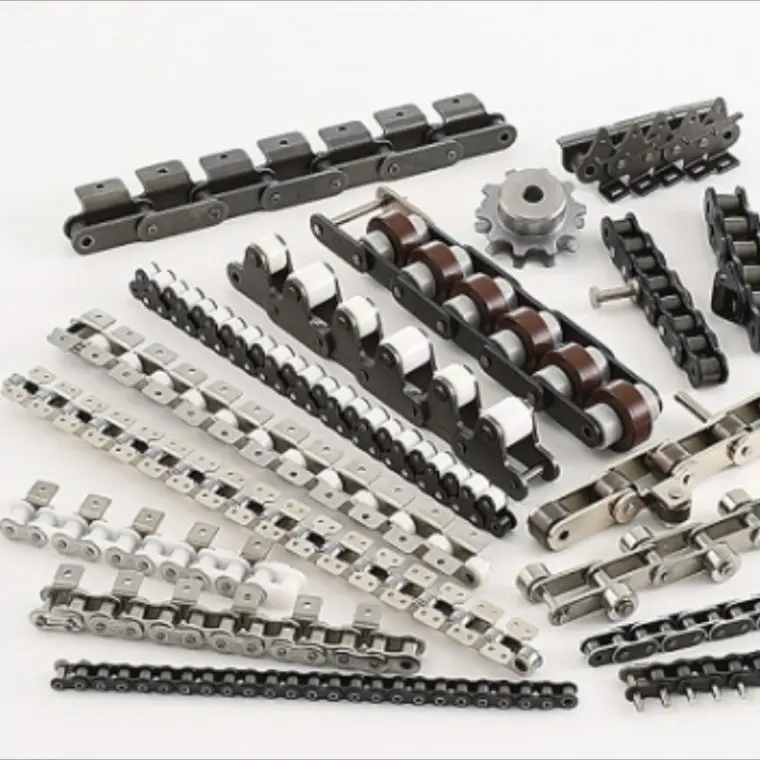
HRSY Roller Chain Profile |
|||
|
Standard: |
ANSI, DIN, ISO |
||
|
Type: |
Drive chains, Conveyor chains, Engineering chains, Agricultural chains, Traction chains, Escalator chains |
||
|
Drive chain |
Short pitch precision roller chain (A series, B series, Hevey duty series roller chain) High strength short pitch roller chains Self-lubrication roller chain O-Ring chains Oil filed chains Heavy duty cranked-link transmission chains Double pitch transmission chains Inverted tooth chains Motorcycle chains Other (Driver chains) |
||
|
Conveyor chains |
Conveying roller chains Rubber attached plate chains Printing iron drying room line chains Double hinged conveyor chains Metric (M type) conveyor chains FV series conveyor chains Wooden conveyor chains Chains for food packaging machinery Conveyor chains for paper roll |
||
|
Engineering chains |
Conveying chains for cement industry Scraper conveyor chains Conveyor chains for coal washer Rubber gloves carrier chains Steel sleeve chain for engineering Welded-steel-type mill chains Sugar machine chains Conveyor chains for steel mill |
||
|
Agricultural chains |
Agricultural machinery drive chains Steel pintle chains ZGS38 combine harvester chains Rice harvester chains S type C type Others |
||
|
Traction chains |
Plate chains Leaf chains for sky stacker Traction chains Others |
||
|
Escalator chains |
Escalator step chains Escalator driver chains |
||
|
Material |
40Mn, 45Mn, SS316, SS304, SS201 |
||
|
Advantage |
We have competitive price and high quality. Our stock standard length: 5ft each piece, 10ft each piece. Custom length: We can custom according to your demand. We can accept your Logo, accept ODM, OEM. |
||
Detailed Photos
Packaging & Shipping
Company Profile
ZheJiang Haorongshengye Electrical Equipment Co., Ltd.
1. Was founded in 2008
2. Our Principle:
“Credibility Supremacy, and Customer First”
3. Our Promise:
“High quality products, and Excellent Service”
4. Our Value:
“Being Honesty, Doing the Best, and Long-lasting Development”
5. Our Aim:
“Develop to be a leader in the power transmission parts industry in the world”
|
6.Our services: |
1).Competitive price |
|||
|
2).High quality products |
||||
|
3).OEM service or can customized according to your drawings |
||||
|
4).Reply your inquiry in 24 hours |
||||
|
5).Professional technical team 24 hours online service |
||||
|
6).Provide sample service |
||||
Main products
Machines
Exbihition
| Standard or Nonstandard: | Standard |
|---|---|
| Application: | Textile Machinery, Garment Machinery, Conveyer Equipment, Packaging Machinery, Electric Cars, Motorcycle, Food Machinery, Marine, Mining Equipment, Agricultural Machinery, Car |
| Surface Treatment: | Oil Blooming |
| Structure: | Roller Chain |
| Material: | Stainless Steel |
| Type: | Short Pitch Chain |
| Samples: |
US$ 50/Meter
1 Meter(Min.Order) | |
|---|
| Customization: |
Available
| Customized Request |
|---|
Can roller chains be used in food processing or pharmaceutical industries?
Roller chains can be used in certain food processing and pharmaceutical applications, but there are specific considerations and requirements to ensure compliance with industry standards and regulations. Here’s a detailed answer to the question:
1. Food Grade Materials: In food processing and pharmaceutical industries, it is essential to use roller chains made from food-grade materials. These materials are non-toxic, corrosion-resistant, and designed to meet the hygiene and cleanliness requirements of these industries. Stainless steel chains or chains with special food-grade coatings are commonly used.
2. Lubrication: Proper lubrication is crucial in food processing and pharmaceutical applications to prevent contamination. Food-grade lubricants that are safe for consumption or lubrication-free chains are often used to meet the industry standards and regulations. It’s important to ensure that the lubricants used are compatible with the specific chain material and application requirements.
3. Cleanliness and Sanitization: The equipment and chains used in food processing and pharmaceutical industries must be designed for easy cleaning and sanitization. Smooth surfaces, without crevices or pockets that can trap food particles or bacteria, are preferred. Regular cleaning and maintenance procedures should be implemented to ensure proper hygiene and prevent the risk of contamination.
4. FDA and Regulatory Compliance: Roller chains used in food processing and pharmaceutical industries must comply with the regulations set by the Food and Drug Administration (FDA) or other relevant regulatory bodies. These regulations specify the acceptable materials, lubricants, and cleanliness standards for equipment used in these industries.
5. Hazard Analysis and Critical Control Points (HACCP): The Hazard Analysis and Critical Control Points system is commonly implemented in the food processing industry to identify and control potential hazards. When using roller chains in food processing, it’s important to assess the risks and implement appropriate measures to prevent contamination, such as installing guards to protect the chain from direct contact with food products.
While roller chains can be used in food processing and pharmaceutical industries, it is crucial to consult industry-specific guidelines and work with suppliers or manufacturers experienced in supplying chains for these applications. Adhering to industry standards and regulations ensures the safe and reliable use of roller chains in such sensitive environments.
How do roller chains handle angular misalignment between sprockets?
Roller chains are designed to accommodate a certain degree of angular misalignment between sprockets. Here’s a detailed answer to the question:
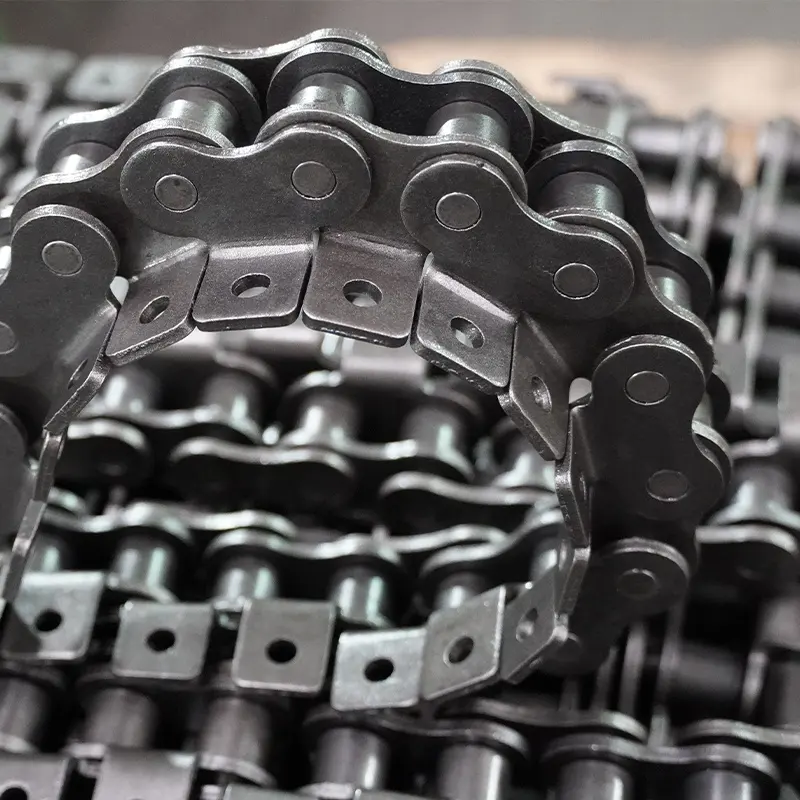
1. Flexibility: Roller chains have inherent flexibility, allowing them to adapt to slight misalignments between sprockets. The chain links can articulate and adjust their position to compensate for the angular misalignment. This flexibility helps to reduce stress on the chain and the sprockets.
2. Chain Articulation: The individual chain links in a roller chain are connected by pins, allowing them to rotate and articulate as the chain engages with the sprockets. This articulation enables the chain to follow the angular movement of the sprockets and maintain proper engagement. It helps to distribute the load evenly across the chain and minimize concentrated stresses on individual chain links.
3. Tolerance for Misalignment: Roller chains have a certain tolerance for angular misalignment between the sprockets. The exact amount of misalignment that a chain can handle depends on factors such as chain size, pitch, and design. However, it’s important to note that excessive misalignment can lead to accelerated wear, increased noise, and reduced chain life.
4. Proper Alignment: While roller chains can tolerate some degree of angular misalignment, it’s still essential to aim for proper sprocket alignment whenever possible. Proper alignment helps to optimize chain performance, minimize wear, and extend the lifespan of the chain and sprockets. Aligning the sprockets correctly ensures that the chain engages smoothly and uniformly with the sprocket teeth, reducing the risk of premature wear or failure.
5. Regular Inspection and Maintenance: To ensure optimal performance and longevity, it’s important to regularly inspect the roller chain system for any signs of misalignment or excessive wear. Routine maintenance, such as lubrication and tension adjustment, helps to mitigate the effects of misalignment and promotes smooth operation.
While roller chains can handle a certain degree of angular misalignment, it’s always recommended to minimize misalignment and strive for proper sprocket alignment to ensure optimal performance, efficiency, and longevity of the chain and sprocket system.
What are the signs of roller chain wear and when should it be replaced?
Roller chain wear is a natural occurrence due to the repetitive motion and load-bearing nature of the chain. Recognizing the signs of wear is important to ensure the safe and efficient operation of the chain. Here’s a detailed answer to the question:
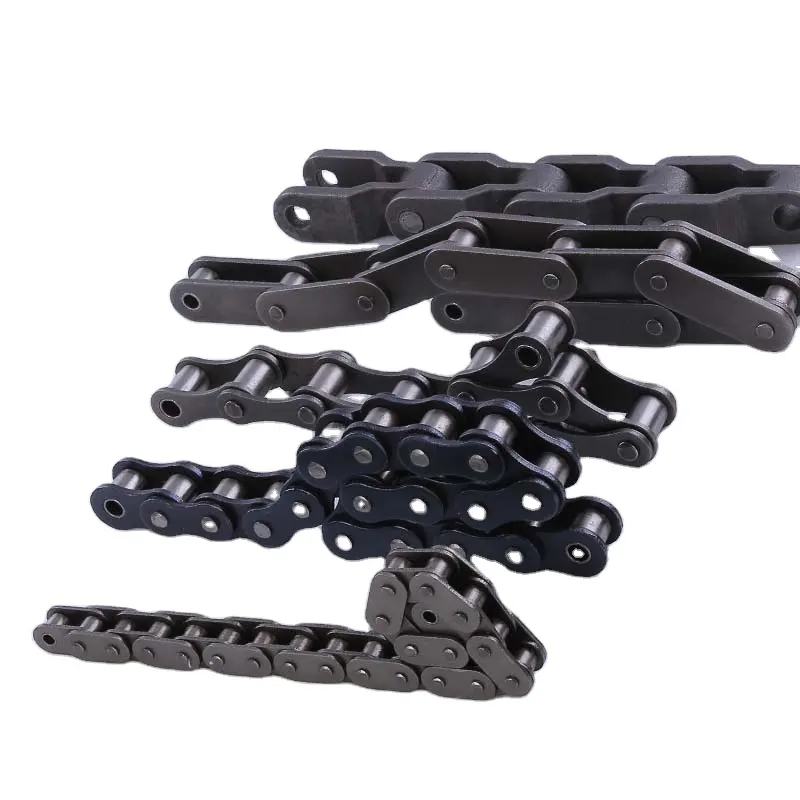
1. Elongation: Roller chains can elongate over time due to wear on the pins, bushings, and rollers. To check for elongation, measure the distance between a specific number of links (e.g., 10 or 12) over a known length. If the measured distance exceeds the standard pitch length, it indicates chain elongation and the need for replacement.
2. Chain Slack: Excessive chain slack or sag is another sign of wear. When the chain becomes elongated, it fails to maintain the proper tension, resulting in increased slack. Excessive chain slack can cause poor engagement with sprockets, resulting in skipping or jumping and affecting the overall performance of the chain.
3. Misalignment: As a roller chain wears, it may start to misalign with the sprockets. This misalignment can cause the chain to ride unevenly on the sprocket teeth, leading to accelerated wear on the chain and sprockets. If you notice the chain consistently riding to one side of the sprocket, it may be a sign of wear and misalignment.
4. Chain Noise: Worn roller chains can produce increased noise during operation. Excessive wear on the chain components can cause rattling, clicking, or grinding sounds. Unusual noises should be investigated, as they may indicate significant wear or damage to the chain.
5. Visible Signs of Wear: Inspect the chain visually for signs of wear, such as rust, discoloration, or visible damage to the rollers, pins, or bushings. Excessive wear on these components can affect the chain’s ability to properly engage with the sprockets and transmit power efficiently.
When to replace a roller chain depends on various factors, including the severity of wear, the criticality of the application, and the manufacturer’s recommendations. It is generally recommended to replace a roller chain when it has elongated beyond the allowable limits, exhibits excessive wear, or shows signs of damage that can compromise its performance and safety.
Regular inspection and maintenance of roller chains are essential to identify signs of wear and ensure timely replacement. Replacing the chain at the appropriate time helps prevent unexpected failures, reduces downtime, and maintains the overall efficiency of the machinery or equipment.


editor by CX 2023-10-25