Product Description
Carbon Steel Roller Chain for Machines
1. Standards: ISO /DIN /ANSI
2. Model: 35-160, 04B-32B Simplex, Duplex, Triplex, Heavy duty
3. Materials: Carbon steel 40Mn
4. All parts are heat treatment(quenching and tempering) and controlled in a reasonable tolerance range.
5. Tensile strength: 15-20% higher than the standard
6. Certificate of Quality: ISO 9001, SGS
7. Centreless grinding.
8. Good lubrication with excellent grease.
9. Color: Self, dark yellow, dark blue, black
Products are made of high quality alloy steel production. The plates are punched and squeezed bores by precision technology. The pin, bush, roller are machined by high-efficiency automatic equipment and automatic grinding equipment, then through heat treatment of carburization, carbon and nitrogen protection mesh belt furnace, surface blasting process etc. Assembled precision by Internal hole position, spin riveted by pressure to ensure the performance of the entire chain.
Specifications
| Technique Treatment | |||
| 1 | Shot Peening | 8 | Tempering |
| 2 | Bluing | 9 | Oiling |
| 3 | Nickel-plated | 10 | Greasing |
| 4 | Zincing | 11 | Special color |
| 5 | Heat Treatment | 12 | Stain proofing |
| 6 | Carburizing | 13 | Pre-stretched and anti-fatigue |
| 7 | Quenching | ||
Our Service
1. Any of your kind inquiry conveyor chain would be replied within 24 hours.
2. Well-trained and experienced sales staffs will reply all your concerns in fluent English.
3. OEM services are available with us, our professional designer would make your private idea into being.
4. Protection of your sales area, ideas of design and all your private information.
5. Delivery by air mail or ship for your orders.
Why choose us
1. We are the manufacture.
2. We have near 30 years experience of making chains and chain links.
3. Our design team has extensive experience in the chain design.
4. Best service and prompt delivery.
5. We offer various styles, size and colors to meet your requirement.
6. We covering a production area of 18750 square CHINAMFG have more than 100 employees and we have a complete set of testing equipment to ensure our quality.
| Usage: | Transmission Chain |
|---|---|
| Material: | Alloy/Carbon Steel |
| Surface Treatment: | Polishing/Electroplating/Oxygenation |
| Feature: | Oil Resistant |
| Chain Size: | 25 to 200 / 04b to 40b |
| Structure: | Roller Chain |
| Samples: |
US$ 4/Meter
1 Meter(Min.Order) | |
|---|
| Customization: |
Available
| Customized Request |
|---|
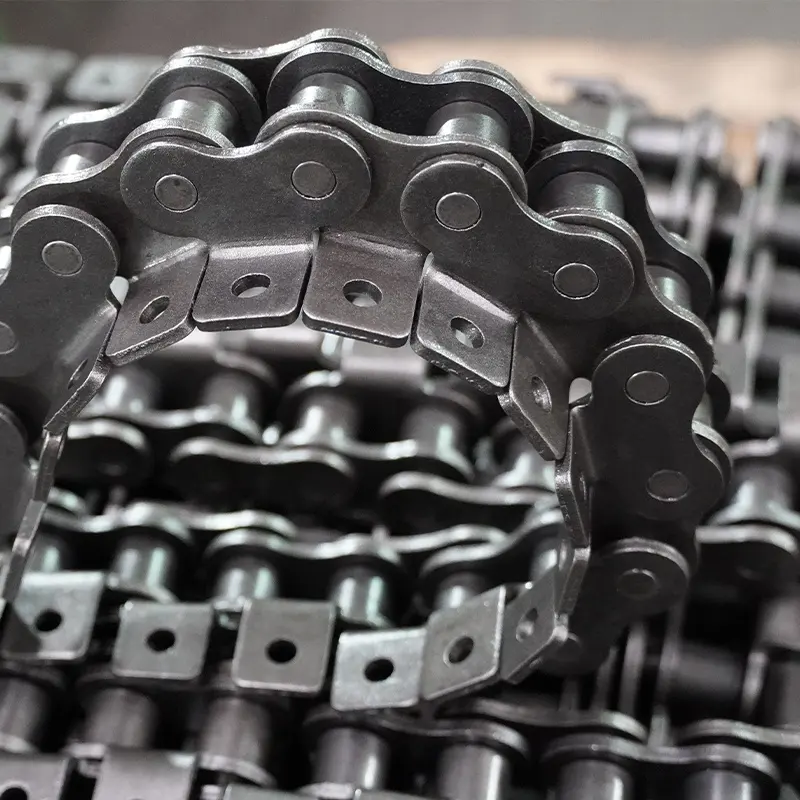
What are the key differences between single-strand and multi-strand roller chains?
Single-strand and multi-strand roller chains are two variations of roller chains with distinct characteristics. Here’s a detailed answer to the question:
1. Structure: Single-strand roller chains consist of a single row of links, while multi-strand roller chains have two or more parallel rows of links running side by side.
2. Load Capacity: Multi-strand roller chains generally have a higher load capacity compared to single-strand chains. The additional strands distribute the load across multiple rows of links, increasing the overall strength and load-carrying capacity of the chain.
3. Width: Multi-strand roller chains are wider than single-strand chains due to the presence of multiple rows of links. The increased width provides additional surface area for load distribution and enhances the chain’s overall stability and strength.
4. Speed Limit: Single-strand roller chains typically have a higher speed limit compared to multi-strand chains. The presence of multiple strands in multi-strand chains can create more friction and resistance, limiting their speed capability.
5. Tolerance to Misalignment: Multi-strand roller chains generally have better tolerance to misalignment compared to single-strand chains. The multiple rows of links allow for slight misalignments between sprockets, providing some flexibility and accommodating minor deviations without compromising the chain’s performance.
6. Installation Complexity: Single-strand chains are generally easier to install and align compared to multi-strand chains. The simplicity of a single row of links reduces the complexity of installation and reduces the chances of misalignment.
7. Application Suitability: Single-strand roller chains are commonly used in applications where moderate loads and higher speeds are required, such as bicycles, motorcycles, and light machinery. Multi-strand roller chains are preferred for heavy-duty applications that involve high loads, such as industrial machinery, conveyors, and heavy equipment.
When selecting between single-strand and multi-strand roller chains, factors such as the magnitude of the load, operating speed, alignment requirements, and application-specific considerations should be taken into account to ensure optimal chain performance and longevity.
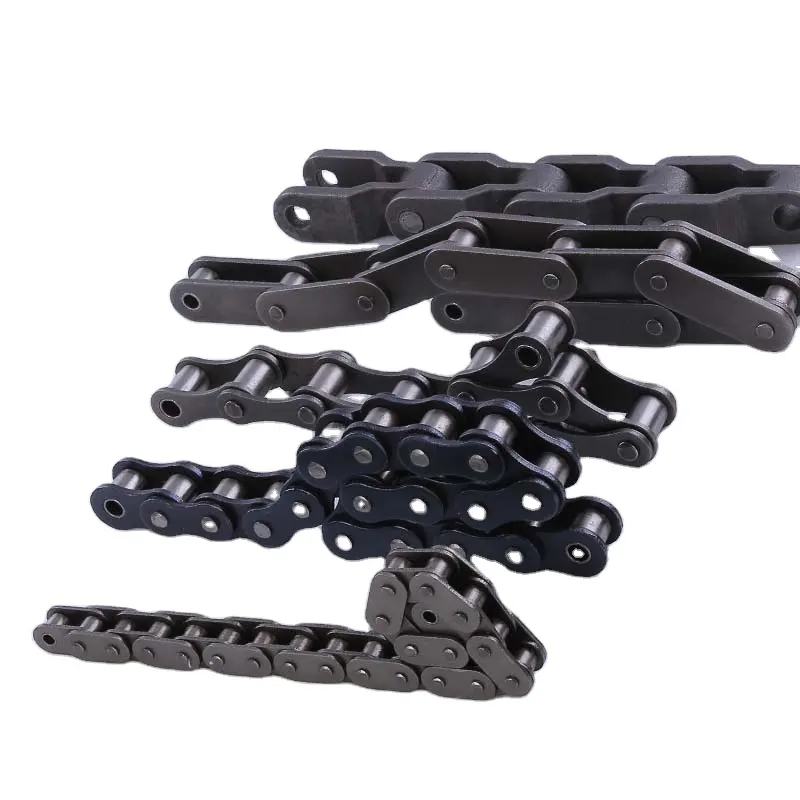
What are the differences between standard and specialty roller chains?
Standard roller chains refer to chains that are commonly used in a wide range of applications and are readily available from chain manufacturers. These chains typically have standard dimensions, including pitch, roller diameter, and pin diameter, and are made from materials such as carbon steel, stainless steel, or nickel-plated steel. Standard roller chains are suitable for most general-purpose applications that require moderate strength and durability.
Specialty roller chains, on the other hand, are designed for specific applications that require unique features or properties. These chains may have non-standard dimensions or be made from specialized materials such as high-strength alloys or plastic. Specialty roller chains can be used in a variety of industries, including food processing, automotive, and aerospace. Examples of specialty roller chains include corrosion-resistant chains, high-temperature chains, and chains with special attachments for conveying specific products or materials.
Overall, the main differences between standard and specialty roller chains are their intended applications and the unique features that they offer. Standard roller chains are suitable for most general-purpose applications, while specialty roller chains are tailored to specific applications that require special properties or features.
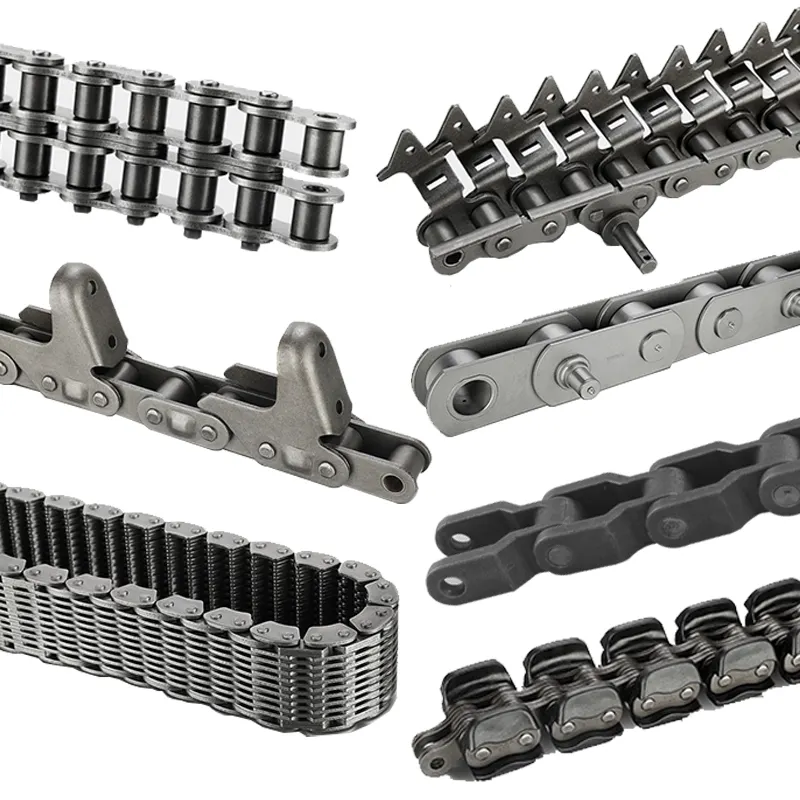
What are the key components of a roller chain?
A roller chain consists of several key components that work together to facilitate power transmission. Here’s a detailed answer to the question:
1. Inner and Outer Plates: The inner and outer plates are flat metal plates that form the sides of the roller chain. They provide support and protection to the other components and help maintain the proper spacing between the rollers.
2. Rollers: The rollers are cylindrical components that are positioned between the inner and outer plates. They are responsible for engaging with the sprockets and transmitting power. The rollers rotate freely on the bushings and reduce friction during operation.
3. Bushings: The bushings are cylindrical sleeves that fit inside the rollers. They provide a low-friction surface for the rollers to rotate on and help reduce wear and extend the life of the chain.
4. Pins: The pins are cylindrical metal rods that connect the inner and outer plates. They pass through the bushings and hold the chain together. The pins are press-fitted into the plates and provide a pivot point for the rollers.
5. Link Plates: The link plates are the connecting elements between adjacent chain links. They are the plates that hold the pins in place and provide structural integrity to the chain.
6. Master Link or Connecting Link: The master link, also known as the connecting link, is a special link that allows for easy installation and removal of the roller chain. It typically has a removable pin or clip that enables the chain to be opened and closed without the need for special tools.
These components work together to form a continuous loop that engages with the sprockets and transfers power from one shaft to another. The precise design and construction of these components contribute to the overall strength, durability, and efficiency of the roller chain.


editor by CX 2023-10-11