Product Description
ZheJiang CZPT Conveying Equipment Co.,Ltd
Product Description
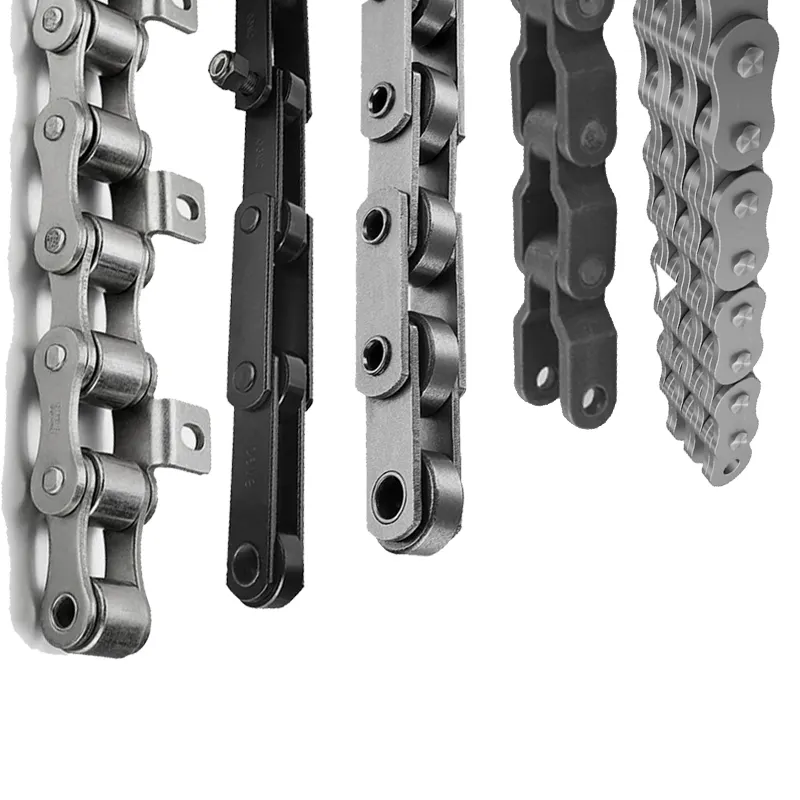
Bush roller chain(used in horizontal scraper conveyor)
1.Chains adopt high quality medium-carbon alloy steel, chain plate material is 40Mn, pin and roller material is 40Cr. High quality material and good heat treatment guarantee excellent anti-shearing force and tensile strength during working and have good looking.
2.Model: GLF For TGSS flat scraper conveyor, install flat scrapper
General & Dimension(Material: Carbon Steel, Stainless Steel)
| Type |
Pitch P mm |
between inner plates b1 mm |
Bush Diameter d mm |
Pin Diameter d1 mm |
Bush Diameter d2 mm |
Plate Width H mm |
Plate Thickness T mm |
Flight Attachment (mm) | Rated Strength KN |
|||
| Width L |
Distance L1 |
Distance L2 |
diameter D |
|||||||||
| GLF66.5(5-6)D
|
66.5
|
26.5
|
22.23
|
12.7
|
16.23
|
30
|
5/6
|
160 | 102 | / | 2-Φ9X14 | 140
|
| 230 | 95 | 195 | 4-Φ9X14 |
|||||||||
| 270 | 102 | 228 | ||||||||||
| GLF66.675(5-6)D
|
66.675
|
26.5
|
22.23
|
12.7
|
16.23
|
30
|
5/6
|
182 | 90 | 150 | 4-Φ9X14
|
140
|
| 215 | 95 | 195 | ||||||||||
| 295 | 95 | 195 | ||||||||||
| GLF100(6)
|
100
|
38.5
|
36.0
|
16.0
|
21.6
|
40
|
6
|
170 | 115 | 2-Φ9X14 | 180
|
|
| 225 | 95 | 195 | 4-Φ9X14
|
|||||||||
| 294 | 115 | 245 | ||||||||||
| 370 | 155 | 255 | ||||||||||
| GLF125(6)D |
125 |
32.5 |
25.0 |
18.0 |
20.00 |
50 |
6 |
300 | 115 | 245 | 4-Φ9X14 |
200 |
| 370 | 130 | 330 | ||||||||||
| GLF160(8)D×385 | 160 | 36.5 | 36.0 | 17.8 | 24.50 | 50 | 8 | 385 | 130 | 330 | 4-Φ11X15 | 220 |
| GLF200(8)D×467 | 200 | 42.5 | 40.0 | 20.0 | 30.00 | 60 | 8 | 467 | 160 | 420 | 4-Φ13X17 | 250 |
| 81X | 66.27
|
26.99
|
23.02
|
11.1
|
16.23
|
28.6 | 4 | Welding attached plate, length and hole size customized Wood transport chain according to customer requirements
|
107 | |||
| 81XH | 31.4 |
6/8 | 152 | |||||||||
| 81XHH | 8 | 191 | ||||||||||
NOTE: Other specifications which are not listed above can be made to customers’ specifications.
Bush roller chain(used in U type scraper conveyor)
Model: GLR For TGSU arc scraper conveyor, install U type scrapper
General & Dimension(Material: Carbon Steel, Stainless Steel)
| Type | Pitch P mm |
between inner plates b1 mm |
Bush Diameter D mm |
Pin Diameter d1 mm |
Bush Diameter d2 mm |
Plate Width H mm |
Plate Thickness T mm |
Flight Attachment (mm) | Rated Strength KN |
|||
| Width L mm |
Distance L1mm |
Distance L2mm |
diameter D mm |
|||||||||
| GLR68(5) | 68 | 25.3 | 22.23 | 11.1 | 16.23 | 29 | 5 | 102 | 32 | 4-Φ9 | 140 | |
| GLR60(6)D | 60 | 26.0 | 22.23 | 12.7 | 30 | 6 | 130 | 100 | 32 | 4-Φ9 | 140 | |
| GLR66.5(6)D | 66.5 | 26.5 | 22.23 | 12.7 | 16.23 | 30 | 6 | 130 | 102 | 32 | 4-Φ9 | 140 |
| GLR80(6)D | 80 | 32.0 | 28.00 | 18.0 | 42 | 6 | 160 | 120 | 32 | 4-Φ9 | 140 | |
| GLR100(6)D | 100 | 38.5 | 36.00 | 16.0 | 21.6 | 40 | 6 | 130 | 102 | 32 | 4-Φ9 | 180 |
Ring Chain
| DRAG CONVEYOR Type |
Ring Chain Type |
Pitch P(mm) |
Diameter d(mm) |
length L1(mm) |
Width W(mm) |
Flight Type |
Wing Width L(mm) |
Flight Width H(mm) |
| GSS16 | D10-55-13 | 55 | 10 | 74 | 32.5 | HF16 | 148 | 43.5 |
| GSS20 | D10-55-13 | 55 | 10 | 74 | 32.5 | HF20 | 188 | 43.5 |
| GSS25 | D10-55-13 | 55 | 10 | 74 | 32.5 | HF25 | 225 | 43.5 |
| GSS32 | D14-70-18 | 70 | 14 | 95 | 45 | HF32 | 300 | 54.5 |
| GSS40 | D14-70-18 | 70 | 14 | 95 | 45 | HF40 | 382 | 54.5 |
Offset Sidebar Chain
| Type | Pitch P mm |
Bush Diameter d1 |
Pin Diameter d |
Plate Width H |
Width between plates at inner ends b1 |
Width between plates at outer ends b2 |
Plate Thickness T1 |
Rated Strength KN |
Wing Plate Thickness T2 |
Wing Width L mm |
| WH78 | 66.27 | 22.23 | 12.7 | 28.4 | 28.4 | 51 | 6.4 | 93.4 | Welding attached plate, length and hole size customized | |
| WH82 | 78.1 | 27 | 14.29 | 32 | 44 | 57 | 6.4 | 132 | ||
| WH124 | 101.6 | 36.5 | 19.05 | 38.1 | 41.3 | 70 | 9.5 | 300 | ||
| WH132 | 153.67 | 44.45 | 25.25 | 50.8 | 77.1 | 111.76 | 12.7 | 378 | ||
| WH150 | 153.67 | 44.45 | 25.25 | 63.5 | 77.1 | 111.76 | 12.7 | 398 | ||
| WH155 | 153.67 | 44.45 | 28.42 | 63.5 | 73.6 | 111.25 | 14.27 | 411 | ||
| WH157 | 153.67 | 44.45 | 28.42 | 63.5 | 76.4 | 117.35 | 15.88 | 552 | ||
Forged Chain
| Pitch P(mm) |
Pin Diameter d(mm) |
Plate Width H(mm) |
b1 (mm) |
b2 (mm) |
b3 (mm) |
T1 (mm) |
T2 (mm) |
Wing Width L(mm) |
Rated Strength |
| 100 | 14 | 30 | 15 | 33 | 16 | 13 | 6(8) | Welding attached plate, length and hole size customized | 140KN |
| 125 | 17 | 35 | 17 | 34 | 18 | 8 | 6(8) | 150KN | |
| 142 | 25.4 | 50.8 | 19 | 43 | 20 | 12.2 | 8(10) | 270KN | |
| 142(H) | 25.4 | 50.8 | 29 | 62 | 30 | 15 | 8(10) | 340KN | |
| 150 | 18 | 40 | 18 | 40 | 20 | 11.5 | 6(8.10) | 200KN | |
| 200 | 21 | 45 | 20 | 42 | 22 | 12.2 | 6(8.10) | 270KN |
Company Profile
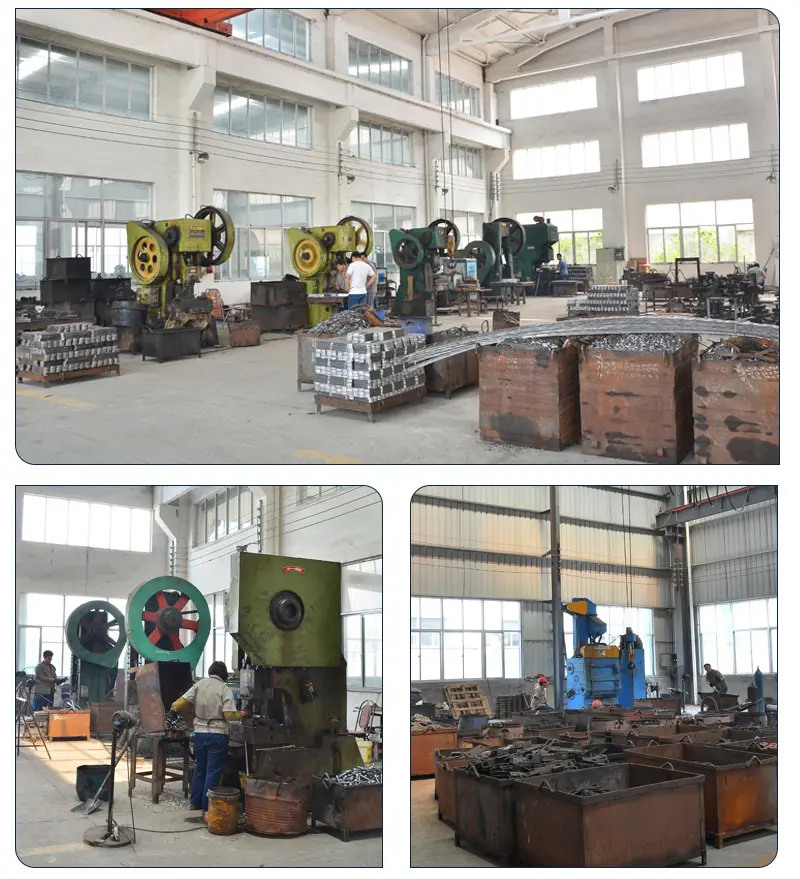
ZheJiang CZPT CONVEYING EQUIPMENT CO. LTD., Established in 2011, specializing in bucket elevator, conveyor parts manufacturing, in recent years, more than 10 research and development of food conveying accessories obtained national invention and edible new patents.
Our factory is located in Daoshu Industrial Park, HangZhou City, ZheJiang Province, which is 1 of the most developed industrial areas in China. The company covers 28,000 square CZPT with the floor area of 8,000 square meters.
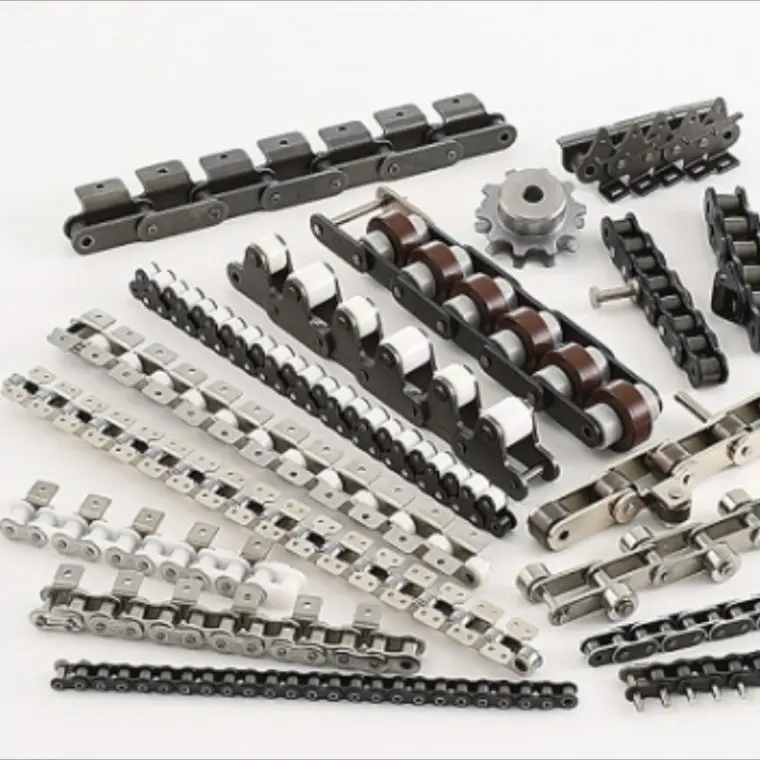
Our main products include elevator bucket, drag conveyor flight, UHMW-PE sheet, PVC elevator belts, elevator bolts, belt fastener, conveyor chains and more than 4 hundred types components which are widely used in bulk material handling and storage industry.
JINGWEI currently has more than 10 units of the whole series of 250-2500g injection molding machines, 1 production line of UHMW-PE sheet which is the higher pressure per unit in China, 1 special production line for PVC CZPT woven belt, 1 production line of elevator bolts and nut, 1 production line for conveyor chains. We annually produce 5 million plastic elevator buckets, 2 million steel buckets, 500 tons of UHMW-PE products, 0.8 million square CZPT of PVC CZPT woven elevator belt, 15 billion sets of elevator bolts, and 60,000 CZPT of conveyor chains.
Our company strictly in accordance with ISO9001 Quality Management System, and has obtained SGS certification. In order to raising working efficiency and reducing the cost of production, our company makes full use of computer network and ERP system to reform integration management in enterprise resource management, on the base of that, we have the ability to provide high quality products with competitive price and best service to customers.
JINGWEI believes the enterprise spirit of “integrity, pragmatic and innovative.” We will strive to become 1 of the best one-stop suppliers in the industry.
| Material: | Steel/Satinless Steel |
|---|---|
| Structure: | Conveyor Chain |
| Surface Treatment: | Shot Peening |
| Chain Size: | Glf/Glr |
| Feature: | Fire Resistant, Oil Resistant, Heat Resistant |
| Function: | transmission |
| Samples: |
US$ 20/Piece
1 Piece(Min.Order) | |
|---|
| Customization: |
Available
| Customized Request |
|---|
Can roller chains be used for power transmission in bicycles?
Yes, roller chains are commonly used for power transmission in bicycles. Here’s a detailed answer to the question:
Roller chains are an integral component of bicycle drivetrains, transmitting power from the pedals to the rear wheel. They offer several advantages that make them well-suited for this application:
1. Efficient Power Transfer: Roller chains provide efficient power transfer from the rider’s pedaling force to the rear wheel of the bicycle. They have low frictional losses, allowing for a smooth and efficient transfer of energy, resulting in better propulsion and improved performance.
2. High Strength and Durability: Roller chains used in bicycles are designed to withstand the forces exerted during pedaling and the varying loads encountered during riding. They are constructed using high-quality materials and precise manufacturing techniques to ensure strength and durability.
3. Lightweight: Roller chains used in bicycles are lightweight, contributing to the overall weight reduction of the bike. This is important for cyclists as it allows for faster acceleration, easier maneuverability, and enhanced handling.
4. Versatility: Roller chains are available in various sizes and configurations, allowing them to be used in different types of bicycles. Whether it’s a road bike, mountain bike, or city bike, roller chains can be adapted to suit the specific requirements of the bike’s drivetrain.
5. Easy Maintenance: Roller chains in bicycles require regular maintenance to ensure optimal performance and longevity. Proper lubrication and periodic cleaning are essential to prevent wear and corrosion. Fortunately, bicycle chains are relatively easy to maintain and can be readily accessed for cleaning and lubrication.
6. Cost-Effective Solution: Roller chains offer a cost-effective solution for power transmission in bicycles. They are affordable and widely available, making them a practical choice for bike manufacturers and cyclists alike.
In summary, roller chains are commonly used for power transmission in bicycles due to their efficient power transfer, strength, durability, lightweight nature, versatility, ease of maintenance, and cost-effectiveness. They play a crucial role in ensuring a smooth and reliable ride for cyclists of all types and skill levels.
What are the limitations of using roller chains in certain applications?
Roller chains are versatile and widely used in various applications, but they do have some limitations to consider. Here’s a detailed answer to the question:
1. Speed Limitations: Roller chains have a practical speed limit due to factors such as chain length, centrifugal forces, and roller-to-sprocket engagement. At high speeds, the centrifugal forces can cause excessive chain vibration and increase wear, potentially leading to chain failure. In such cases, alternative power transmission systems like gears or belts may be more suitable.
2. Precision Requirements: Roller chains require proper alignment and tensioning for efficient operation. In applications that demand high precision, such as precision machinery or robotics, the inherent flexibility and slight elongation of roller chains may not meet the desired accuracy requirements. In such cases, alternative systems like timing belts or direct drive solutions may be preferred.
3. Environmental Limitations: Roller chains may not be suitable for certain environments with extreme temperatures, corrosive substances, or high levels of contamination. Harsh conditions can accelerate chain wear, reduce lubrication effectiveness, or cause corrosion. In these situations, specialized chains with appropriate coatings or alternative power transmission systems may be necessary.
4. Noise and Vibration: Roller chains can generate noise and vibrations during operation, particularly when not properly tensioned or maintained. In applications where noise or vibration is a concern, such as in noise-sensitive environments or precision machinery, additional measures like chain tensioners, vibration dampening, or alternative drive systems may be required.
5. Size and Space Constraints: Roller chains have a certain physical size and require appropriate clearance for installation. In applications with limited space or tight packaging requirements, alternative power transmission systems like compact belts or direct drives might be more suitable.
It’s important to carefully evaluate the specific requirements and constraints of each application when considering the use of roller chains. Alternative power transmission systems may be more suitable in certain cases, and consulting with experts or manufacturers can help determine the best solution for the intended application.
What is a roller chain and how does it work?
A roller chain is a type of transmission chain that is commonly used in various mechanical systems to transmit power and motion between rotating shafts. It consists of a series of interconnected links, including inner plates, outer plates, rollers, and pins. Here’s a detailed answer to the question:
A roller chain operates based on the principle of contact and rolling motion. The basic components of a roller chain include:
- Inner Plates: These are flat metal plates with holes through which the pins pass.
- Outer Plates: These are similar to inner plates and are connected to the inner plates through pins.
- Rollers: The rollers are cylindrical components that are positioned between the inner and outer plates. They have a slightly larger diameter than the pins, allowing them to freely rotate.
- Pins: The pins hold the inner and outer plates together and provide a pivot point for the rollers. They pass through the holes in the inner and outer plates and secure them in place.
When the roller chain is installed in a system, it wraps around a pair of sprockets. The sprockets have teeth that mesh with the rollers of the chain. As one sprocket rotates, it engages with the rollers and pulls the chain along, causing the other sprocket to rotate as well.
The working principle of a roller chain involves the following steps:
- Engagement: The chain is positioned around the sprockets, and the rollers engage with the teeth of the sprockets.
- Tension: The tension in the chain is created by the movement of the sprockets, which causes the chain to wrap tightly around them.
- Rolling Motion: As the sprockets rotate, they impart a rolling motion to the rollers. The rollers, in turn, rotate freely on the pins, allowing the chain to move smoothly along the sprockets.
- Power Transmission: The rotational motion of one sprocket is transferred to the other sprocket through the chain. This enables the transmission of power and motion between the two shafts connected to the sprockets.
Roller chains are widely used in various applications, including machinery, automobiles, motorcycles, bicycles, conveyors, and more. They offer high efficiency, reliability, and the ability to transmit substantial amounts of power. Regular maintenance, including lubrication and periodic inspection, is essential to ensure the proper functioning and longevity of a roller chain.


editor by CX 2023-08-21