Product Description
Drive Roller Conveyor Leaf Hollow Pin Industrial Chain Elevator Silent Hoisting Pintle Cast Stainless Steel Duplex Engineering Drag Link Agricultural Escalator
Product Description
Click on the picture to get the latest quotation
| transmission chain (Driving Chain) | Short Pitch Precision Roller Chain (A Series)(1,2,3) | 04C-1 06C-1-2-3 085-1-2-3 08A-1-2-3 10A-1-2-3 12A-1-2-3 16A-1-2-3 20A-1-2-3 24A-1-2-3 28A-1-2-3 32A-1-2-3 40A-1-2-3 48A-1-2-3 |
| 25 35 35-2 35-3 -2 40-3 50 50-2-50-3 60 60-2 60-3 80 80-2 80-3 100 100-2 100-3 120 120-2 120-3 140 140-2 160 160-2 -2 240 | ||
| Short Pitch Precision Roller Chain (B Series)(1,2,3) | 06B-1-2-3 06B-1-2-3 08B-1-2-3 10B-1-2-3 12B-1-2-3 16B-1-2-3 20B-1-2-3 24B-1-2-3 28B-1-2-3 32B-1-2-3 40B-1-2-3 48B-1-2-3 56B-1-2-3 64B-1-2-3 72B-1-2-3 | |
| Heavy Duty Series Roller Chain(1,2) | 08AH-1 10AH-1 12AH-1-2-3 16AH-1-2-3 20AH-1-2-3 24AH-1-2-3 28AH-1-2-3 32AH-1-2-3 40AH-1-2-3 | |
| Side Bow Chain | 40SB 43SB 50SB 60SB 63SB 80SB 08BSB 08BSBY1 10BSB 12BSB C2050SB | |
| Motorcycle Chain | 410 415 415H 420 420H 428 428H 520 520H 525 525H 530 530H 630 630H | |
| Engine Mechanism Chain (Timing Chain) | CL04 | |
| Self-Lubrication Roller Chain | 08BSLR 10BSLR 12BSLR 16BSLR 40SLR 50SLR 60SLR 80SLR | |
| Double Pitch Transmission Chain | 208A 208B 210A 210B 212A 212B 216A 216B 220A 220B | |
| 2040 2050 2060 2080 2100 | ||
| Bush Chain | P15F-B P20-B P25-B P25F1-B P30F2-B P36-B P40-B P45-B P50-B P55-B P60-B P70-B P80-B | |
| Conveyor Chain | Roller Chains With Straight Side Plates (A Series) | C08A-1-2-3 C10A-1-2-3 C12-1-2-3 C24A-1-2-3 C32A-1-2-3 |
| C35 C40-1-2-3 C50-1-2-3 C80-1-2-3 C100-1-2-3 C120-1-2-3 C140-1-2-3 C160-1-2-3 | ||
| Roller Chains With Straight Side Plates (B Series) | C08B-1-2-3 C10B-1-2-3 C12B-1-2-3 C16-1-2-3 C20B-1-2-3 C24B-1-2-3 C28B-1-2-3 C32B-1-2-3 | |
| Double Pitch Conveyor Chain | C208A C208AH C208B C208BL C210A C210AL C212A C212AH C212AHL C216A C216AL C216AH C216AHL C220A C220AL C220AH C220AHL C224A C224AL C224AH C224AHL C232A C232AL C232AH C232AHL | |
| C2050 C2052 C2060 C2062 C2060H C2080 C2080H C2082 C2082H C2100 C2100H C2102 C2102H C2120 C2120H C2122 C2122H C2160 C2160H C2162 C2162H | ||
| Double Pius Speed Chain | BS25-C206B BS25-C208A BS25-C210A BS25-C212A BS30-C206B BS30-C208B BS30-C210B BS30-C212B | |
| Conveyor Chain (M Series) | M20 M28 M40 M56 M80 | |
| Hollow Pin Conveyor Chain (MC Series) | MC28 MC56 MC112 MC224 | |
| Conveyor Chain (FV Series) | FV40 FV63 FV90 FV112 FV140 | |
| Conveyor Chain (FVT Series) | FVT40 FVT63 FVT90 FVT112 FVT140 FVT180 FVT250 FVT315 | |
| Hollow Pin Conveyor Chain (FVC Series) | FVC63 FVC90 FVC112 FVC140 FVC180 FVC250 FVC315 | |
| Conveyor Chain (Z Series) | Z40 Z100 Z160 Z300 | |
| Conveyor Chain (ZE Series) | ZE40 ZE100 ZE160 ZE300 | |
| Hollow Pin Conveyor Chain (ZC Series) | ZC21 ZC40 ZC60 ZC150 ZC300 | |
| Hollow Pin Chains | 08BHPF 08BHPF5 08BHP9 10BHPF3 10BHPF4 12BHPF2 12BHPF3 16BHPF3 16BHPF4 40HP 08BHPF7 08BHP 50HP 50HPF4 50H-HP 60HP 60HPF1 80HP 80HPF1 80HPF2 80H-HP 80HPF3 80HPF4 HB41.75F5 A2080HP | |
| Welded-type cranked link chains | WR78 WH78 WR82 WH82 WR106 WH106 WR110 WH110 WR111 WH111 WR124 WH124 WR132 WH132 WR150 WH150 WR155 WH155 WR157 WH157 WR78F5 WH78F4 WH124F1 WH111F1 | |
| Palm oil Chains | P101.6F2 P152F14 P152F17 P152F29 90R-S P101.6F64 P76.7 P152F31 | |
| Sugar mill chains | DH9063 DH2198 P152F93K2 P152F78K2 DH 0571 0 DH1796 P152F77-AS2 P203.2F9 | |
| Rubber gloves carrier chains | P100F155 P100F13 P100F139 P150/90 | |
| Lumber conveyor chains | 81X 81XH 81XHE 81XHH 81XHS 500R 441.100R | |
| Sharp top chains | 08AF34 08BF21 10AF8 41F6 06BF1 06BF37 08AF41 08BF44 08AF8… | |
| Stainless Steel Chain | Stainless Steel Short Pitch Precision Roller Chain(A Series) | 25SS-1 35SS-1 41SS-1 40SS-1 50SS-1 60SS-1 80SS-1 100SS-1 120SS-1 |
| Stainless Steel Short Pitch Precision Roller Chain(B Series) | 05BSS-1 06BSS-1 08BSS-1 10BSS-1 12BSS-1 16BSS-1 20BSS-1 24BSS-1 | |
| Stainless Steel Roller Chain With Straight Side Plates | C40SS-1 C50SS-1 C60SS-1 C80SS-1 C100SS-1 C120SS-1 C08BSS-1 C10BSS-1 C12BSS-1 C16BSS-1 C20BSS-1 C24BSS-1 | |
| Stainless Steel Double Pitch Transmission Chain | 2040SS 2050SS 2060SS 2080SS 2100SS 2120SS 208BSS 210BSS 212BSS 216BSS 220BSS 224BSS | |
| Stainless Steel Double Pitch Conveyor Chain | C2040SS C2040HSS C208BSS C2050SS C2060SS C2060HSS C2080SS C2080HSS C2100SS C2100HSS C2120SS C2120HSS | |
| Stainless Steel Hollow Pin Chain | 08BHFSS 40HPSS 50HPSS 60HPSS 12BHPSS 80HPSS C2040HPSS C2050HPSS C2060HPSS C2080HPSS HB50.8SS | |
| Stainless Steel Double Pitch Hollow Pin Chain | C2042HPSS C2052HPSS C2062HPSS C2082HPSS C2042H-HPSS C2052H-HPSS C2062H-HPSS C2082H-HPSS | |
| Lifting Chain | Car Parking Chain | 12AT-1 16AT-1-2 20AT-1-2-3 24AT-1-2 |
| Leaf Chain | LH0822 LH0823 LH571 LH0844 LH0846 LH 0571 LH1571 LH1571 LH1034 LH1044 LH1046 LH1066 LH1088 LH1222 LH1223 LH1234 LH1244 LH1246 LH1266 LH1288 | |
| BL422 BL423 BL434 BL444 BL446 BL466 BL488 BL522 BL523 BL534 BL544 BL546 BL566 BL588 BL622 BL623 BL634 BL644 BL646 BL666 BL688 | ||
| Multiple Plate Bearing Pin Chain | LF30 MP50F2 MP50.8 MP70F1 MP70F2 MP70F3 MP80F1 MP90F1 MP90F2 MP110F1 | |
| Rollerless Lift Chain | 45-1 55-1 65-1 85-1 105-1 125-1 145-1 165-1 | |
| Agricultural Chain | S Type Steel Agricultural Chain & Attachments | S32 S42 S45 S52 S55 S62 S77 S88 A550 A620 |
| C Type Steel Agricultural Chain with Attachments | CA550 CA550/S55 CA555 CA550HD CA550V CA557 CA620 CA2801 38.1R 38.4R 38.4V 38.4VB | |
| Rice Harvester Chain | S3558T-48001 S3558T-48002 | |
| Drop Forged Chain Series | Drop Forged Rivetless Chain | Imperial: 80H X348 X458 468H X658 X678 678 698 998 9118 S348 S458 S678 S698 S9118, Metric system: XT100 XT160 |
| Cast Detachable Chain | 55 57 62 74 78 | |
| Steel Detachable Chain | 25 32 32W 51 52 55 62 | |
| Cast Iron Chain | Cast Iron Chain (C Series) | C55 C55L C77 C188 C188L C102B C111 C131 C132 |
| Cast Iron Chain (H Series) | H60 H78 H82 H110 | |
| Cast Iron Chain (4 Series) | 462 477 488 4103 720 720S 730 | |
| Cast Iron Chain BRH188 | BRH188 C188CP C102B-K2 C55A C55B C55D CC600 H78A H78B H130 H138 MC33 103 4103F29 907-E51 | |
| Welded chains | WR78 WH78 WR82 WH82 WR124 WH124 | |
| Forging Hanging Chain | X228 X348 X458 X678 698 |
Our Advantages
1. The material shall be 40Cr or above alloy steel
2. All raw materials are customized by large domestic steel plants. Before entering the plant, secondary tests are carried out to ensure stable and controllable product materials.
3. The basic amount of chain parts have realized white motion and CNC-controlled production
4. Mesh belt furnaces, infiltration, high frequency, etc., are used for heat treatment to make the chain plate and shaft sleeve reach the working state. The quenching medium is made of Korean Dragon base oil
5. Professional inspection personnel are assigned to inspect each level to ensure the product quality
6. Over 20 years of operation, we have accumulated a lot of practical experience, especially in the non-standard chain leading city, which enjoys a good reputation in the industry
Related products
Company Profile
The company mainly produces a variety of A and B series of short pitch precision roller chains for transmission, double pitch transmission chains, double pitch conveying roller accessories, short pitch conveying roller chain accessories, stereo garage chains, pin chains, double speed chains, scraper chain, pumping unit chain, sugar machinery particular chain, hollow pin roller chain and sleeve chain, large roller conveying chain and accessories, ZGS38 combine chain and accessories, S-type C-type steel agricultural machinery chain and accessories, conveyor chain, beer and beverage machinery conveyor chain, side bend flat top conveyor chain, brown oil press conveyor chain, etc. – series.
Our company has Ward, Yangli, and other precision stamping equipment. CHINAMFG laser cutting machine, automatic submerged arc welding machine, and other cutting equipment. XH precision leveling equipment, DM high-speed circular saw machine, CNC lathe, heavy double-end square milling machine, and other machining equipment. Fully automatic mesh belt quenching line, well-type gas carburizing furnace, vacuum mold furnace, high-frequency furnace, and other heat treatment equipment, lifting and hanging shot blasting machine barrel, and other surface treatment equipment.
Our company has a CHINAMFG technical force, advanced technology, a short development cycle of new products, and complete and perfect testing. The products are sold all over the world.
/* January 22, 2571 19:08:37 */!function(){function s(e,r){var a,o={};try{e&&e.split(“,”).forEach(function(e,t){e&&(a=e.match(/(.*?):(.*)$/))&&1
| Usage: | Transmission Chain, Drag Chain, Conveyor Chain, Dedicated Special Chain |
|---|---|
| Material: | Iron |
| Surface Treatment: | Oil Blooming |
| Feature: | Oil Resistant |
| Chain Size: | 1/2"*3/32" |
| Structure: | Roller Chain |
| Samples: |
US$ 9999/Piece
1 Piece(Min.Order) | |
|---|
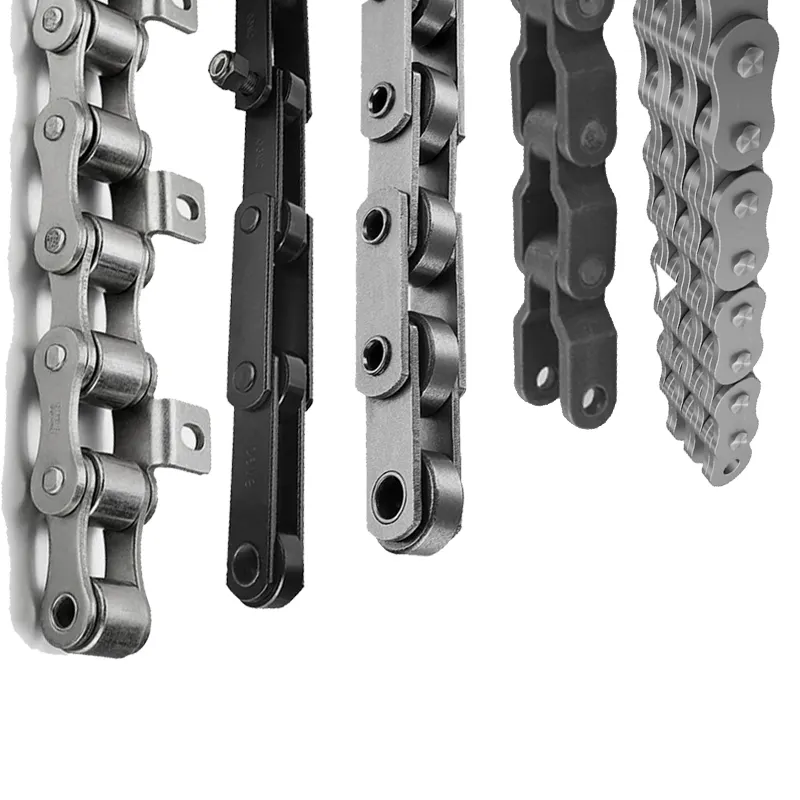
Can roller chains be used for power transmission in bicycles?
Yes, roller chains are commonly used for power transmission in bicycles. Here’s a detailed answer to the question:
Roller chains are an integral component of bicycle drivetrains, transmitting power from the pedals to the rear wheel. They offer several advantages that make them well-suited for this application:
1. Efficient Power Transfer: Roller chains provide efficient power transfer from the rider’s pedaling force to the rear wheel of the bicycle. They have low frictional losses, allowing for a smooth and efficient transfer of energy, resulting in better propulsion and improved performance.
2. High Strength and Durability: Roller chains used in bicycles are designed to withstand the forces exerted during pedaling and the varying loads encountered during riding. They are constructed using high-quality materials and precise manufacturing techniques to ensure strength and durability.
3. Lightweight: Roller chains used in bicycles are lightweight, contributing to the overall weight reduction of the bike. This is important for cyclists as it allows for faster acceleration, easier maneuverability, and enhanced handling.
4. Versatility: Roller chains are available in various sizes and configurations, allowing them to be used in different types of bicycles. Whether it’s a road bike, mountain bike, or city bike, roller chains can be adapted to suit the specific requirements of the bike’s drivetrain.
5. Easy Maintenance: Roller chains in bicycles require regular maintenance to ensure optimal performance and longevity. Proper lubrication and periodic cleaning are essential to prevent wear and corrosion. Fortunately, bicycle chains are relatively easy to maintain and can be readily accessed for cleaning and lubrication.
6. Cost-Effective Solution: Roller chains offer a cost-effective solution for power transmission in bicycles. They are affordable and widely available, making them a practical choice for bike manufacturers and cyclists alike.
In summary, roller chains are commonly used for power transmission in bicycles due to their efficient power transfer, strength, durability, lightweight nature, versatility, ease of maintenance, and cost-effectiveness. They play a crucial role in ensuring a smooth and reliable ride for cyclists of all types and skill levels.
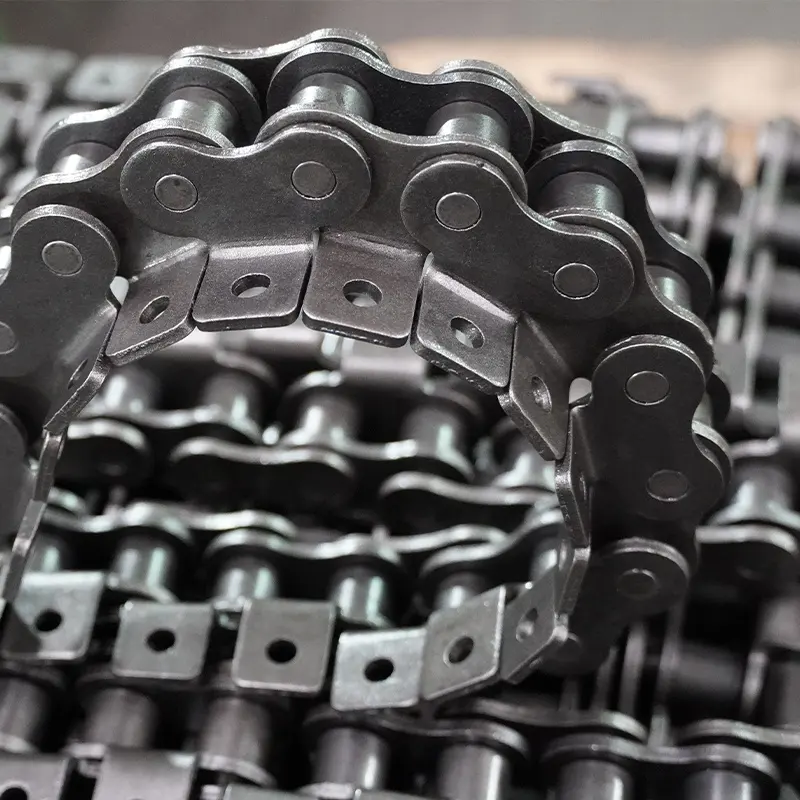
How do roller chains handle angular misalignment between sprockets?
Roller chains are designed to accommodate a certain degree of angular misalignment between sprockets. Here’s a detailed answer to the question:
1. Flexibility: Roller chains have inherent flexibility, allowing them to adapt to slight misalignments between sprockets. The chain links can articulate and adjust their position to compensate for the angular misalignment. This flexibility helps to reduce stress on the chain and the sprockets.
2. Chain Articulation: The individual chain links in a roller chain are connected by pins, allowing them to rotate and articulate as the chain engages with the sprockets. This articulation enables the chain to follow the angular movement of the sprockets and maintain proper engagement. It helps to distribute the load evenly across the chain and minimize concentrated stresses on individual chain links.
3. Tolerance for Misalignment: Roller chains have a certain tolerance for angular misalignment between the sprockets. The exact amount of misalignment that a chain can handle depends on factors such as chain size, pitch, and design. However, it’s important to note that excessive misalignment can lead to accelerated wear, increased noise, and reduced chain life.
4. Proper Alignment: While roller chains can tolerate some degree of angular misalignment, it’s still essential to aim for proper sprocket alignment whenever possible. Proper alignment helps to optimize chain performance, minimize wear, and extend the lifespan of the chain and sprockets. Aligning the sprockets correctly ensures that the chain engages smoothly and uniformly with the sprocket teeth, reducing the risk of premature wear or failure.
5. Regular Inspection and Maintenance: To ensure optimal performance and longevity, it’s important to regularly inspect the roller chain system for any signs of misalignment or excessive wear. Routine maintenance, such as lubrication and tension adjustment, helps to mitigate the effects of misalignment and promotes smooth operation.
While roller chains can handle a certain degree of angular misalignment, it’s always recommended to minimize misalignment and strive for proper sprocket alignment to ensure optimal performance, efficiency, and longevity of the chain and sprocket system.
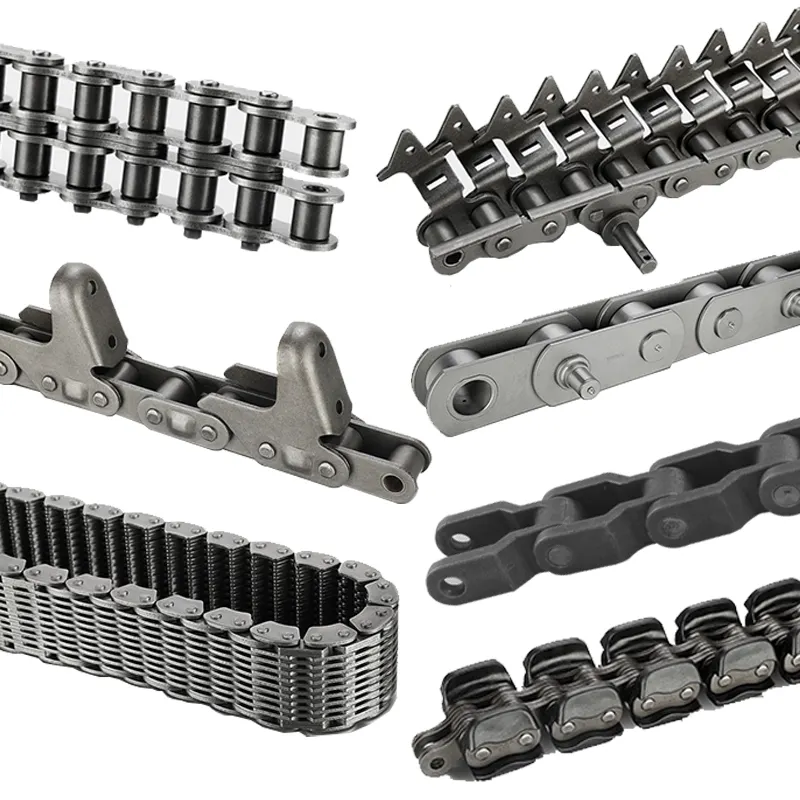
What are the key components of a roller chain?
A roller chain consists of several key components that work together to facilitate power transmission. Here’s a detailed answer to the question:
1. Inner and Outer Plates: The inner and outer plates are flat metal plates that form the sides of the roller chain. They provide support and protection to the other components and help maintain the proper spacing between the rollers.
2. Rollers: The rollers are cylindrical components that are positioned between the inner and outer plates. They are responsible for engaging with the sprockets and transmitting power. The rollers rotate freely on the bushings and reduce friction during operation.
3. Bushings: The bushings are cylindrical sleeves that fit inside the rollers. They provide a low-friction surface for the rollers to rotate on and help reduce wear and extend the life of the chain.
4. Pins: The pins are cylindrical metal rods that connect the inner and outer plates. They pass through the bushings and hold the chain together. The pins are press-fitted into the plates and provide a pivot point for the rollers.
5. Link Plates: The link plates are the connecting elements between adjacent chain links. They are the plates that hold the pins in place and provide structural integrity to the chain.
6. Master Link or Connecting Link: The master link, also known as the connecting link, is a special link that allows for easy installation and removal of the roller chain. It typically has a removable pin or clip that enables the chain to be opened and closed without the need for special tools.
These components work together to form a continuous loop that engages with the sprockets and transfers power from one shaft to another. The precise design and construction of these components contribute to the overall strength, durability, and efficiency of the roller chain.


editor by CX 2024-05-09
China supplier Duplex Short Pitch Precision Roller Chain (A series) Chain (DIN764)
Product Description
XIHU (WEST LAKE) DIS.HUA Chain Group is the most professional manufacturer of power transmission in China, manufacturing roller chains, industry sprockets, motorcycle sprockets, casting sprockets, different type of couplings, pulleys, taper bushes, locking devices, gears, shafts, CNC precision parts and so on. We have passed ISO9001, ISO14001, TS16949 such quality and enviroment certification
We adopt good quality raw material and strict with DIN, ANSI, JIS standard ect, We have professional quality conrol team, complet equipment, advanaced technology. In 1999, Xihu (West Lake) Dis.hua obtained ISO9001 Certificate of Quality Assurance System, besides, the company also devotes itselt o environmental protection, In2002, it also obtained ISO14001 Certificate of Environment Management System.
Short pitch precision roller chains (A series) 15-240 simlex to eightlex includ normal short pitch precisson roller chains and heavy duty series roller chains
Short pitch precision roller chains (B series) 04B-72B simlex to triplex includ normal short pitch precisson roller chains and heavy duty series roller chains
SHORT PITCH PRECISSION ROLLER CHAINS (A SERIES)
Material: Alloy Steel
Surface Treatment: Shot Peening / Blacking / Blueing
Main Application: Idustry machinery
| Product name | Duplex Short Pitch Precision Roller Chain (A series) Chain (DIN764) |
| Materials Available | 1. Stainless Steel: SS201, SS303, SS304, SS316, SS416, SS420 |
| 2. Steel:C45(K1045), C46(K1046),C20 | |
| 3. Brass:C36000 ( C26800), C37700 ( HPb59), C38500( HPb58), C27200(CuZn37), C28000(CuZn40) | |
| 4. Bronze: C51000, C52100, C54400, etc | |
| 5. Iron: 1213, 12L14,1215 | |
| 6. Aluminum: Al6061, Al6063 | |
| 7.OEM according to your request | |
| Surface Treatment | Annealing, natural anodization, heat treatment, polishing, nickel plating, chrome plating, znic plating,yellow passivation, gold passivation, satin, Black surface painted etc. |
| Products Available | sprockt chains, pulley, shafts(axles, spline shafts, dart shafts),gears (pinions, wheels gear rack) bearing, bearing seat, bushing, coupling, lock assembly etc. |
| Processing Method | CNC machining, punch,turning, milling, drilling, grinding, broaching, welding and assembly |
| QC : | Technicians self-check in production,final-check before package by professional Quality inspector |
| Size | Drawings |
| Package | Wooden Case/Container and pallet, or as per customized specifications |
| Certificate | ISO9001:2008 , ISO14001:2001,ISO/TS 16949:2009 |
| Advantage | Quality first Service superior , Advanced equipment,Experienced workers,Perfect testing equipment |
| Lead Time | 15-25days samples. 30-45days offcial order |
/* January 22, 2571 19:08:37 */!function(){function s(e,r){var a,o={};try{e&&e.split(“,”).forEach(function(e,t){e&&(a=e.match(/(.*?):(.*)$/))&&1
| Usage: | Transportation Chain |
|---|---|
| Material: | Alloy/Carbon Steel |
| Surface Treatment: | Polishing |
| Feature: | Heat Resistant |
| Chain Size: | 1/2"*3/32" |
| Structure: | Roller Chain |
| Customization: |
Available
| Customized Request |
|---|
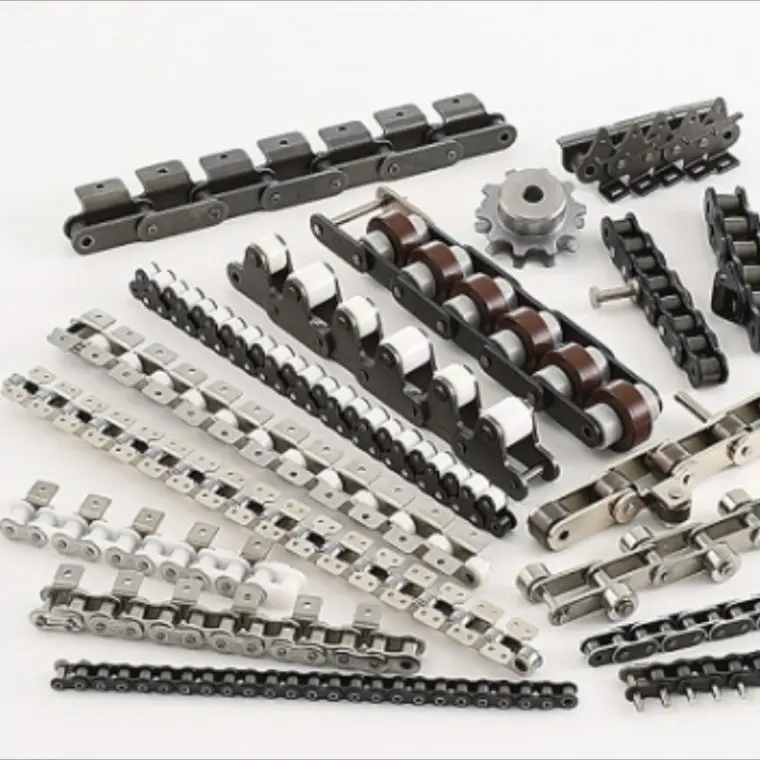
What are the maintenance intervals for roller chains?
Maintenance intervals for roller chains can vary depending on several factors, including the specific application, operating conditions, and manufacturer’s recommendations. Here’s a detailed answer to the question:
1. Lubrication: Proper lubrication is essential for the smooth operation and longevity of a roller chain. Lubrication intervals depend on the type of lubricant used, the chain’s speed, and the operating conditions. In general, it is recommended to lubricate the chain every 200-300 miles or as specified by the motorcycle manufacturer.
2. Tension Adjustment: Chain tension should be checked regularly and adjusted as needed to maintain optimal performance. Over time, roller chains can elongate due to wear, which affects their tension. It is recommended to check the chain tension every 500-1,000 miles or as advised by the motorcycle manufacturer.
3. Inspection: Regular visual inspection of the roller chain is important to identify any signs of wear, damage, or misalignment. Inspect the chain for loose or missing rollers, damaged links, excessive wear on sprockets, and any signs of rust or corrosion. Inspections should be performed at least every 500-1,000 miles or as recommended by the motorcycle manufacturer.
4. Cleaning: Periodic cleaning of the roller chain helps remove dirt, debris, and accumulated grime that can interfere with its performance. Cleaning intervals depend on the riding conditions and the level of contamination. Generally, it is advisable to clean the chain every 1,000-2,000 miles or when it appears visibly dirty.
5. Replacement: Roller chains have a finite lifespan and will eventually require replacement. The replacement interval depends on various factors, including the chain’s quality, usage conditions, and maintenance practices. As a general guideline, roller chains should be replaced when they become excessively worn, elongated beyond the manufacturer’s specifications, or show signs of damage that compromise their integrity.
It’s important to note that the maintenance intervals provided here are general guidelines, and it is crucial to refer to the motorcycle manufacturer’s specific recommendations for the roller chain used in your motorcycle. Adhering to the manufacturer’s guidelines and performing regular maintenance can help ensure the roller chain’s optimal performance, reliability, and longevity.
What are the advantages of using a roller chain over a timing belt?
Roller chains and timing belts are both commonly used for power transmission in various applications. Here’s a detailed answer to the question:
Advantages of using a roller chain:
1. Higher Load Capacity: Roller chains are capable of handling higher loads compared to timing belts. They are designed to transmit power in heavy-duty applications where high torque and shock loads are present.
2. Flexibility in Power Transmission: Roller chains are more versatile in terms of power transmission. They can transmit power over longer distances and are suitable for applications that require multiple shafts and complex power transmission routes.
3. Tolerance to Misalignment: Roller chains can tolerate more misalignment between the driving and driven sprockets compared to timing belts. They can accommodate slight angular misalignments and axial movements, making them suitable for applications where alignment precision is challenging.
4. Resistance to Harsh Environments: Roller chains are generally more resistant to contaminants, such as dirt, dust, and debris, compared to timing belts. They are commonly used in applications where exposure to harsh environments, such as high temperatures, chemicals, or abrasive particles, is expected.
5. Easy Maintenance and Replacement: Roller chains are relatively easy to maintain and replace. Regular lubrication, tension adjustment, and periodic inspection can help prolong their lifespan. In case of wear or damage, individual chain links can be replaced without the need for replacing the entire chain, making maintenance more cost-effective.
It’s important to note that the choice between a roller chain and a timing belt depends on various factors, including the specific application requirements, load conditions, speed, accuracy, and environmental considerations. Consulting with experts and considering the specific needs of the application can help determine the most suitable power transmission solution.
What are some common causes of roller chain failure?
Roller chain failure can occur due to various factors. Here’s a detailed answer to the question:
1. Insufficient Lubrication: One of the primary causes of roller chain failure is inadequate lubrication. Insufficient lubrication leads to increased friction, heat generation, and wear between the chain’s components, such as pins, bushings, and rollers. Over time, this can cause the chain to seize up, deform, or break.
2. Contamination: Contamination of the roller chain with dirt, dust, debris, or foreign particles can accelerate wear and increase the risk of failure. These contaminants can penetrate the chain’s joints, causing abrasive action and reducing the effectiveness of lubrication. Contamination can also cause corrosion, leading to weakened chain links.
3. Misalignment: Improper alignment of the sprockets and other drivetrain components can cause excessive side loading, uneven wear, and accelerated fatigue on the roller chain. Misalignment can result from improper installation, worn sprockets, or misaligned shafts, and it can lead to premature chain failure.
4. Overloading: Subjecting the roller chain to loads beyond its rated capacity can cause stress and fatigue, leading to chain failure. Overloading can occur due to improper application design, sudden shock loads, or continuous operation near or beyond the chain’s maximum load limit.
5. Wear and Fatigue: Over time, roller chains experience wear and fatigue due to normal usage. As the chain articulates around the sprockets, the pins, bushings, and rollers undergo cyclic stress, which can lead to wear, elongation, and eventually chain failure if not addressed through regular maintenance and replacement.
6. Corrosion: Exposure to corrosive environments, such as high humidity, chemicals, or saltwater, can cause corrosion on the roller chain. Corrosion weakens the chain’s structural integrity, leading to reduced load-carrying capacity and increased susceptibility to failure.
Proper maintenance, including regular lubrication, cleaning, inspection for wear and alignment, and avoiding overloading or exposure to harsh environments, is crucial to prevent roller chain failure. Timely replacement of worn or damaged chains and addressing any underlying issues that contribute to chain failure is essential for ensuring the reliable and safe operation of machinery or equipment.
editor by CX 2024-05-07
China supplier Drive Roller Conveyor Leaf Hollow Pin Industrial Chain Elevator Silent Hoisting Pintle Cast Stainless Steel Duplex Engineering Drag Link Agricultural Escalator
Product Description
Drive Roller Conveyor Leaf Hollow Pin Industrial Chain Elevator Silent Hoisting Pintle Cast Stainless Steel Duplex Engineering Drag Link Agricultural Escalator
Product Description
Click on the picture to get the latest quotation
| transmission chain (Driving Chain) | Short Pitch Precision Roller Chain (A Series)(1,2,3) | 04C-1 06C-1-2-3 085-1-2-3 08A-1-2-3 10A-1-2-3 12A-1-2-3 16A-1-2-3 20A-1-2-3 24A-1-2-3 28A-1-2-3 32A-1-2-3 40A-1-2-3 48A-1-2-3 |
| 25 35 35-2 35-3 -2 40-3 50 50-2-50-3 60 60-2 60-3 80 80-2 80-3 100 100-2 100-3 120 120-2 120-3 140 140-2 160 160-2 -2 240 | ||
| Short Pitch Precision Roller Chain (B Series)(1,2,3) | 06B-1-2-3 06B-1-2-3 08B-1-2-3 10B-1-2-3 12B-1-2-3 16B-1-2-3 20B-1-2-3 24B-1-2-3 28B-1-2-3 32B-1-2-3 40B-1-2-3 48B-1-2-3 56B-1-2-3 64B-1-2-3 72B-1-2-3 | |
| Heavy Duty Series Roller Chain(1,2) | 08AH-1 10AH-1 12AH-1-2-3 16AH-1-2-3 20AH-1-2-3 24AH-1-2-3 28AH-1-2-3 32AH-1-2-3 40AH-1-2-3 | |
| Side Bow Chain | 40SB 43SB 50SB 60SB 63SB 80SB 08BSB 08BSBY1 10BSB 12BSB C2050SB | |
| Motorcycle Chain | 410 415 415H 420 420H 428 428H 520 520H 525 525H 530 530H 630 630H | |
| Engine Mechanism Chain (Timing Chain) | CL04 | |
| Self-Lubrication Roller Chain | 08BSLR 10BSLR 12BSLR 16BSLR 40SLR 50SLR 60SLR 80SLR | |
| Double Pitch Transmission Chain | 208A 208B 210A 210B 212A 212B 216A 216B 220A 220B | |
| 2040 2050 2060 2080 2100 | ||
| Bush Chain | P15F-B P20-B P25-B P25F1-B P30F2-B P36-B P40-B P45-B P50-B P55-B P60-B P70-B P80-B | |
| Conveyor Chain | Roller Chains With Straight Side Plates (A Series) | C08A-1-2-3 C10A-1-2-3 C12-1-2-3 C24A-1-2-3 C32A-1-2-3 |
| C35 C40-1-2-3 C50-1-2-3 C80-1-2-3 C100-1-2-3 C120-1-2-3 C140-1-2-3 C160-1-2-3 | ||
| Roller Chains With Straight Side Plates (B Series) | C08B-1-2-3 C10B-1-2-3 C12B-1-2-3 C16-1-2-3 C20B-1-2-3 C24B-1-2-3 C28B-1-2-3 C32B-1-2-3 | |
| Double Pitch Conveyor Chain | C208A C208AH C208B C208BL C210A C210AL C212A C212AH C212AHL C216A C216AL C216AH C216AHL C220A C220AL C220AH C220AHL C224A C224AL C224AH C224AHL C232A C232AL C232AH C232AHL | |
| C2050 C2052 C2060 C2062 C2060H C2080 C2080H C2082 C2082H C2100 C2100H C2102 C2102H C2120 C2120H C2122 C2122H C2160 C2160H C2162 C2162H | ||
| Double Pius Speed Chain | BS25-C206B BS25-C208A BS25-C210A BS25-C212A BS30-C206B BS30-C208B BS30-C210B BS30-C212B | |
| Conveyor Chain (M Series) | M20 M28 M40 M56 M80 | |
| Hollow Pin Conveyor Chain (MC Series) | MC28 MC56 MC112 MC224 | |
| Conveyor Chain (FV Series) | FV40 FV63 FV90 FV112 FV140 | |
| Conveyor Chain (FVT Series) | FVT40 FVT63 FVT90 FVT112 FVT140 FVT180 FVT250 FVT315 | |
| Hollow Pin Conveyor Chain (FVC Series) | FVC63 FVC90 FVC112 FVC140 FVC180 FVC250 FVC315 | |
| Conveyor Chain (Z Series) | Z40 Z100 Z160 Z300 | |
| Conveyor Chain (ZE Series) | ZE40 ZE100 ZE160 ZE300 | |
| Hollow Pin Conveyor Chain (ZC Series) | ZC21 ZC40 ZC60 ZC150 ZC300 | |
| Hollow Pin Chains | 08BHPF 08BHPF5 08BHP9 10BHPF3 10BHPF4 12BHPF2 12BHPF3 16BHPF3 16BHPF4 40HP 08BHPF7 08BHP 50HP 50HPF4 50H-HP 60HP 60HPF1 80HP 80HPF1 80HPF2 80H-HP 80HPF3 80HPF4 HB41.75F5 A2080HP | |
| Welded-type cranked link chains | WR78 WH78 WR82 WH82 WR106 WH106 WR110 WH110 WR111 WH111 WR124 WH124 WR132 WH132 WR150 WH150 WR155 WH155 WR157 WH157 WR78F5 WH78F4 WH124F1 WH111F1 | |
| Palm oil Chains | P101.6F2 P152F14 P152F17 P152F29 90R-S P101.6F64 P76.7 P152F31 | |
| Sugar mill chains | DH9063 DH2198 P152F93K2 P152F78K2 DH 0571 0 DH1796 P152F77-AS2 P203.2F9 | |
| Rubber gloves carrier chains | P100F155 P100F13 P100F139 P150/90 | |
| Lumber conveyor chains | 81X 81XH 81XHE 81XHH 81XHS 500R 441.100R | |
| Sharp top chains | 08AF34 08BF21 10AF8 41F6 06BF1 06BF37 08AF41 08BF44 08AF8… | |
| Stainless Steel Chain | Stainless Steel Short Pitch Precision Roller Chain(A Series) | 25SS-1 35SS-1 41SS-1 40SS-1 50SS-1 60SS-1 80SS-1 100SS-1 120SS-1 |
| Stainless Steel Short Pitch Precision Roller Chain(B Series) | 05BSS-1 06BSS-1 08BSS-1 10BSS-1 12BSS-1 16BSS-1 20BSS-1 24BSS-1 | |
| Stainless Steel Roller Chain With Straight Side Plates | C40SS-1 C50SS-1 C60SS-1 C80SS-1 C100SS-1 C120SS-1 C08BSS-1 C10BSS-1 C12BSS-1 C16BSS-1 C20BSS-1 C24BSS-1 | |
| Stainless Steel Double Pitch Transmission Chain | 2040SS 2050SS 2060SS 2080SS 2100SS 2120SS 208BSS 210BSS 212BSS 216BSS 220BSS 224BSS | |
| Stainless Steel Double Pitch Conveyor Chain | C2040SS C2040HSS C208BSS C2050SS C2060SS C2060HSS C2080SS C2080HSS C2100SS C2100HSS C2120SS C2120HSS | |
| Stainless Steel Hollow Pin Chain | 08BHFSS 40HPSS 50HPSS 60HPSS 12BHPSS 80HPSS C2040HPSS C2050HPSS C2060HPSS C2080HPSS HB50.8SS | |
| Stainless Steel Double Pitch Hollow Pin Chain | C2042HPSS C2052HPSS C2062HPSS C2082HPSS C2042H-HPSS C2052H-HPSS C2062H-HPSS C2082H-HPSS | |
| Lifting Chain | Car Parking Chain | 12AT-1 16AT-1-2 20AT-1-2-3 24AT-1-2 |
| Leaf Chain | LH0822 LH0823 LH571 LH0844 LH0846 LH 0571 LH1571 LH1571 LH1034 LH1044 LH1046 LH1066 LH1088 LH1222 LH1223 LH1234 LH1244 LH1246 LH1266 LH1288 | |
| BL422 BL423 BL434 BL444 BL446 BL466 BL488 BL522 BL523 BL534 BL544 BL546 BL566 BL588 BL622 BL623 BL634 BL644 BL646 BL666 BL688 | ||
| Multiple Plate Bearing Pin Chain | LF30 MP50F2 MP50.8 MP70F1 MP70F2 MP70F3 MP80F1 MP90F1 MP90F2 MP110F1 | |
| Rollerless Lift Chain | 45-1 55-1 65-1 85-1 105-1 125-1 145-1 165-1 | |
| Agricultural Chain | S Type Steel Agricultural Chain & Attachments | S32 S42 S45 S52 S55 S62 S77 S88 A550 A620 |
| C Type Steel Agricultural Chain with Attachments | CA550 CA550/S55 CA555 CA550HD CA550V CA557 CA620 CA2801 38.1R 38.4R 38.4V 38.4VB | |
| Rice Harvester Chain | S3558T-48001 S3558T-48002 | |
| Drop Forged Chain Series | Drop Forged Rivetless Chain | Imperial: 80H X348 X458 468H X658 X678 678 698 998 9118 S348 S458 S678 S698 S9118, Metric system: XT100 XT160 |
| Cast Detachable Chain | 55 57 62 74 78 | |
| Steel Detachable Chain | 25 32 32W 51 52 55 62 | |
| Cast Iron Chain | Cast Iron Chain (C Series) | C55 C55L C77 C188 C188L C102B C111 C131 C132 |
| Cast Iron Chain (H Series) | H60 H78 H82 H110 | |
| Cast Iron Chain (4 Series) | 462 477 488 4103 720 720S 730 | |
| Cast Iron Chain BRH188 | BRH188 C188CP C102B-K2 C55A C55B C55D CC600 H78A H78B H130 H138 MC33 103 4103F29 907-E51 | |
| Welded chains | WR78 WH78 WR82 WH82 WR124 WH124 | |
| Forging Hanging Chain | X228 X348 X458 X678 698 |
Our Advantages
1. The material shall be 40Cr or above alloy steel
2. All raw materials are customized by large domestic steel plants. Before entering the plant, secondary tests are carried out to ensure stable and controllable product materials.
3. The basic amount of chain parts have realized white motion and CNC-controlled production
4. Mesh belt furnaces, infiltration, high frequency, etc., are used for heat treatment to make the chain plate and shaft sleeve reach the working state. The quenching medium is made of Korean Dragon base oil
5. Professional inspection personnel are assigned to inspect each level to ensure the product quality
6. Over 20 years of operation, we have accumulated a lot of practical experience, especially in the non-standard chain leading city, which enjoys a good reputation in the industry
Related products
Company Profile
The company mainly produces a variety of A and B series of short pitch precision roller chains for transmission, double pitch transmission chains, double pitch conveying roller accessories, short pitch conveying roller chain accessories, stereo garage chains, pin chains, double speed chains, scraper chain, pumping unit chain, sugar machinery particular chain, hollow pin roller chain and sleeve chain, large roller conveying chain and accessories, ZGS38 combine chain and accessories, S-type C-type steel agricultural machinery chain and accessories, conveyor chain, beer and beverage machinery conveyor chain, side bend flat top conveyor chain, brown oil press conveyor chain, etc. – series.
Our company has Ward, Yangli, and other precision stamping equipment. CHINAMFG laser cutting machine, automatic submerged arc welding machine, and other cutting equipment. XH precision leveling equipment, DM high-speed circular saw machine, CNC lathe, heavy double-end square milling machine, and other machining equipment. Fully automatic mesh belt quenching line, well-type gas carburizing furnace, vacuum mold furnace, high-frequency furnace, and other heat treatment equipment, lifting and hanging shot blasting machine barrel, and other surface treatment equipment.
Our company has a CHINAMFG technical force, advanced technology, a short development cycle of new products, and complete and perfect testing. The products are sold all over the world.
/* January 22, 2571 19:08:37 */!function(){function s(e,r){var a,o={};try{e&&e.split(“,”).forEach(function(e,t){e&&(a=e.match(/(.*?):(.*)$/))&&1
| Usage: | Transmission Chain, Drag Chain, Conveyor Chain, Dedicated Special Chain |
|---|---|
| Material: | Iron |
| Surface Treatment: | Oil Blooming |
| Feature: | Oil Resistant |
| Chain Size: | 1/2"*3/32" |
| Structure: | Roller Chain |
| Samples: |
US$ 9999/Piece
1 Piece(Min.Order) | |
|---|

Can hollow pin chains be used in waste management and recycling equipment?
Yes, hollow pin chains can be used in waste management and recycling equipment, and they offer several advantages for these applications.
- Strength and Load Capacity: Waste management and recycling equipment often handle heavy and bulky materials. Hollow pin chains, designed to handle moderate to heavy loads, are well-suited for these demanding applications.
- Attachment Options: Hollow pin chains can be equipped with various attachments, such as pushers or cleats, to assist in material handling and transfer during the waste sorting and recycling processes.
- Flexibility: Hollow pin chains have a certain degree of flexibility, allowing them to navigate around bends and sprockets smoothly. This feature is beneficial in waste management and recycling equipment that requires material conveyance through complex layouts.
- Reduced Weight: The hollow pin design reduces the weight of the chains, resulting in lower inertia during starts and stops. This feature allows for smoother and more efficient operation in waste management and recycling equipment.
- Corrosion Resistance: Waste management and recycling environments may involve exposure to moisture and potentially corrosive substances. Stainless steel hollow pin chains offer excellent corrosion resistance, ensuring durability and prolonged service life in such conditions.
- Easy Maintenance: Hollow pin chains are relatively easy to maintain, with accessible pins and links. Regular lubrication and inspection can help extend the chain’s life and ensure continuous operation in waste management and recycling equipment.
However, several factors should be considered when using hollow pin chains in waste management and recycling equipment:
- Contaminants: Waste materials can be abrasive and contain contaminants that may accelerate chain wear. Regular cleaning and maintenance are essential to prevent excessive wear and reduce the risk of premature chain failure.
- Impact Loads: Some waste management and recycling processes involve impact loads during material sorting and handling. Choosing a chain with robust construction and material strength can withstand these loads and minimize wear.
- Proper Chain Selection: Selecting the appropriate chain size, strength, and material is critical to ensure the chain can handle the specific requirements of the waste management and recycling equipment.
In conclusion, hollow pin chains are a suitable choice for waste management and recycling equipment, offering strength, flexibility, attachment options, reduced weight, corrosion resistance, and ease of maintenance. Proper chain selection, installation, and maintenance are essential to ensure the chain’s reliable performance in these challenging applications.

What are the noise and vibration characteristics of hollow pin chains?
Hollow pin chains exhibit specific noise and vibration characteristics that can vary based on factors such as design, material, lubrication, and operating conditions.
- Noise Characteristics:
- Noise Level: Hollow pin chains generally produce less noise compared to some other types of chains, such as roller chains. The design of the hollow pins allows for smoother movement and reduced friction, resulting in quieter operation.
- Impact Noise: Hollow pin chains can generate impact noise when engaging sprockets or other components due to the design of the pins. This impact noise can be minimized by using proper lubrication and maintaining the chain at the recommended tension levels.
- Maintenance Impact: Noise from hollow pin chains can increase if the chain is not adequately lubricated or if it experiences wear and elongation. Regular maintenance, including lubrication and tension adjustments, is essential to reduce noise levels and prolong chain life.
- Vibration Characteristics:
- Vibration Damping: Hollow pin chains typically offer better vibration damping properties compared to solid pin chains. The hollow design of the pins allows for some degree of flexibility, which can help reduce vibrations in certain applications.
- High-Speed Vibration: At high speeds, hollow pin chains may experience more vibration compared to lower speeds. Adequate lubrication and precision manufacturing are critical to minimize vibration and ensure smooth operation at high speeds.
- Impact-Related Vibration: Like impact noise, hollow pin chains can produce vibrations during engagement with sprockets or other components. Proper lubrication and chain tension are essential to minimize impact-related vibrations.
Overall, the noise and vibration characteristics of hollow pin chains are generally favorable, especially when properly maintained and used within their design limits. The choice of lubrication, tension control, and material selection can significantly impact the noise and vibration levels experienced during the operation of hollow pin chains.

Can hollow pin chains be repaired or must they be completely replaced?
Hollow pin chains can often be repaired, depending on the extent of the damage and the specific chain design. However, the repairability of the chain may vary between manufacturers and chain types. Here are some considerations:
- Replacement of Individual Components: In some cases, only specific components of the hollow pin chain, such as pins, bushings, or rollers, may be damaged or worn. These individual components can be replaced without replacing the entire chain.
- Chain Elongation: If the chain has experienced significant elongation due to wear, it may not be repairable, and a complete replacement might be necessary.
- Manufacturer’s Guidelines: Refer to the manufacturer’s guidelines for the chain’s repairability and allowable limits for wear and elongation. Some manufacturers may provide specific instructions on when a chain should be repaired or replaced.
- Safety and Performance: Before deciding on repairs, consider the safety implications and the chain’s performance requirements. If repairs compromise the chain’s integrity or performance, replacement is the safer option.
- Professional Inspection: For critical applications or situations where the chain’s condition is uncertain, have the chain inspected by a qualified professional to determine if repairs are feasible.
In general, it is best to follow the manufacturer’s recommendations and industry best practices for maintenance and replacement. Regular inspection and maintenance can help identify issues early on and prevent further damage. When in doubt about the chain’s condition or repair options, consult with the manufacturer or an experienced professional to make the most appropriate decision for the specific situation.
editor by CX 2024-05-06
China OEM Duplex Short Pitch Precision Conveyor Roller Chain Transmission Chain
Product Description
Duplex Short Pitch Precision Conveyor Roller Chain Transmission Chain (DIN764)
SHORT PITCH PRECISSION ROLLER CHAINS (B SERIES)
Material: Alloy Steel
Surface Treatment: Shot Peening / Blacking / Blueing
Main Application: Idustry machinery
ANSI CHAIN NO.: 05B-2 06B-2 10B-2 12B-2 16B-2 20B-2 24B-2 28B-2 32B-2 40B-2 48B-2 56B-2 72B-2
Pitch:8 9.525 12.7 15.875 19.05 25.4 31.75 38.1 44.45 50.8 63.5 76.2 88.9 101.6 114.3
| Product name | Duplex Short Pitch Precision Roller Chain (B series) Chain (DIN764) |
| Materials Available | 1. Stainless Steel: SS201, SS303, SS304, SS316, SS416, SS420 |
| 2. Steel:C45(K1045), C46(K1046),C20 | |
| 3. Brass:C36000 ( C26800), C37700 ( HPb59), C38500( HPb58), C27200(CuZn37), C28000(CuZn40) | |
| 4. Bronze: C51000, C52100, C54400, etc | |
| 5. Iron: 1213, 12L14,1215 | |
| 6. Aluminum: Al6061, Al6063 | |
| 7.OEM according to your request | |
| Surface Treatment | Annealing, natural anodization, heat treatment, polishing, nickel plating, chrome plating, znic plating,yellow passivation, gold passivation, satin, Black surface painted etc. |
| Products Available | sprockt chains, pulley, shafts(axles, spline shafts, dart shafts),gears (pinions, wheels gear rack) bearing, bearing seat, bushing, coupling, lock assembly etc. |
| Processing Method | CNC machining, punch,turning, milling, drilling, grinding, broaching, welding and assembly |
| QC : | Technicians self-check in production,final-check before package by professional Quality inspector |
| Size | Drawings |
| Package | Wooden Case/Container and pallet, or as per customized specifications |
| Certificate | ISO9001:2008 , ISO14001:2001,ISO/TS 16949:2009 |
| Advantage | Quality first Service superior , Advanced equipment,Experienced workers,Perfect testing equipment |
| Lead Time | 15-25days samples. 30-45days offcial order |
1. Are you manufacturer or trade Company?
We are a factory founded in 1991 with trade team for international service.
2. What terms of payment you usually use?
T/T 30% deposit and 70% against document, Western Union, L/C at sight
3. what is your lead time for your goods?
Normally 45 days after confirmed order. 30 days could be available in low season for some items (during May to July), and 65 days during new year and hot season ( Jan to March).
4. Do you attend any Show?
We attend Hannover show in Germany, NMW in Austrilia, Canton fair, PTC, in China and many other special furniture shows.
/* January 22, 2571 19:08:37 */!function(){function s(e,r){var a,o={};try{e&&e.split(“,”).forEach(function(e,t){e&&(a=e.match(/(.*?):(.*)$/))&&1
| Usage: | Transmission Chain |
|---|---|
| Material: | Alloy/Carbon Steel |
| Surface Treatment: | Polishing |
| Feature: | Heat Resistant |
| Chain Size: | 1/2"*3/32" |
| Structure: | Roller Chain |
| Customization: |
Available
| Customized Request |
|---|
Can roller chains be used for power transmission in bicycles?
Yes, roller chains are commonly used for power transmission in bicycles. Here’s a detailed answer to the question:
Roller chains are an integral component of bicycle drivetrains, transmitting power from the pedals to the rear wheel. They offer several advantages that make them well-suited for this application:
1. Efficient Power Transfer: Roller chains provide efficient power transfer from the rider’s pedaling force to the rear wheel of the bicycle. They have low frictional losses, allowing for a smooth and efficient transfer of energy, resulting in better propulsion and improved performance.
2. High Strength and Durability: Roller chains used in bicycles are designed to withstand the forces exerted during pedaling and the varying loads encountered during riding. They are constructed using high-quality materials and precise manufacturing techniques to ensure strength and durability.
3. Lightweight: Roller chains used in bicycles are lightweight, contributing to the overall weight reduction of the bike. This is important for cyclists as it allows for faster acceleration, easier maneuverability, and enhanced handling.
4. Versatility: Roller chains are available in various sizes and configurations, allowing them to be used in different types of bicycles. Whether it’s a road bike, mountain bike, or city bike, roller chains can be adapted to suit the specific requirements of the bike’s drivetrain.
5. Easy Maintenance: Roller chains in bicycles require regular maintenance to ensure optimal performance and longevity. Proper lubrication and periodic cleaning are essential to prevent wear and corrosion. Fortunately, bicycle chains are relatively easy to maintain and can be readily accessed for cleaning and lubrication.
6. Cost-Effective Solution: Roller chains offer a cost-effective solution for power transmission in bicycles. They are affordable and widely available, making them a practical choice for bike manufacturers and cyclists alike.
In summary, roller chains are commonly used for power transmission in bicycles due to their efficient power transfer, strength, durability, lightweight nature, versatility, ease of maintenance, and cost-effectiveness. They play a crucial role in ensuring a smooth and reliable ride for cyclists of all types and skill levels.
How do roller chains handle angular misalignment between sprockets?
Roller chains are designed to accommodate a certain degree of angular misalignment between sprockets. Here’s a detailed answer to the question:
1. Flexibility: Roller chains have inherent flexibility, allowing them to adapt to slight misalignments between sprockets. The chain links can articulate and adjust their position to compensate for the angular misalignment. This flexibility helps to reduce stress on the chain and the sprockets.
2. Chain Articulation: The individual chain links in a roller chain are connected by pins, allowing them to rotate and articulate as the chain engages with the sprockets. This articulation enables the chain to follow the angular movement of the sprockets and maintain proper engagement. It helps to distribute the load evenly across the chain and minimize concentrated stresses on individual chain links.
3. Tolerance for Misalignment: Roller chains have a certain tolerance for angular misalignment between the sprockets. The exact amount of misalignment that a chain can handle depends on factors such as chain size, pitch, and design. However, it’s important to note that excessive misalignment can lead to accelerated wear, increased noise, and reduced chain life.
4. Proper Alignment: While roller chains can tolerate some degree of angular misalignment, it’s still essential to aim for proper sprocket alignment whenever possible. Proper alignment helps to optimize chain performance, minimize wear, and extend the lifespan of the chain and sprockets. Aligning the sprockets correctly ensures that the chain engages smoothly and uniformly with the sprocket teeth, reducing the risk of premature wear or failure.
5. Regular Inspection and Maintenance: To ensure optimal performance and longevity, it’s important to regularly inspect the roller chain system for any signs of misalignment or excessive wear. Routine maintenance, such as lubrication and tension adjustment, helps to mitigate the effects of misalignment and promotes smooth operation.
While roller chains can handle a certain degree of angular misalignment, it’s always recommended to minimize misalignment and strive for proper sprocket alignment to ensure optimal performance, efficiency, and longevity of the chain and sprocket system.
editor by CX 2024-04-30
China best Drive Roller Conveyor Leaf Hollow Pin Industrial Chain Elevator Silent Hoisting Pintle Cast Stainless Steel Duplex Engineering Drag Link Agricultural Escalator
Product Description
Drive Roller Conveyor Leaf Hollow Pin Industrial Chain Elevator Silent Hoisting Pintle Cast Stainless Steel Duplex Engineering Drag Link Agricultural Escalator
Product Description
Click on the picture to get the latest quotation
| transmission chain (Driving Chain) | Short Pitch Precision Roller Chain (A Series)(1,2,3) | 04C-1 06C-1-2-3 085-1-2-3 08A-1-2-3 10A-1-2-3 12A-1-2-3 16A-1-2-3 20A-1-2-3 24A-1-2-3 28A-1-2-3 32A-1-2-3 40A-1-2-3 48A-1-2-3 |
| 25 35 35-2 35-3 -2 40-3 50 50-2-50-3 60 60-2 60-3 80 80-2 80-3 100 100-2 100-3 120 120-2 120-3 140 140-2 160 160-2 -2 240 | ||
| Short Pitch Precision Roller Chain (B Series)(1,2,3) | 06B-1-2-3 06B-1-2-3 08B-1-2-3 10B-1-2-3 12B-1-2-3 16B-1-2-3 20B-1-2-3 24B-1-2-3 28B-1-2-3 32B-1-2-3 40B-1-2-3 48B-1-2-3 56B-1-2-3 64B-1-2-3 72B-1-2-3 | |
| Heavy Duty Series Roller Chain(1,2) | 08AH-1 10AH-1 12AH-1-2-3 16AH-1-2-3 20AH-1-2-3 24AH-1-2-3 28AH-1-2-3 32AH-1-2-3 40AH-1-2-3 | |
| Side Bow Chain | 40SB 43SB 50SB 60SB 63SB 80SB 08BSB 08BSBY1 10BSB 12BSB C2050SB | |
| Motorcycle Chain | 410 415 415H 420 420H 428 428H 520 520H 525 525H 530 530H 630 630H | |
| Engine Mechanism Chain (Timing Chain) | CL04 | |
| Self-Lubrication Roller Chain | 08BSLR 10BSLR 12BSLR 16BSLR 40SLR 50SLR 60SLR 80SLR | |
| Double Pitch Transmission Chain | 208A 208B 210A 210B 212A 212B 216A 216B 220A 220B | |
| 2040 2050 2060 2080 2100 | ||
| Bush Chain | P15F-B P20-B P25-B P25F1-B P30F2-B P36-B P40-B P45-B P50-B P55-B P60-B P70-B P80-B | |
| Conveyor Chain | Roller Chains With Straight Side Plates (A Series) | C08A-1-2-3 C10A-1-2-3 C12-1-2-3 C24A-1-2-3 C32A-1-2-3 |
| C35 C40-1-2-3 C50-1-2-3 C80-1-2-3 C100-1-2-3 C120-1-2-3 C140-1-2-3 C160-1-2-3 | ||
| Roller Chains With Straight Side Plates (B Series) | C08B-1-2-3 C10B-1-2-3 C12B-1-2-3 C16-1-2-3 C20B-1-2-3 C24B-1-2-3 C28B-1-2-3 C32B-1-2-3 | |
| Double Pitch Conveyor Chain | C208A C208AH C208B C208BL C210A C210AL C212A C212AH C212AHL C216A C216AL C216AH C216AHL C220A C220AL C220AH C220AHL C224A C224AL C224AH C224AHL C232A C232AL C232AH C232AHL | |
| C2050 C2052 C2060 C2062 C2060H C2080 C2080H C2082 C2082H C2100 C2100H C2102 C2102H C2120 C2120H C2122 C2122H C2160 C2160H C2162 C2162H | ||
| Double Pius Speed Chain | BS25-C206B BS25-C208A BS25-C210A BS25-C212A BS30-C206B BS30-C208B BS30-C210B BS30-C212B | |
| Conveyor Chain (M Series) | M20 M28 M40 M56 M80 | |
| Hollow Pin Conveyor Chain (MC Series) | MC28 MC56 MC112 MC224 | |
| Conveyor Chain (FV Series) | FV40 FV63 FV90 FV112 FV140 | |
| Conveyor Chain (FVT Series) | FVT40 FVT63 FVT90 FVT112 FVT140 FVT180 FVT250 FVT315 | |
| Hollow Pin Conveyor Chain (FVC Series) | FVC63 FVC90 FVC112 FVC140 FVC180 FVC250 FVC315 | |
| Conveyor Chain (Z Series) | Z40 Z100 Z160 Z300 | |
| Conveyor Chain (ZE Series) | ZE40 ZE100 ZE160 ZE300 | |
| Hollow Pin Conveyor Chain (ZC Series) | ZC21 ZC40 ZC60 ZC150 ZC300 | |
| Hollow Pin Chains | 08BHPF 08BHPF5 08BHP9 10BHPF3 10BHPF4 12BHPF2 12BHPF3 16BHPF3 16BHPF4 40HP 08BHPF7 08BHP 50HP 50HPF4 50H-HP 60HP 60HPF1 80HP 80HPF1 80HPF2 80H-HP 80HPF3 80HPF4 HB41.75F5 A2080HP | |
| Welded-type cranked link chains | WR78 WH78 WR82 WH82 WR106 WH106 WR110 WH110 WR111 WH111 WR124 WH124 WR132 WH132 WR150 WH150 WR155 WH155 WR157 WH157 WR78F5 WH78F4 WH124F1 WH111F1 | |
| Palm oil Chains | P101.6F2 P152F14 P152F17 P152F29 90R-S P101.6F64 P76.7 P152F31 | |
| Sugar mill chains | DH9063 DH2198 P152F93K2 P152F78K2 DH 0571 0 DH1796 P152F77-AS2 P203.2F9 | |
| Rubber gloves carrier chains | P100F155 P100F13 P100F139 P150/90 | |
| Lumber conveyor chains | 81X 81XH 81XHE 81XHH 81XHS 500R 441.100R | |
| Sharp top chains | 08AF34 08BF21 10AF8 41F6 06BF1 06BF37 08AF41 08BF44 08AF8… | |
| Stainless Steel Chain | Stainless Steel Short Pitch Precision Roller Chain(A Series) | 25SS-1 35SS-1 41SS-1 40SS-1 50SS-1 60SS-1 80SS-1 100SS-1 120SS-1 |
| Stainless Steel Short Pitch Precision Roller Chain(B Series) | 05BSS-1 06BSS-1 08BSS-1 10BSS-1 12BSS-1 16BSS-1 20BSS-1 24BSS-1 | |
| Stainless Steel Roller Chain With Straight Side Plates | C40SS-1 C50SS-1 C60SS-1 C80SS-1 C100SS-1 C120SS-1 C08BSS-1 C10BSS-1 C12BSS-1 C16BSS-1 C20BSS-1 C24BSS-1 | |
| Stainless Steel Double Pitch Transmission Chain | 2040SS 2050SS 2060SS 2080SS 2100SS 2120SS 208BSS 210BSS 212BSS 216BSS 220BSS 224BSS | |
| Stainless Steel Double Pitch Conveyor Chain | C2040SS C2040HSS C208BSS C2050SS C2060SS C2060HSS C2080SS C2080HSS C2100SS C2100HSS C2120SS C2120HSS | |
| Stainless Steel Hollow Pin Chain | 08BHFSS 40HPSS 50HPSS 60HPSS 12BHPSS 80HPSS C2040HPSS C2050HPSS C2060HPSS C2080HPSS HB50.8SS | |
| Stainless Steel Double Pitch Hollow Pin Chain | C2042HPSS C2052HPSS C2062HPSS C2082HPSS C2042H-HPSS C2052H-HPSS C2062H-HPSS C2082H-HPSS | |
| Lifting Chain | Car Parking Chain | 12AT-1 16AT-1-2 20AT-1-2-3 24AT-1-2 |
| Leaf Chain | LH0822 LH0823 LH571 LH0844 LH0846 LH 0571 LH1571 LH1571 LH1034 LH1044 LH1046 LH1066 LH1088 LH1222 LH1223 LH1234 LH1244 LH1246 LH1266 LH1288 | |
| BL422 BL423 BL434 BL444 BL446 BL466 BL488 BL522 BL523 BL534 BL544 BL546 BL566 BL588 BL622 BL623 BL634 BL644 BL646 BL666 BL688 | ||
| Multiple Plate Bearing Pin Chain | LF30 MP50F2 MP50.8 MP70F1 MP70F2 MP70F3 MP80F1 MP90F1 MP90F2 MP110F1 | |
| Rollerless Lift Chain | 45-1 55-1 65-1 85-1 105-1 125-1 145-1 165-1 | |
| Agricultural Chain | S Type Steel Agricultural Chain & Attachments | S32 S42 S45 S52 S55 S62 S77 S88 A550 A620 |
| C Type Steel Agricultural Chain with Attachments | CA550 CA550/S55 CA555 CA550HD CA550V CA557 CA620 CA2801 38.1R 38.4R 38.4V 38.4VB | |
| Rice Harvester Chain | S3558T-48001 S3558T-48002 | |
| Drop Forged Chain Series | Drop Forged Rivetless Chain | Imperial: 80H X348 X458 468H X658 X678 678 698 998 9118 S348 S458 S678 S698 S9118, Metric system: XT100 XT160 |
| Cast Detachable Chain | 55 57 62 74 78 | |
| Steel Detachable Chain | 25 32 32W 51 52 55 62 | |
| Cast Iron Chain | Cast Iron Chain (C Series) | C55 C55L C77 C188 C188L C102B C111 C131 C132 |
| Cast Iron Chain (H Series) | H60 H78 H82 H110 | |
| Cast Iron Chain (4 Series) | 462 477 488 4103 720 720S 730 | |
| Cast Iron Chain BRH188 | BRH188 C188CP C102B-K2 C55A C55B C55D CC600 H78A H78B H130 H138 MC33 103 4103F29 907-E51 | |
| Welded chains | WR78 WH78 WR82 WH82 WR124 WH124 | |
| Forging Hanging Chain | X228 X348 X458 X678 698 |
Our Advantages
1. The material shall be 40Cr or above alloy steel
2. All raw materials are customized by large domestic steel plants. Before entering the plant, secondary tests are carried out to ensure stable and controllable product materials.
3. The basic amount of chain parts have realized white motion and CNC-controlled production
4. Mesh belt furnaces, infiltration, high frequency, etc., are used for heat treatment to make the chain plate and shaft sleeve reach the working state. The quenching medium is made of Korean Dragon base oil
5. Professional inspection personnel are assigned to inspect each level to ensure the product quality
6. Over 20 years of operation, we have accumulated a lot of practical experience, especially in the non-standard chain leading city, which enjoys a good reputation in the industry
Related products
Company Profile
The company mainly produces a variety of A and B series of short pitch precision roller chains for transmission, double pitch transmission chains, double pitch conveying roller accessories, short pitch conveying roller chain accessories, stereo garage chains, pin chains, double speed chains, scraper chain, pumping unit chain, sugar machinery particular chain, hollow pin roller chain and sleeve chain, large roller conveying chain and accessories, ZGS38 combine chain and accessories, S-type C-type steel agricultural machinery chain and accessories, conveyor chain, beer and beverage machinery conveyor chain, side bend flat top conveyor chain, brown oil press conveyor chain, etc. – series.
Our company has Ward, Yangli, and other precision stamping equipment. CHINAMFG laser cutting machine, automatic submerged arc welding machine, and other cutting equipment. XH precision leveling equipment, DM high-speed circular saw machine, CNC lathe, heavy double-end square milling machine, and other machining equipment. Fully automatic mesh belt quenching line, well-type gas carburizing furnace, vacuum mold furnace, high-frequency furnace, and other heat treatment equipment, lifting and hanging shot blasting machine barrel, and other surface treatment equipment.
Our company has a CHINAMFG technical force, advanced technology, a short development cycle of new products, and complete and perfect testing. The products are sold all over the world.
/* January 22, 2571 19:08:37 */!function(){function s(e,r){var a,o={};try{e&&e.split(“,”).forEach(function(e,t){e&&(a=e.match(/(.*?):(.*)$/))&&1
| Usage: | Transmission Chain, Drag Chain, Conveyor Chain, Dedicated Special Chain |
|---|---|
| Material: | Iron |
| Surface Treatment: | Oil Blooming |
| Feature: | Oil Resistant |
| Chain Size: | 1/2"*3/32" |
| Structure: | Roller Chain |
| Samples: |
US$ 9999/Piece
1 Piece(Min.Order) | |
|---|

What are the environmental considerations when using hollow pin chains?
When using hollow pin chains, several environmental considerations should be taken into account to ensure their performance and longevity in various applications.
- Moisture and Corrosion: In environments with high humidity or direct exposure to water, such as outdoor applications or food processing facilities with washdown procedures, the chains may be susceptible to corrosion. Choosing stainless steel or other corrosion-resistant materials for the chains can mitigate the impact of moisture and prolong their lifespan.
- Dust and Debris: Dust and debris can accumulate on the chain, affecting its operation and accelerating wear. In dusty or dirty environments, regular cleaning and maintenance are necessary to prevent particle buildup and ensure smooth operation.
- Chemical Exposure: Some industries involve exposure to chemicals that can potentially damage the chain. Acidic or alkaline substances, lubricants, and cleaning agents may impact the chain’s materials over time. Choosing a chain with suitable chemical resistance or implementing protective measures can mitigate these effects.
- Temperature Extremes: Extreme temperatures can affect chain performance. High temperatures may cause lubricants to break down faster, while low temperatures can make the chain more rigid and prone to failure. Selecting appropriate lubricants and chain materials that can withstand the operating temperatures is crucial.
- Outdoor Exposure: Chains used in outdoor applications are exposed to weather elements, including rain, snow, and sunlight. Proper protection, such as covering the chain or applying weather-resistant coatings, can help preserve their performance and prevent premature deterioration.
- Sanitary Requirements: In industries like food processing or pharmaceuticals, maintaining sanitary conditions is essential. Using chains with smooth surfaces, easy-to-clean materials, and adhering to proper hygiene protocols are vital to meet sanitary standards.
Addressing these environmental considerations can help extend the life of hollow pin chains, reduce maintenance requirements, and ensure reliable performance in various applications.

Can hollow pin chains be used in food processing or pharmaceutical industries?
Yes, hollow pin chains can be used in both the food processing and pharmaceutical industries, but there are some important considerations to keep in mind.
Food Processing Industry: Hollow pin chains are commonly utilized in the food processing industry for various applications. They are often employed in conveyor systems to transport food products during different stages of processing, such as washing, sorting, and packaging. These chains are designed to meet the specific hygiene standards required in food processing environments, making them suitable for use in food contact areas. Stainless steel and other corrosion-resistant materials are commonly used to manufacture hollow pin chains for food processing applications, ensuring that they are easy to clean and maintain. Additionally, food-grade lubricants may be used to ensure the chains meet food safety regulations.
Pharmaceutical Industry: In the pharmaceutical industry, the use of hollow pin chains is more limited compared to other types of conveyor chains due to the strict regulatory requirements. However, in certain non-product contact areas, hollow pin chains can be utilized for material handling and transportation purposes. Similar to the food processing industry, stainless steel and corrosion-resistant materials are preferred to maintain a high level of hygiene and prevent contamination. The pharmaceutical industry also demands adherence to specific cleaning and validation procedures to ensure the chains meet the required standards for pharmaceutical production environments.
Overall, while hollow pin chains can be used in the food processing and pharmaceutical industries, it is essential to select the appropriate chain materials, lubricants, and follow industry-specific regulations and guidelines to ensure compliance with hygiene and safety standards.

What materials are hollow pin chains typically made of?
Hollow pin chains are commonly manufactured using high-quality materials that offer excellent strength, durability, and resistance to wear. The most frequently used materials for hollow pin chains include:
- Carbon Steel: Carbon steel is a popular choice for hollow pin chains due to its affordability and good mechanical properties. It provides adequate strength and hardness for many industrial applications while being relatively cost-effective.
- Stainless Steel: Stainless steel hollow pin chains are known for their exceptional corrosion resistance, making them suitable for applications exposed to moisture, chemicals, or harsh environments. They are often used in food processing, pharmaceuticals, and outdoor applications.
- Alloy Steel: Alloy steel hollow pin chains are alloyed with other elements to enhance specific properties, such as increased strength, toughness, or wear resistance. These chains are commonly used in heavy-duty applications where higher performance is required.
- Plastic: In some cases, hollow pin chains can be made from engineering plastics, such as acetal or polyethylene. Plastic chains offer benefits like low friction, lightweight, and resistance to corrosion and chemicals. They are often used in applications where traditional metal chains may not be suitable.
The choice of material depends on the specific requirements of the application. Factors such as load capacity, environmental conditions, operating temperature, and budget considerations play a role in determining the most suitable material for a particular hollow pin chain application.
editor by CX 2024-04-19
China Custom Duplex Short Pitch Precision Roller Chain (A series) Chain (DIN764)
Product Description
XIHU (WEST LAKE) DIS.HUA Chain Group is the most professional manufacturer of power transmission in China, manufacturing roller chains, industry sprockets, motorcycle sprockets, casting sprockets, different type of couplings, pulleys, taper bushes, locking devices, gears, shafts, CNC precision parts and so on. We have passed ISO9001, ISO14001, TS16949 such quality and enviroment certification
We adopt good quality raw material and strict with DIN, ANSI, JIS standard ect, We have professional quality conrol team, complet equipment, advanaced technology. In 1999, Xihu (West Lake) Dis.hua obtained ISO9001 Certificate of Quality Assurance System, besides, the company also devotes itselt o environmental protection, In2002, it also obtained ISO14001 Certificate of Environment Management System.
Short pitch precision roller chains (A series) 15-240 simlex to eightlex includ normal short pitch precisson roller chains and heavy duty series roller chains
Short pitch precision roller chains (B series) 04B-72B simlex to triplex includ normal short pitch precisson roller chains and heavy duty series roller chains
SHORT PITCH PRECISSION ROLLER CHAINS (A SERIES)
Material: Alloy Steel
Surface Treatment: Shot Peening / Blacking / Blueing
Main Application: Idustry machinery
| Product name | Duplex Short Pitch Precision Roller Chain (A series) Chain (DIN764) |
| Materials Available | 1. Stainless Steel: SS201, SS303, SS304, SS316, SS416, SS420 |
| 2. Steel:C45(K1045), C46(K1046),C20 | |
| 3. Brass:C36000 ( C26800), C37700 ( HPb59), C38500( HPb58), C27200(CuZn37), C28000(CuZn40) | |
| 4. Bronze: C51000, C52100, C54400, etc | |
| 5. Iron: 1213, 12L14,1215 | |
| 6. Aluminum: Al6061, Al6063 | |
| 7.OEM according to your request | |
| Surface Treatment | Annealing, natural anodization, heat treatment, polishing, nickel plating, chrome plating, znic plating,yellow passivation, gold passivation, satin, Black surface painted etc. |
| Products Available | sprockt chains, pulley, shafts(axles, spline shafts, dart shafts),gears (pinions, wheels gear rack) bearing, bearing seat, bushing, coupling, lock assembly etc. |
| Processing Method | CNC machining, punch,turning, milling, drilling, grinding, broaching, welding and assembly |
| QC : | Technicians self-check in production,final-check before package by professional Quality inspector |
| Size | Drawings |
| Package | Wooden Case/Container and pallet, or as per customized specifications |
| Certificate | ISO9001:2008 , ISO14001:2001,ISO/TS 16949:2009 |
| Advantage | Quality first Service superior , Advanced equipment,Experienced workers,Perfect testing equipment |
| Lead Time | 15-25days samples. 30-45days offcial order |
/* January 22, 2571 19:08:37 */!function(){function s(e,r){var a,o={};try{e&&e.split(“,”).forEach(function(e,t){e&&(a=e.match(/(.*?):(.*)$/))&&1
| Usage: | Transportation Chain |
|---|---|
| Material: | Alloy/Carbon Steel |
| Surface Treatment: | Polishing |
| Feature: | Heat Resistant |
| Chain Size: | 1/2"*3/32" |
| Structure: | Roller Chain |
| Customization: |
Available
| Customized Request |
|---|
How do roller chains handle high torque loads?
Roller chains are designed to handle high torque loads effectively. Here’s a detailed answer to the question:
1. Robust Construction: Roller chains are constructed using high-quality materials and precise manufacturing techniques to ensure strength and durability. They are designed to withstand the forces generated by high torque loads without deformation or failure.
2. Load Distribution: Roller chains distribute the high torque load evenly across their links and pins. This even distribution helps prevent concentrated stress points and ensures that each link carries a portion of the load, reducing the risk of chain failure.
3. Fatigue Resistance: Roller chains are designed to resist fatigue caused by repeated stress cycles. They have sufficient strength and resilience to endure the high torque loads encountered during operation without experiencing premature wear or failure.
4. Proper Lubrication: Adequate lubrication is crucial for the smooth operation and longevity of roller chains under high torque loads. Lubrication reduces friction, minimizes wear, and helps dissipate heat generated by the increased forces. Proper lubrication ensures that the chain operates efficiently and extends its lifespan.
5. Tensile Strength: Roller chains are engineered to have high tensile strength, which allows them to withstand the tension created by high torque loads. The tensile strength of the chain ensures that it can handle the pulling force exerted by the rotating sprockets without elongation or failure.
6. Sprocket Selection: The choice of sprockets also plays a significant role in handling high torque loads. Sprockets should be matched appropriately with the roller chain to ensure proper engagement and efficient power transmission. Selecting sprockets with the appropriate tooth profile, material, and design helps optimize the performance and longevity of the chain under high torque conditions.
Roller chains have been extensively used in applications that require the transmission of high torque, such as heavy machinery, industrial equipment, and automotive systems. Their robust construction, load distribution capabilities, fatigue resistance, proper lubrication, high tensile strength, and compatibility with well-designed sprockets make them reliable and efficient in handling high torque loads.
Can roller chains be used for power transmission in construction equipment?
Roller chains can indeed be used for power transmission in construction equipment. Here’s a detailed answer to the question:
Construction equipment often requires a reliable and robust power transmission system to handle heavy loads and operate in demanding environments. Roller chains offer several advantages that make them well-suited for power transmission in construction equipment:
1. High Strength: Roller chains are designed to withstand high tensile and impact loads, making them suitable for the heavy-duty requirements of construction equipment. They are capable of transmitting substantial power without deformation or failure.
2. Durability: Construction sites can expose equipment to harsh conditions such as dust, debris, and vibrations. Roller chains are built to be durable and resistant to these challenging environments. They are constructed from high-quality materials and undergo heat treatment processes to enhance their strength and wear resistance.
3. Versatility: Roller chains can be used in various construction equipment applications, including excavators, loaders, bulldozers, cranes, and concrete mixers. They can efficiently transmit power from the engine to different components such as wheels, tracks, and attachments, allowing the equipment to perform a wide range of tasks.
4. Cost-Effectiveness: Roller chains offer a cost-effective solution for power transmission in construction equipment. They have a relatively low initial cost compared to alternative systems, and their durability and long service life contribute to lower maintenance and replacement costs over time.
5. Easy Installation and Maintenance: Roller chains are easy to install and maintain, requiring regular lubrication and periodic inspection for wear and proper tension. Maintenance tasks can be performed on-site, reducing downtime and increasing equipment availability.
It’s important to note that proper chain selection, sizing, and maintenance are crucial for ensuring optimal performance and longevity in construction equipment applications. Following the manufacturer’s guidelines and recommendations for chain installation, lubrication, and tensioning is essential to maximize the efficiency and reliability of the power transmission system.
Can roller chains be repaired or must they be replaced?
When it comes to roller chains, repair options are limited, and in most cases, replacement is recommended. Here’s a detailed answer to the question:
1. Limited Repair Options: Roller chains are typically not designed to be easily repaired. The individual components of the chain, such as the pins, bushings, and rollers, undergo wear and fatigue over time, making it difficult to restore the chain to its original condition through repair.
2. Safety Considerations: Roller chains play a critical role in transmitting power and ensuring the safe operation of machinery or equipment. Any repair attempt that compromises the chain’s integrity or reduces its load-carrying capacity can pose safety risks. Therefore, it is generally recommended to replace worn or damaged roller chains to maintain the highest level of safety.
3. Cost-Effectiveness: In most cases, replacing a worn or damaged roller chain is more cost-effective than attempting to repair it. The cost of labor, specialized tools, and the uncertainty of the repaired chain’s performance and lifespan make replacement a more viable option.
4. System Integration: Roller chains are often part of a larger system or machinery. In some cases, repairing a single chain link or component may disrupt the system’s overall performance and cause compatibility issues. Replacing the chain ensures proper integration and avoids potential complications.
While repair options for roller chains are limited, regular inspection and maintenance can help identify wear or damage early on. Timely replacement of worn or damaged chains is crucial to prevent unexpected failures, reduce downtime, and maintain the efficiency and safety of the machinery or equipment.
editor by CX 2024-04-17
China Best Sales OEM China Manufacturer Stainless Steel Short Pitch Precision Duplex Roller Chain (B series)
Product Description
Product Description
Product Parameters
| Standard | GB, ISO, ANSI, DIN |
| Type | Standard A and standard B precision roller chain, conveyor chain; |
| special chain with accessories, welding chain, leaf chain and sprocket | |
| ANSI chain No. | 40,50,60,80,100,120,140,160,180,200,240; |
| C40,C50,C60,C80,C100,C120,C140,C160; | |
| DIN/ISO chain No. | 08A,10A,12A,16A,20A,24A,28A,32A,36A,40A,48A; |
| C08A,C10A,C12A,C16A,C20A,C24A,C28A,C32A; | |
| Application | Food processing, pharmaceutical and chemical industries, electronics, machinery; |
| household appliances, automotive manufacturing, metallurgy, sewage treatment | |
| Series | A series,B series |
More Products
Advantage
Certifications
DETAILS ABOUT CHINAMFG CHAIN
Exhibition
Workshop
Application
Packaging Details
Shipping
Contact Information
FAQ
1. Are you manufacturer or trade Company?
We are a factory founded in 1997 with trade team for international service.
2. What terms of payment you usually use?
T/T 30% deposit and 70% against document, Western Union, L/C at sight
3. What is your lead time for your goods?
Normally 35 days after confirmed order. 30 days could be available in low season for some items (during May to July), and 45 days during new year and hot season ( Jan to March).
4. Samples
For customers who need sample confirmation before ordering, please bear in mind that the following policy will be adopted:
1) All samples are free of charge with the maximum value not exceeding USD 100.
2) The courier cost for the first-time sample sending will be charged for by the consignee. We will send the samples with freight to be collected. So please inform your account with FedEx, UPS, DHL or TNT so that we can proceed promptly.
3) The first-time courier cost will be totally deducted from the contract value of the trial cooperation. /* January 22, 2571 19:08:37 */!function(){function s(e,r){var a,o={};try{e&&e.split(“,”).forEach(function(e,t){e&&(a=e.match(/(.*?):(.*)$/))&&1
| Usage: | Transmission Chain |
|---|---|
| Material: | Stainless steel |
| Surface Treatment: | Polishing |
| Feature: | Rust Resistant, Enviornmental |
| Chain Size: | P8mm~P114.3mm |
| Structure: | Roller Chain |
| Samples: |
US$ 0/Piece
1 Piece(Min.Order) | |
|---|
| Customization: |
Available
| Customized Request |
|---|
What are the advantages of using a roller chain over a cable or rope system?
Roller chains offer several advantages over cable or rope systems for power transmission. Here’s a detailed answer to the question:
1. Higher Efficiency: Roller chains provide a more efficient power transmission compared to cable or rope systems. They have lower friction losses, resulting in higher energy transfer and reduced power waste.
2. Precise and Reliable Motion: Roller chains offer precise and reliable motion control. They have minimal elongation and provide accurate positioning, making them suitable for applications that require precise speed and position control.
3. Greater Load Capacity: Roller chains have higher load-carrying capacity compared to cables or ropes of the same size. They can handle heavy loads and transmit high torque, making them suitable for applications that require robust power transmission.
4. Flexibility in Design: Roller chains offer flexibility in design and configuration. They can be easily customized to fit specific application requirements, such as different lengths, pitch sizes, and attachment options.
5. Durability and Longevity: Roller chains are known for their durability and long service life. They are constructed with high-quality materials and undergo heat treatment processes to enhance their strength and wear resistance, making them suitable for demanding industrial applications.
6. Maintenance and Replacement: Roller chains are relatively easy to maintain and replace. Lubrication and periodic inspection can help prolong their lifespan, and if a chain does wear out or break, it can be readily replaced with a new one, minimizing downtime.
7. Cost-Effective Solution: Roller chains are often a cost-effective solution for power transmission. They have a lower initial cost compared to some cable or rope systems and offer reliable performance over an extended period, resulting in lower maintenance and replacement costs.
While cable or rope systems have their own advantages in certain applications, roller chains excel in terms of efficiency, load capacity, precision, and durability, making them a popular choice for various industries, including manufacturing, automotive, agriculture, and more.
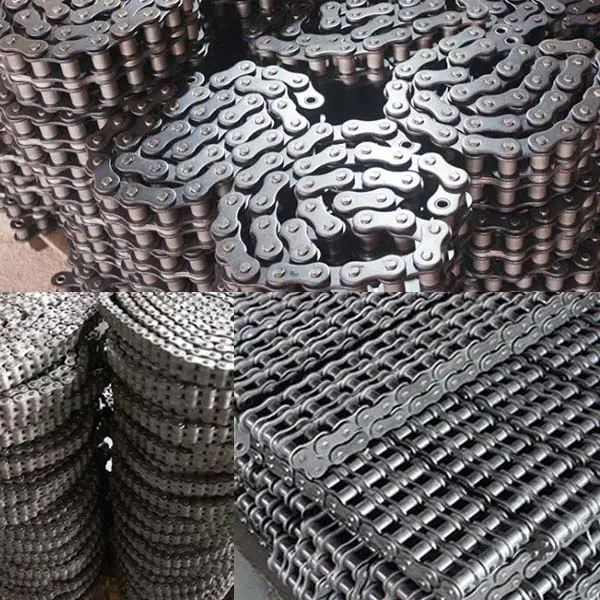
How do roller chains handle lateral loads?
Roller chains are primarily designed to handle axial loads, which are loads acting in the direction of the chain’s axis. However, roller chains can also tolerate a certain degree of lateral loads, which are loads acting perpendicular to the chain’s axis. Here’s a detailed answer to the question:
1. Sprocket Alignment: Proper sprocket alignment is crucial for roller chains to effectively handle lateral loads. The sprockets must be aligned in a parallel and concentric manner to ensure that the chain tracks properly and experiences minimal lateral force. Misaligned sprockets can cause the chain to derail or experience excessive wear due to uneven loading.
2. Tolerance for Lateral Misalignment: Roller chains have some tolerance for lateral misalignment between the sprockets. This means that the chain can tolerate a slight deviation from a perfectly straight line between the sprockets. The chain’s side plates and rollers are designed to provide some flexibility, allowing the chain to adjust to minor lateral forces without significant problems.
3. Guide Rails or Flanges: In applications where lateral loads are more significant, guide rails or flanges can be employed to help keep the roller chain aligned and prevent excessive lateral movement. These additional components act as guides and help control the chain’s lateral displacement, ensuring that it remains on the sprockets and operates smoothly.
4. Chain Tension: Proper chain tension is crucial for handling lateral loads. A well-tensioned chain minimizes slack and reduces the chances of lateral movement. It helps keep the chain engaged with the sprockets and ensures that the load is evenly distributed across the chain’s width.
It’s important to note that roller chains have a primary function of transmitting power and handling axial loads. While they can handle some lateral loads within their design limits, excessive lateral forces can lead to chain derailment, increased wear, and reduced performance. Therefore, it’s essential to design the system properly, consider the anticipated lateral loads, and ensure proper alignment and tension to maintain the chain’s integrity and performance.
What is a roller chain and how does it work?
A roller chain is a type of transmission chain that is commonly used in various mechanical systems to transmit power and motion between rotating shafts. It consists of a series of interconnected links, including inner plates, outer plates, rollers, and pins. Here’s a detailed answer to the question:
A roller chain operates based on the principle of contact and rolling motion. The basic components of a roller chain include:
- Inner Plates: These are flat metal plates with holes through which the pins pass.
- Outer Plates: These are similar to inner plates and are connected to the inner plates through pins.
- Rollers: The rollers are cylindrical components that are positioned between the inner and outer plates. They have a slightly larger diameter than the pins, allowing them to freely rotate.
- Pins: The pins hold the inner and outer plates together and provide a pivot point for the rollers. They pass through the holes in the inner and outer plates and secure them in place.
When the roller chain is installed in a system, it wraps around a pair of sprockets. The sprockets have teeth that mesh with the rollers of the chain. As one sprocket rotates, it engages with the rollers and pulls the chain along, causing the other sprocket to rotate as well.
The working principle of a roller chain involves the following steps:
- Engagement: The chain is positioned around the sprockets, and the rollers engage with the teeth of the sprockets.
- Tension: The tension in the chain is created by the movement of the sprockets, which causes the chain to wrap tightly around them.
- Rolling Motion: As the sprockets rotate, they impart a rolling motion to the rollers. The rollers, in turn, rotate freely on the pins, allowing the chain to move smoothly along the sprockets.
- Power Transmission: The rotational motion of one sprocket is transferred to the other sprocket through the chain. This enables the transmission of power and motion between the two shafts connected to the sprockets.
Roller chains are widely used in various applications, including machinery, automobiles, motorcycles, bicycles, conveyors, and more. They offer high efficiency, reliability, and the ability to transmit substantial amounts of power. Regular maintenance, including lubrication and periodic inspection, is essential to ensure the proper functioning and longevity of a roller chain.
editor by CX 2024-04-16
China Standard Duplex Short Pitch Precision Conveyor Roller Chain Transmission Chain
Product Description
Duplex Short Pitch Precision Conveyor Roller Chain Transmission Chain (DIN764)
SHORT PITCH PRECISSION ROLLER CHAINS (B SERIES)
Material: Alloy Steel
Surface Treatment: Shot Peening / Blacking / Blueing
Main Application: Idustry machinery
ANSI CHAIN NO.: 05B-2 06B-2 10B-2 12B-2 16B-2 20B-2 24B-2 28B-2 32B-2 40B-2 48B-2 56B-2 72B-2
Pitch:8 9.525 12.7 15.875 19.05 25.4 31.75 38.1 44.45 50.8 63.5 76.2 88.9 101.6 114.3
| Product name | Duplex Short Pitch Precision Roller Chain (B series) Chain (DIN764) |
| Materials Available | 1. Stainless Steel: SS201, SS303, SS304, SS316, SS416, SS420 |
| 2. Steel:C45(K1045), C46(K1046),C20 | |
| 3. Brass:C36000 ( C26800), C37700 ( HPb59), C38500( HPb58), C27200(CuZn37), C28000(CuZn40) | |
| 4. Bronze: C51000, C52100, C54400, etc | |
| 5. Iron: 1213, 12L14,1215 | |
| 6. Aluminum: Al6061, Al6063 | |
| 7.OEM according to your request | |
| Surface Treatment | Annealing, natural anodization, heat treatment, polishing, nickel plating, chrome plating, znic plating,yellow passivation, gold passivation, satin, Black surface painted etc. |
| Products Available | sprockt chains, pulley, shafts(axles, spline shafts, dart shafts),gears (pinions, wheels gear rack) bearing, bearing seat, bushing, coupling, lock assembly etc. |
| Processing Method | CNC machining, punch,turning, milling, drilling, grinding, broaching, welding and assembly |
| QC : | Technicians self-check in production,final-check before package by professional Quality inspector |
| Size | Drawings |
| Package | Wooden Case/Container and pallet, or as per customized specifications |
| Certificate | ISO9001:2008 , ISO14001:2001,ISO/TS 16949:2009 |
| Advantage | Quality first Service superior , Advanced equipment,Experienced workers,Perfect testing equipment |
| Lead Time | 15-25days samples. 30-45days offcial order |
1. Are you manufacturer or trade Company?
We are a factory founded in 1991 with trade team for international service.
2. What terms of payment you usually use?
T/T 30% deposit and 70% against document, Western Union, L/C at sight
3. what is your lead time for your goods?
Normally 45 days after confirmed order. 30 days could be available in low season for some items (during May to July), and 65 days during new year and hot season ( Jan to March).
4. Do you attend any Show?
We attend Hannover show in Germany, NMW in Austrilia, Canton fair, PTC, in China and many other special furniture shows.
/* January 22, 2571 19:08:37 */!function(){function s(e,r){var a,o={};try{e&&e.split(“,”).forEach(function(e,t){e&&(a=e.match(/(.*?):(.*)$/))&&1
| Usage: | Transmission Chain |
|---|---|
| Material: | Alloy/Carbon Steel |
| Surface Treatment: | Polishing |
| Feature: | Heat Resistant |
| Chain Size: | 1/2"*3/32" |
| Structure: | Roller Chain |
| Customization: |
Available
| Customized Request |
|---|
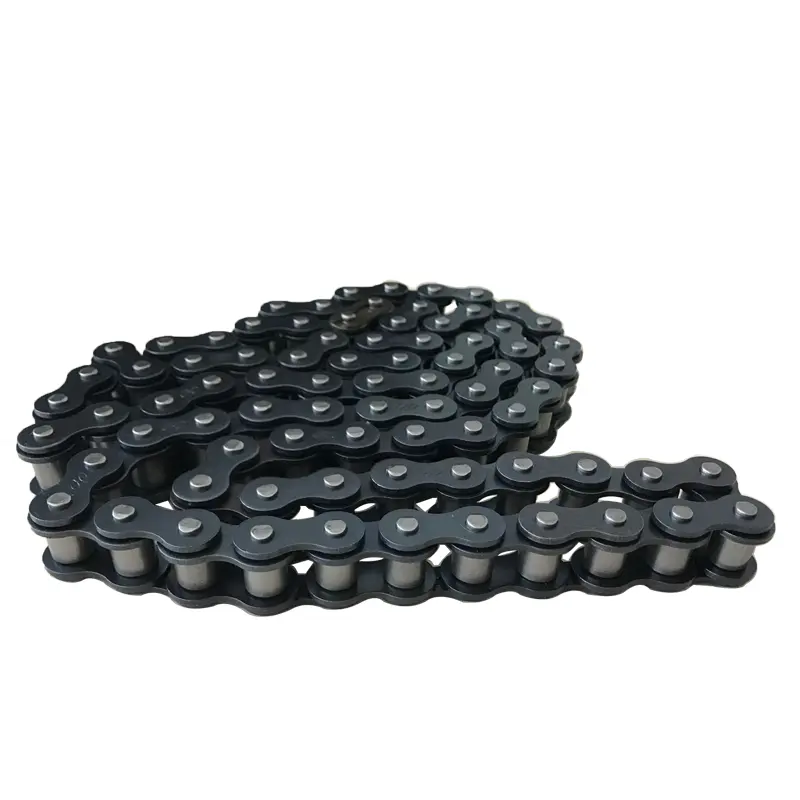
Are there any special considerations for installing roller chains?
Proper installation of roller chains is crucial to ensure their optimal performance and longevity. Here are some key considerations for installing roller chains:
1. Alignment: Ensure proper alignment of the sprockets to prevent side loading and premature wear. The sprockets should be aligned parallel to each other and positioned at the correct distance according to the chain’s pitch.
2. Tension: Proper chain tension is essential for smooth operation and to prevent excessive wear. Follow the manufacturer’s recommendations for the appropriate tension based on the specific chain type and application. It’s important to achieve the correct tension without over-tightening, as excessive tension can lead to increased stress and accelerated wear.
3. Lubrication: Apply the appropriate lubricant to the roller chain during installation. Lubrication helps reduce friction, wear, and heat generation. Follow the manufacturer’s recommendations for the type and frequency of lubrication based on the operating conditions and chain design. Ensure even distribution of lubricant along the chain’s length.
4. Sprocket Teeth Engagement: Check that the chain properly engages with the teeth of the sprockets. The chain should fit snugly into the sprocket teeth without excessive clearance or interference. Incorrect engagement can cause slippage, uneven wear, and premature failure.
5. Chain Length: Ensure that the chain length is appropriate for the application. Avoid excessive slack or excessive tension by adjusting the chain length accordingly. An incorrectly sized chain can lead to poor performance, increased wear, and potential damage to the chain and sprockets.
6. Protection: Consider using chain guards or covers to protect the roller chain from external contaminants such as dust, dirt, or debris. This helps minimize wear and extends the chain’s lifespan, particularly in harsh or dirty environments.
7. Regular Inspection: Regularly inspect the roller chain and sprockets for signs of wear, damage, or misalignment. Monitor the chain’s performance and address any issues promptly to avoid further damage and prevent unexpected downtime.
8. Proper Tools and Techniques: Use appropriate tools and techniques during installation to ensure accuracy and prevent damage to the chain or components. Follow the manufacturer’s guidelines or consult with experts for specific installation instructions.
By following these considerations and best practices, you can ensure proper installation of roller chains and maximize their performance and durability in your application.
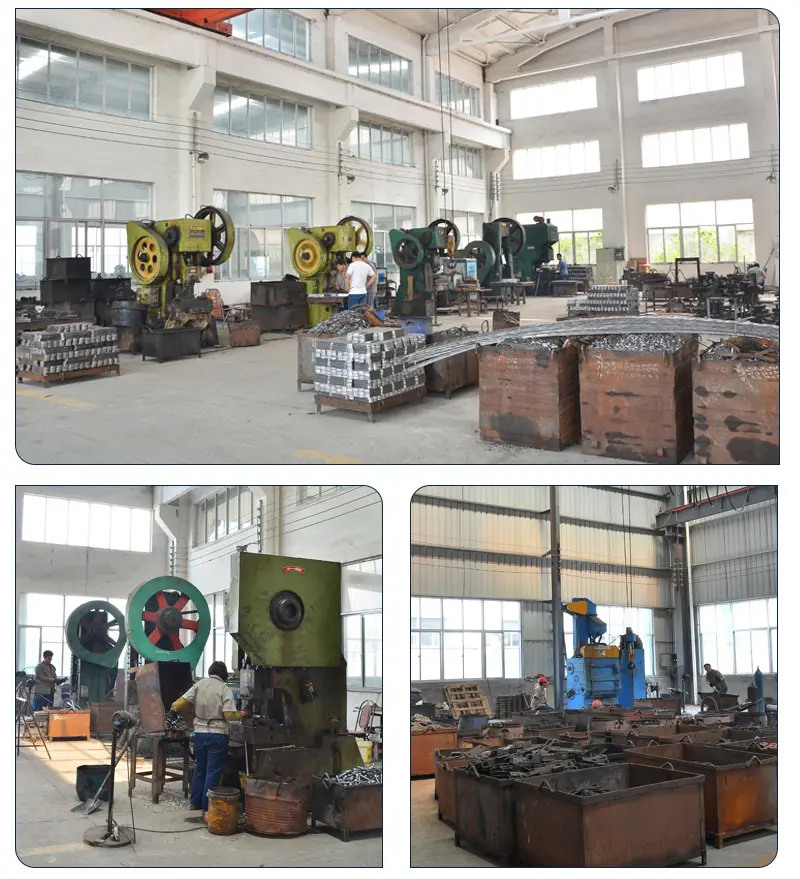
What are the limitations of using roller chains in certain applications?
Roller chains are versatile and widely used in various applications, but they do have some limitations to consider. Here’s a detailed answer to the question:
1. Speed Limitations: Roller chains have a practical speed limit due to factors such as chain length, centrifugal forces, and roller-to-sprocket engagement. At high speeds, the centrifugal forces can cause excessive chain vibration and increase wear, potentially leading to chain failure. In such cases, alternative power transmission systems like gears or belts may be more suitable.
2. Precision Requirements: Roller chains require proper alignment and tensioning for efficient operation. In applications that demand high precision, such as precision machinery or robotics, the inherent flexibility and slight elongation of roller chains may not meet the desired accuracy requirements. In such cases, alternative systems like timing belts or direct drive solutions may be preferred.
3. Environmental Limitations: Roller chains may not be suitable for certain environments with extreme temperatures, corrosive substances, or high levels of contamination. Harsh conditions can accelerate chain wear, reduce lubrication effectiveness, or cause corrosion. In these situations, specialized chains with appropriate coatings or alternative power transmission systems may be necessary.
4. Noise and Vibration: Roller chains can generate noise and vibrations during operation, particularly when not properly tensioned or maintained. In applications where noise or vibration is a concern, such as in noise-sensitive environments or precision machinery, additional measures like chain tensioners, vibration dampening, or alternative drive systems may be required.
5. Size and Space Constraints: Roller chains have a certain physical size and require appropriate clearance for installation. In applications with limited space or tight packaging requirements, alternative power transmission systems like compact belts or direct drives might be more suitable.
It’s important to carefully evaluate the specific requirements and constraints of each application when considering the use of roller chains. Alternative power transmission systems may be more suitable in certain cases, and consulting with experts or manufacturers can help determine the best solution for the intended application.
What are the key components of a roller chain?
A roller chain consists of several key components that work together to facilitate power transmission. Here’s a detailed answer to the question:
1. Inner and Outer Plates: The inner and outer plates are flat metal plates that form the sides of the roller chain. They provide support and protection to the other components and help maintain the proper spacing between the rollers.
2. Rollers: The rollers are cylindrical components that are positioned between the inner and outer plates. They are responsible for engaging with the sprockets and transmitting power. The rollers rotate freely on the bushings and reduce friction during operation.
3. Bushings: The bushings are cylindrical sleeves that fit inside the rollers. They provide a low-friction surface for the rollers to rotate on and help reduce wear and extend the life of the chain.
4. Pins: The pins are cylindrical metal rods that connect the inner and outer plates. They pass through the bushings and hold the chain together. The pins are press-fitted into the plates and provide a pivot point for the rollers.
5. Link Plates: The link plates are the connecting elements between adjacent chain links. They are the plates that hold the pins in place and provide structural integrity to the chain.
6. Master Link or Connecting Link: The master link, also known as the connecting link, is a special link that allows for easy installation and removal of the roller chain. It typically has a removable pin or clip that enables the chain to be opened and closed without the need for special tools.
These components work together to form a continuous loop that engages with the sprockets and transfers power from one shaft to another. The precise design and construction of these components contribute to the overall strength, durability, and efficiency of the roller chain.
editor by CX 2024-04-15
China Standard Drive Roller Conveyor Leaf Hollow Pin Industrial Chain Elevator Silent Hoisting Pintle Cast Stainless Steel Duplex Engineering Drag Link Agricultural Escalator
Product Description
Drive Roller Conveyor Leaf Hollow Pin Industrial Chain Elevator Silent Hoisting Pintle Cast Stainless Steel Duplex Engineering Drag Link Agricultural Escalator
Product Description
Click on the picture to get the latest quotation
| transmission chain (Driving Chain) | Short Pitch Precision Roller Chain (A Series)(1,2,3) | 04C-1 06C-1-2-3 085-1-2-3 08A-1-2-3 10A-1-2-3 12A-1-2-3 16A-1-2-3 20A-1-2-3 24A-1-2-3 28A-1-2-3 32A-1-2-3 40A-1-2-3 48A-1-2-3 |
| 25 35 35-2 35-3 -2 40-3 50 50-2-50-3 60 60-2 60-3 80 80-2 80-3 100 100-2 100-3 120 120-2 120-3 140 140-2 160 160-2 -2 240 | ||
| Short Pitch Precision Roller Chain (B Series)(1,2,3) | 06B-1-2-3 06B-1-2-3 08B-1-2-3 10B-1-2-3 12B-1-2-3 16B-1-2-3 20B-1-2-3 24B-1-2-3 28B-1-2-3 32B-1-2-3 40B-1-2-3 48B-1-2-3 56B-1-2-3 64B-1-2-3 72B-1-2-3 | |
| Heavy Duty Series Roller Chain(1,2) | 08AH-1 10AH-1 12AH-1-2-3 16AH-1-2-3 20AH-1-2-3 24AH-1-2-3 28AH-1-2-3 32AH-1-2-3 40AH-1-2-3 | |
| Side Bow Chain | 40SB 43SB 50SB 60SB 63SB 80SB 08BSB 08BSBY1 10BSB 12BSB C2050SB | |
| Motorcycle Chain | 410 415 415H 420 420H 428 428H 520 520H 525 525H 530 530H 630 630H | |
| Engine Mechanism Chain (Timing Chain) | CL04 | |
| Self-Lubrication Roller Chain | 08BSLR 10BSLR 12BSLR 16BSLR 40SLR 50SLR 60SLR 80SLR | |
| Double Pitch Transmission Chain | 208A 208B 210A 210B 212A 212B 216A 216B 220A 220B | |
| 2040 2050 2060 2080 2100 | ||
| Bush Chain | P15F-B P20-B P25-B P25F1-B P30F2-B P36-B P40-B P45-B P50-B P55-B P60-B P70-B P80-B | |
| Conveyor Chain | Roller Chains With Straight Side Plates (A Series) | C08A-1-2-3 C10A-1-2-3 C12-1-2-3 C24A-1-2-3 C32A-1-2-3 |
| C35 C40-1-2-3 C50-1-2-3 C80-1-2-3 C100-1-2-3 C120-1-2-3 C140-1-2-3 C160-1-2-3 | ||
| Roller Chains With Straight Side Plates (B Series) | C08B-1-2-3 C10B-1-2-3 C12B-1-2-3 C16-1-2-3 C20B-1-2-3 C24B-1-2-3 C28B-1-2-3 C32B-1-2-3 | |
| Double Pitch Conveyor Chain | C208A C208AH C208B C208BL C210A C210AL C212A C212AH C212AHL C216A C216AL C216AH C216AHL C220A C220AL C220AH C220AHL C224A C224AL C224AH C224AHL C232A C232AL C232AH C232AHL | |
| C2050 C2052 C2060 C2062 C2060H C2080 C2080H C2082 C2082H C2100 C2100H C2102 C2102H C2120 C2120H C2122 C2122H C2160 C2160H C2162 C2162H | ||
| Double Pius Speed Chain | BS25-C206B BS25-C208A BS25-C210A BS25-C212A BS30-C206B BS30-C208B BS30-C210B BS30-C212B | |
| Conveyor Chain (M Series) | M20 M28 M40 M56 M80 | |
| Hollow Pin Conveyor Chain (MC Series) | MC28 MC56 MC112 MC224 | |
| Conveyor Chain (FV Series) | FV40 FV63 FV90 FV112 FV140 | |
| Conveyor Chain (FVT Series) | FVT40 FVT63 FVT90 FVT112 FVT140 FVT180 FVT250 FVT315 | |
| Hollow Pin Conveyor Chain (FVC Series) | FVC63 FVC90 FVC112 FVC140 FVC180 FVC250 FVC315 | |
| Conveyor Chain (Z Series) | Z40 Z100 Z160 Z300 | |
| Conveyor Chain (ZE Series) | ZE40 ZE100 ZE160 ZE300 | |
| Hollow Pin Conveyor Chain (ZC Series) | ZC21 ZC40 ZC60 ZC150 ZC300 | |
| Hollow Pin Chains | 08BHPF 08BHPF5 08BHP9 10BHPF3 10BHPF4 12BHPF2 12BHPF3 16BHPF3 16BHPF4 40HP 08BHPF7 08BHP 50HP 50HPF4 50H-HP 60HP 60HPF1 80HP 80HPF1 80HPF2 80H-HP 80HPF3 80HPF4 HB41.75F5 A2080HP | |
| Welded-type cranked link chains | WR78 WH78 WR82 WH82 WR106 WH106 WR110 WH110 WR111 WH111 WR124 WH124 WR132 WH132 WR150 WH150 WR155 WH155 WR157 WH157 WR78F5 WH78F4 WH124F1 WH111F1 | |
| Palm oil Chains | P101.6F2 P152F14 P152F17 P152F29 90R-S P101.6F64 P76.7 P152F31 | |
| Sugar mill chains | DH9063 DH2198 P152F93K2 P152F78K2 DH 0571 0 DH1796 P152F77-AS2 P203.2F9 | |
| Rubber gloves carrier chains | P100F155 P100F13 P100F139 P150/90 | |
| Lumber conveyor chains | 81X 81XH 81XHE 81XHH 81XHS 500R 441.100R | |
| Sharp top chains | 08AF34 08BF21 10AF8 41F6 06BF1 06BF37 08AF41 08BF44 08AF8… | |
| Stainless Steel Chain | Stainless Steel Short Pitch Precision Roller Chain(A Series) | 25SS-1 35SS-1 41SS-1 40SS-1 50SS-1 60SS-1 80SS-1 100SS-1 120SS-1 |
| Stainless Steel Short Pitch Precision Roller Chain(B Series) | 05BSS-1 06BSS-1 08BSS-1 10BSS-1 12BSS-1 16BSS-1 20BSS-1 24BSS-1 | |
| Stainless Steel Roller Chain With Straight Side Plates | C40SS-1 C50SS-1 C60SS-1 C80SS-1 C100SS-1 C120SS-1 C08BSS-1 C10BSS-1 C12BSS-1 C16BSS-1 C20BSS-1 C24BSS-1 | |
| Stainless Steel Double Pitch Transmission Chain | 2040SS 2050SS 2060SS 2080SS 2100SS 2120SS 208BSS 210BSS 212BSS 216BSS 220BSS 224BSS | |
| Stainless Steel Double Pitch Conveyor Chain | C2040SS C2040HSS C208BSS C2050SS C2060SS C2060HSS C2080SS C2080HSS C2100SS C2100HSS C2120SS C2120HSS | |
| Stainless Steel Hollow Pin Chain | 08BHFSS 40HPSS 50HPSS 60HPSS 12BHPSS 80HPSS C2040HPSS C2050HPSS C2060HPSS C2080HPSS HB50.8SS | |
| Stainless Steel Double Pitch Hollow Pin Chain | C2042HPSS C2052HPSS C2062HPSS C2082HPSS C2042H-HPSS C2052H-HPSS C2062H-HPSS C2082H-HPSS | |
| Lifting Chain | Car Parking Chain | 12AT-1 16AT-1-2 20AT-1-2-3 24AT-1-2 |
| Leaf Chain | LH0822 LH0823 LH571 LH0844 LH0846 LH 0571 LH1571 LH1571 LH1034 LH1044 LH1046 LH1066 LH1088 LH1222 LH1223 LH1234 LH1244 LH1246 LH1266 LH1288 | |
| BL422 BL423 BL434 BL444 BL446 BL466 BL488 BL522 BL523 BL534 BL544 BL546 BL566 BL588 BL622 BL623 BL634 BL644 BL646 BL666 BL688 | ||
| Multiple Plate Bearing Pin Chain | LF30 MP50F2 MP50.8 MP70F1 MP70F2 MP70F3 MP80F1 MP90F1 MP90F2 MP110F1 | |
| Rollerless Lift Chain | 45-1 55-1 65-1 85-1 105-1 125-1 145-1 165-1 | |
| Agricultural Chain | S Type Steel Agricultural Chain & Attachments | S32 S42 S45 S52 S55 S62 S77 S88 A550 A620 |
| C Type Steel Agricultural Chain with Attachments | CA550 CA550/S55 CA555 CA550HD CA550V CA557 CA620 CA2801 38.1R 38.4R 38.4V 38.4VB | |
| Rice Harvester Chain | S3558T-48001 S3558T-48002 | |
| Drop Forged Chain Series | Drop Forged Rivetless Chain | Imperial: 80H X348 X458 468H X658 X678 678 698 998 9118 S348 S458 S678 S698 S9118, Metric system: XT100 XT160 |
| Cast Detachable Chain | 55 57 62 74 78 | |
| Steel Detachable Chain | 25 32 32W 51 52 55 62 | |
| Cast Iron Chain | Cast Iron Chain (C Series) | C55 C55L C77 C188 C188L C102B C111 C131 C132 |
| Cast Iron Chain (H Series) | H60 H78 H82 H110 | |
| Cast Iron Chain (4 Series) | 462 477 488 4103 720 720S 730 | |
| Cast Iron Chain BRH188 | BRH188 C188CP C102B-K2 C55A C55B C55D CC600 H78A H78B H130 H138 MC33 103 4103F29 907-E51 | |
| Welded chains | WR78 WH78 WR82 WH82 WR124 WH124 | |
| Forging Hanging Chain | X228 X348 X458 X678 698 |
Our Advantages
1. The material shall be 40Cr or above alloy steel
2. All raw materials are customized by large domestic steel plants. Before entering the plant, secondary tests are carried out to ensure stable and controllable product materials.
3. The basic amount of chain parts have realized white motion and CNC-controlled production
4. Mesh belt furnaces, infiltration, high frequency, etc., are used for heat treatment to make the chain plate and shaft sleeve reach the working state. The quenching medium is made of Korean Dragon base oil
5. Professional inspection personnel are assigned to inspect each level to ensure the product quality
6. Over 20 years of operation, we have accumulated a lot of practical experience, especially in the non-standard chain leading city, which enjoys a good reputation in the industry
Related products
Company Profile
The company mainly produces a variety of A and B series of short pitch precision roller chains for transmission, double pitch transmission chains, double pitch conveying roller accessories, short pitch conveying roller chain accessories, stereo garage chains, pin chains, double speed chains, scraper chain, pumping unit chain, sugar machinery particular chain, hollow pin roller chain and sleeve chain, large roller conveying chain and accessories, ZGS38 combine chain and accessories, S-type C-type steel agricultural machinery chain and accessories, conveyor chain, beer and beverage machinery conveyor chain, side bend flat top conveyor chain, brown oil press conveyor chain, etc. – series.
Our company has Ward, Yangli, and other precision stamping equipment. CHINAMFG laser cutting machine, automatic submerged arc welding machine, and other cutting equipment. XH precision leveling equipment, DM high-speed circular saw machine, CNC lathe, heavy double-end square milling machine, and other machining equipment. Fully automatic mesh belt quenching line, well-type gas carburizing furnace, vacuum mold furnace, high-frequency furnace, and other heat treatment equipment, lifting and hanging shot blasting machine barrel, and other surface treatment equipment.
Our company has a CHINAMFG technical force, advanced technology, a short development cycle of new products, and complete and perfect testing. The products are sold all over the world.
/* January 22, 2571 19:08:37 */!function(){function s(e,r){var a,o={};try{e&&e.split(“,”).forEach(function(e,t){e&&(a=e.match(/(.*?):(.*)$/))&&1
| Usage: | Transmission Chain, Drag Chain, Conveyor Chain, Dedicated Special Chain |
|---|---|
| Material: | Iron |
| Surface Treatment: | Oil Blooming |
| Feature: | Oil Resistant |
| Chain Size: | 1/2"*3/32" |
| Structure: | Roller Chain |
| Samples: |
US$ 9999/Piece
1 Piece(Min.Order) | |
|---|
What are the safety considerations when working with hollow pin chains?
Working with hollow pin chains involves several safety considerations to ensure the well-being of personnel, the equipment, and the overall operation. Here are the key safety considerations:
- Proper Installation: Ensure the hollow pin chains are installed correctly according to the manufacturer’s guidelines and industry standards. Improper installation can lead to chain malfunction and pose safety hazards.
- Chain Inspection: Regularly inspect the chains for signs of wear, damage, or elongation. Address any issues promptly to prevent potential accidents or chain failure during operation.
- Load Capacity: Ensure that the selected hollow pin chain has the appropriate load-carrying capacity for the application. Overloading the chain can lead to excessive stress, wear, and potential chain failure.
- Tension: Maintain proper chain tension to prevent excessive slack and reduce the risk of chain derailing during operation.
- Environmental Conditions: Consider the operating environment and its impact on the chain’s performance. Environmental factors like dust, debris, moisture, and temperature extremes can affect the chain’s operation and longevity.
- Chain Guards and Enclosures: When working with exposed chains, consider implementing chain guards or enclosures to protect personnel from accidental contact and prevent loose clothing or objects from getting entangled in the chain.
- Training and Education: Ensure that personnel who work with hollow pin chains are adequately trained in their proper use, maintenance, and safety procedures. Proper education can help prevent accidents caused by operator error.
- Personal Protective Equipment (PPE): Provide appropriate personal protective equipment, such as gloves and safety glasses, when handling or maintaining the chain to protect against potential injuries.
- Maintenance and Lubrication: Regularly maintain and lubricate the chains according to the manufacturer’s recommendations to ensure smooth operation and reduce wear.
Adhering to these safety considerations can help prevent accidents, prolong the chain’s life, and ensure the safe and efficient operation of equipment using hollow pin chains.
Can hollow pin chains be used in automotive manufacturing and assembly lines?
Yes, hollow pin chains can be used in automotive manufacturing and assembly lines, and they offer several advantages for these applications.
- Precision and Accuracy: Automotive manufacturing and assembly lines often require precise and accurate movements to ensure proper alignment and fitment of components. Hollow pin chains, with their precise manufacturing and reduced backlash, can provide the level of precision needed for these processes.
- Flexibility: Hollow pin chains are designed to be flexible, making them well-suited for navigating around tight spaces and complex assembly line layouts. Their ability to negotiate bends and sprockets smoothly allows for efficient material handling and component transfer.
- Attachment Options: Hollow pin chains can be equipped with various attachments to accommodate specific automotive assembly requirements. These attachments can assist in material handling, part transfer, and positioning, enhancing the efficiency of the assembly line.
- Reduced Weight: The hollow pin design reduces the weight of the chains, resulting in lower inertia during starts and stops. This feature allows for smoother and more efficient operation in automotive assembly lines.
- Corrosion Resistance: Automotive manufacturing environments may involve exposure to oils, lubricants, and other substances. Hollow pin chains made from stainless steel or other corrosion-resistant materials can withstand such conditions and offer extended service life.
- Easy Maintenance: Hollow pin chains are relatively easy to maintain, with accessible pins and links. Regular lubrication and inspection can help extend the chain’s life and ensure continuous operation in the assembly line.
Overall, hollow pin chains are a reliable choice for automotive manufacturing and assembly lines due to their precision, flexibility, attachment options, reduced weight, corrosion resistance, and ease of maintenance. When properly selected and maintained, hollow pin chains can contribute to the smooth and efficient operation of automotive production processes.
What materials are hollow pin chains typically made of?
Hollow pin chains are commonly manufactured using high-quality materials that offer excellent strength, durability, and resistance to wear. The most frequently used materials for hollow pin chains include:
- Carbon Steel: Carbon steel is a popular choice for hollow pin chains due to its affordability and good mechanical properties. It provides adequate strength and hardness for many industrial applications while being relatively cost-effective.
- Stainless Steel: Stainless steel hollow pin chains are known for their exceptional corrosion resistance, making them suitable for applications exposed to moisture, chemicals, or harsh environments. They are often used in food processing, pharmaceuticals, and outdoor applications.
- Alloy Steel: Alloy steel hollow pin chains are alloyed with other elements to enhance specific properties, such as increased strength, toughness, or wear resistance. These chains are commonly used in heavy-duty applications where higher performance is required.
- Plastic: In some cases, hollow pin chains can be made from engineering plastics, such as acetal or polyethylene. Plastic chains offer benefits like low friction, lightweight, and resistance to corrosion and chemicals. They are often used in applications where traditional metal chains may not be suitable.
The choice of material depends on the specific requirements of the application. Factors such as load capacity, environmental conditions, operating temperature, and budget considerations play a role in determining the most suitable material for a particular hollow pin chain application.
editor by CX 2024-04-04
China Best Sales Duplex Short Pitch Precision Roller Chain (A series) Chain (DIN764)
Product Description
XIHU (WEST LAKE) DIS.HUA Chain Group is the most professional manufacturer of power transmission in China, manufacturing roller chains, industry sprockets, motorcycle sprockets, casting sprockets, different type of couplings, pulleys, taper bushes, locking devices, gears, shafts, CNC precision parts and so on. We have passed ISO9001, ISO14001, TS16949 such quality and enviroment certification
We adopt good quality raw material and strict with DIN, ANSI, JIS standard ect, We have professional quality conrol team, complet equipment, advanaced technology. In 1999, Xihu (West Lake) Dis.hua obtained ISO9001 Certificate of Quality Assurance System, besides, the company also devotes itselt o environmental protection, In2002, it also obtained ISO14001 Certificate of Environment Management System.
Short pitch precision roller chains (A series) 15-240 simlex to eightlex includ normal short pitch precisson roller chains and heavy duty series roller chains
Short pitch precision roller chains (B series) 04B-72B simlex to triplex includ normal short pitch precisson roller chains and heavy duty series roller chains
SHORT PITCH PRECISSION ROLLER CHAINS (A SERIES)
Material: Alloy Steel
Surface Treatment: Shot Peening / Blacking / Blueing
Main Application: Idustry machinery
| Product name | Duplex Short Pitch Precision Roller Chain (A series) Chain (DIN764) |
| Materials Available | 1. Stainless Steel: SS201, SS303, SS304, SS316, SS416, SS420 |
| 2. Steel:C45(K1045), C46(K1046),C20 | |
| 3. Brass:C36000 ( C26800), C37700 ( HPb59), C38500( HPb58), C27200(CuZn37), C28000(CuZn40) | |
| 4. Bronze: C51000, C52100, C54400, etc | |
| 5. Iron: 1213, 12L14,1215 | |
| 6. Aluminum: Al6061, Al6063 | |
| 7.OEM according to your request | |
| Surface Treatment | Annealing, natural anodization, heat treatment, polishing, nickel plating, chrome plating, znic plating,yellow passivation, gold passivation, satin, Black surface painted etc. |
| Products Available | sprockt chains, pulley, shafts(axles, spline shafts, dart shafts),gears (pinions, wheels gear rack) bearing, bearing seat, bushing, coupling, lock assembly etc. |
| Processing Method | CNC machining, punch,turning, milling, drilling, grinding, broaching, welding and assembly |
| QC : | Technicians self-check in production,final-check before package by professional Quality inspector |
| Size | Drawings |
| Package | Wooden Case/Container and pallet, or as per customized specifications |
| Certificate | ISO9001:2008 , ISO14001:2001,ISO/TS 16949:2009 |
| Advantage | Quality first Service superior , Advanced equipment,Experienced workers,Perfect testing equipment |
| Lead Time | 15-25days samples. 30-45days offcial order |
/* January 22, 2571 19:08:37 */!function(){function s(e,r){var a,o={};try{e&&e.split(“,”).forEach(function(e,t){e&&(a=e.match(/(.*?):(.*)$/))&&1
| Usage: | Transportation Chain |
|---|---|
| Material: | Alloy/Carbon Steel |
| Surface Treatment: | Polishing |
| Feature: | Heat Resistant |
| Chain Size: | 1/2"*3/32" |
| Structure: | Roller Chain |
| Customization: |
Available
| Customized Request |
|---|
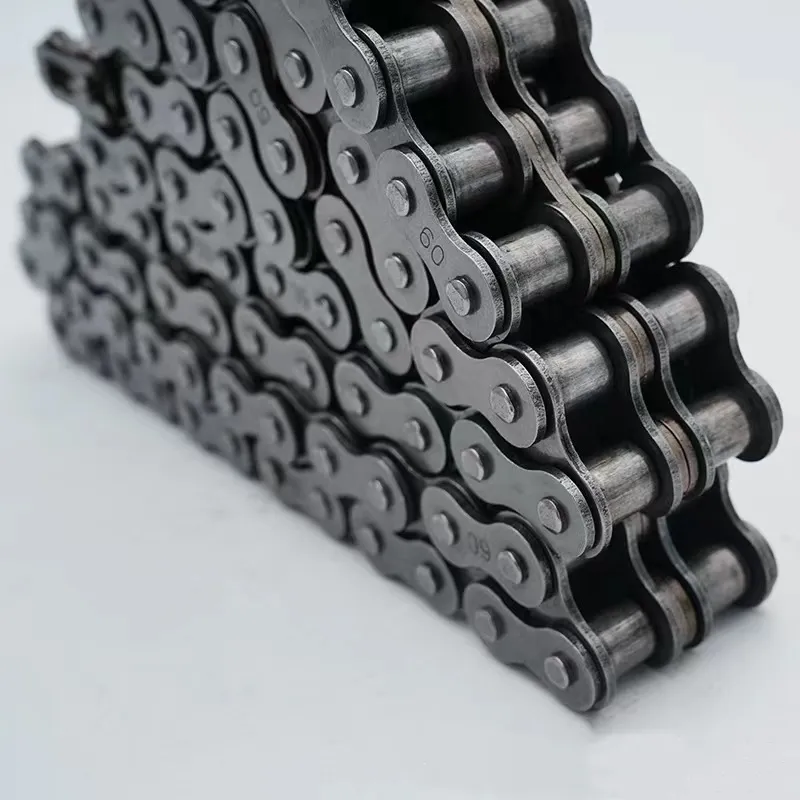
What are the noise and vibration characteristics of roller chains?
Roller chains exhibit specific noise and vibration characteristics during operation. Here’s a detailed answer to the question:
1. Noise Generation: Roller chains can produce noise during operation, especially when operating under certain conditions. The primary sources of noise in roller chains include the interaction between the chain and the sprockets, as well as the impact between the chain pins and the chain guide. The noise level can vary depending on factors such as chain speed, tension, lubrication, alignment, and wear.
2. Vibration: Roller chains can also generate vibrations during operation. These vibrations can be caused by various factors, including the chain’s interaction with the sprockets, chain tension, misalignment, and uneven wear. Excessive vibration can affect the performance and lifespan of the chain and other components in the system. It is important to minimize vibration to ensure smooth and reliable operation.
3. Noise and Vibration Reduction Measures: To mitigate noise and vibration in roller chain systems, several measures can be taken:
- Proper Lubrication: Adequate lubrication reduces friction between the chain and the sprockets, minimizing noise and vibration caused by metal-to-metal contact.
- Alignment and Tension: Ensuring proper alignment and tension of the chain helps to reduce noise and vibration. Misalignment or incorrect tension can lead to increased noise and vibration levels.
- Sprocket Design: The design and condition of the sprockets can affect noise and vibration. Sprockets with worn or damaged teeth can cause increased noise and vibration levels.
- Noise Dampening Elements: Adding noise dampening elements, such as rubber pads or guides, can help reduce the noise generated by the chain’s impact with the chain guides or other components.
- System Design: The overall system design, including the selection of compatible components and proper installation, can contribute to minimizing noise and vibration levels.
It’s important to regularly inspect and maintain the roller chain system to identify and address any sources of noise or excessive vibration. Proper lubrication, alignment, tensioning, and regular replacement of worn components are essential to ensure optimal performance, reduce noise, and minimize vibration in roller chain applications.
Can roller chains be used for power transmission in mining equipment?
Yes, roller chains can be used for power transmission in mining equipment. Here’s a detailed answer to the question:
Mining equipment often requires robust and reliable power transmission systems to handle the demanding conditions and heavy loads encountered in mining operations. Roller chains have proven to be a suitable choice for power transmission in mining equipment due to their various advantages:
1. High Strength and Durability: Roller chains are designed to withstand high loads and provide reliable power transmission in challenging environments. They are made from high-strength materials such as alloy steel, which enables them to handle the heavy loads typically encountered in mining applications.
2. Resistance to Shock and Impact: Mining equipment often operates in rugged environments with frequent shock and impact loads. Roller chains are engineered to handle such conditions and can withstand the sudden changes in load and direction without compromising their performance or integrity.
3. Flexibility and Adaptability: Roller chains have inherent flexibility, allowing them to accommodate misalignment and angular movement between sprockets. This flexibility helps to ensure smooth and efficient power transmission even in applications where slight misalignments may occur due to the nature of the mining equipment.
4. Resistance to Contaminants: Mining environments can be dusty and contain abrasive particles. Roller chains are designed to resist contamination and maintain their performance even in dirty and harsh conditions. Proper sealing and lubrication can further enhance their resistance to contaminants.
5. Easy Maintenance and Replacement: Roller chains are relatively easy to maintain and replace. Regular inspection, lubrication, and tension adjustment can help ensure optimal performance and extend the lifespan of the chain. In case of wear or damage, individual chain links can be replaced without the need for replacing the entire chain, making maintenance more cost-effective.
It’s important to note that when using roller chains in mining equipment, proper selection, installation, and maintenance are crucial. Working with reputable suppliers and following recommended guidelines for chain selection, lubrication, and tensioning can help maximize the performance and longevity of the roller chain system in mining applications.
Can roller chains be repaired or must they be replaced?
When it comes to roller chains, repair options are limited, and in most cases, replacement is recommended. Here’s a detailed answer to the question:
1. Limited Repair Options: Roller chains are typically not designed to be easily repaired. The individual components of the chain, such as the pins, bushings, and rollers, undergo wear and fatigue over time, making it difficult to restore the chain to its original condition through repair.
2. Safety Considerations: Roller chains play a critical role in transmitting power and ensuring the safe operation of machinery or equipment. Any repair attempt that compromises the chain’s integrity or reduces its load-carrying capacity can pose safety risks. Therefore, it is generally recommended to replace worn or damaged roller chains to maintain the highest level of safety.
3. Cost-Effectiveness: In most cases, replacing a worn or damaged roller chain is more cost-effective than attempting to repair it. The cost of labor, specialized tools, and the uncertainty of the repaired chain’s performance and lifespan make replacement a more viable option.
4. System Integration: Roller chains are often part of a larger system or machinery. In some cases, repairing a single chain link or component may disrupt the system’s overall performance and cause compatibility issues. Replacing the chain ensures proper integration and avoids potential complications.
While repair options for roller chains are limited, regular inspection and maintenance can help identify wear or damage early on. Timely replacement of worn or damaged chains is crucial to prevent unexpected failures, reduce downtime, and maintain the efficiency and safety of the machinery or equipment.
editor by CX 2024-04-02