Product Description
A Series Short pitch Precision Simplex Roller Chains & Bush Chains
| ISO/ANSI/ DIN Chain No. |
China Chain No. |
Pitch P mm |
Roller diameter
d1max |
Width between inner plates b1min mm |
Pin diameter
d2max |
Pin length | Inner plate depth h2max mm |
Plate thickness
Tmax |
Tensile strength
Qmin |
Average tensile strength Q0 kN |
Weight per meter q kg/m |
|
| Lmax mm |
Lcmax mm |
|||||||||||
| 15 | *03C | 4.7625 | 2.48 | 2.38 | 1.62 | 6.10 | 6.90 | 4.30 | 0.60 | 1.80/409 | 2.0 | 0.08 |
*Bush chain:d1 in the table indicates the external diameter of the bush
ROLLER CHAIN
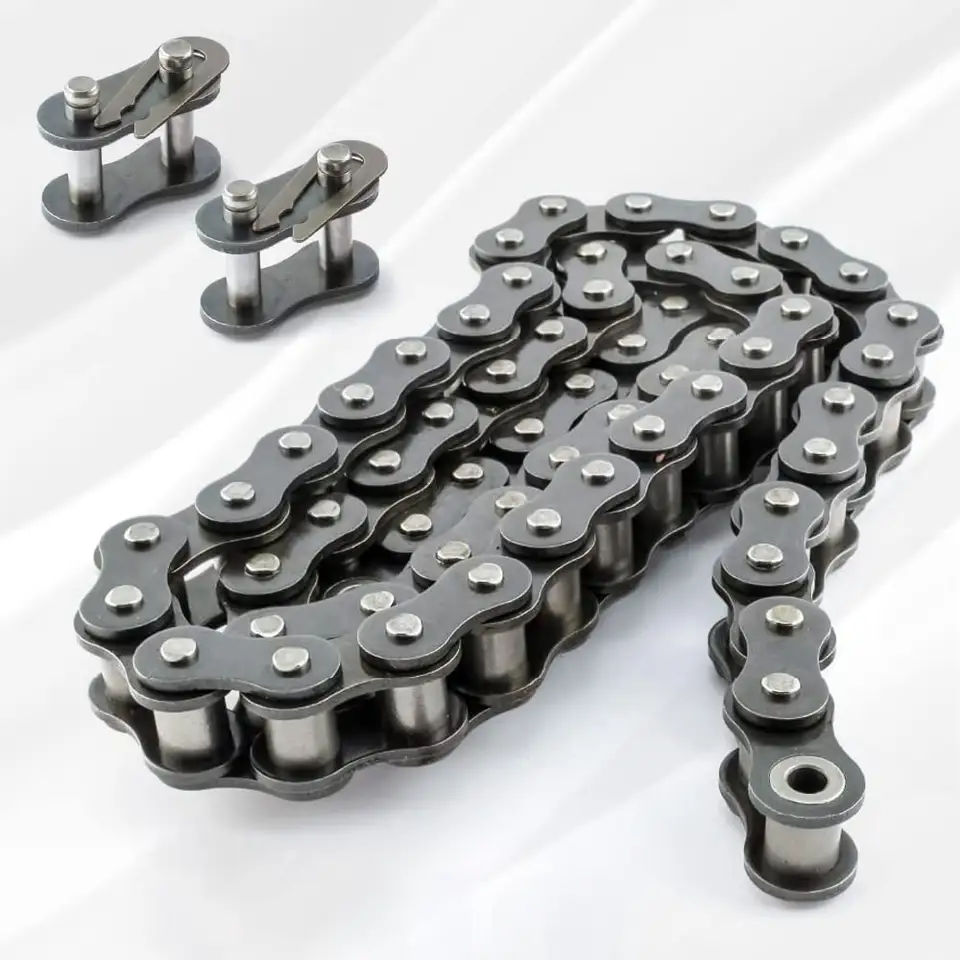
Roller chain or bush roller chain is the type of chain drive most commonly used for transmission of mechanical power on many kinds of domestic, industrial and agricultural machinery, including conveyors, wire- and tube-drawing machines, printing presses, cars, motorcycles, and bicycles. It consists of a series of short cylindrical rollers held together by side links. It is driven by a toothed wheel called a sprocket. It is a simple, reliable, and efficient means of power transmission.
CONSTRUCTION OF THE CHAIN
Two different sizes of roller chain, showing construction.
There are 2 types of links alternating in the bush roller chain. The first type is inner links, having 2 inner plates held together by 2 sleeves or bushings CHINAMFG which rotate 2 rollers. Inner links alternate with the second type, the outer links, consisting of 2 outer plates held together by pins passing through the bushings of the inner links. The “bushingless” roller chain is similar in operation though not in construction; instead of separate bushings or sleeves holding the inner plates together, the plate has a tube stamped into it protruding from the hole which serves the same purpose. This has the advantage of removing 1 step in assembly of the chain.
The roller chain design reduces friction compared to simpler designs, resulting in higher efficiency and less wear. The original power transmission chain varieties lacked rollers and bushings, with both the inner and outer plates held by pins which directly contacted the sprocket teeth; however this configuration exhibited extremely rapid wear of both the sprocket teeth, and the plates where they pivoted on the pins. This problem was partially solved by the development of bushed chains, with the pins holding the outer plates passing through bushings or sleeves connecting the inner plates. This distributed the wear over a greater area; however the teeth of the sprockets still wore more rapidly than is desirable, from the sliding friction against the bushings. The addition of rollers surrounding the bushing sleeves of the chain and provided rolling contact with the teeth of the sprockets resulting in excellent resistance to wear of both sprockets and chain as well. There is even very low friction, as long as the chain is sufficiently lubricated. Continuous, clean, lubrication of roller chains is of primary importance for efficient operation as well as correct tensioning.
LUBRICATION
Many driving chains (for example, in factory equipment, or driving a camshaft inside an internal combustion engine) operate in clean environments, and thus the wearing surfaces (that is, the pins and bushings) are safe from precipitation and airborne grit, many even in a sealed environment such as an oil bath. Some roller chains are designed to have o-rings built into the space between the outside link plate and the inside roller link plates. Chain manufacturers began to include this feature in 1971 after the application was invented by Joseph Montano while working for Whitney Chain of Hartford, Connecticut. O-rings were included as a way to improve lubrication to the links of power transmission chains, a service that is vitally important to extending their working life. These rubber fixtures form a barrier that holds factory applied lubricating grease inside the pin and bushing wear areas. Further, the rubber o-rings prevent dirt and other contaminants from entering inside the chain linkages, where such particles would otherwise cause significant wear.[citation needed]
There are also many chains that have to operate in dirty conditions, and for size or operational reasons cannot be sealed. Examples include chains on farm equipment, bicycles, and chain saws. These chains will necessarily have relatively high rates of wear, particularly when the operators are prepared to accept more friction, less efficiency, more noise and more frequent replacement as they neglect lubrication and adjustment.
Many oil-based lubricants attract dirt and other particles, eventually forming an CHINAMFG paste that will compound wear on chains. This problem can be circumvented by use of a “dry” PTFE spray, which forms a solid film after application and repels both particles and moisture.
VARIANTS DESIGN
Layout of a roller chain: 1. Outer plate, 2. Inner plate, 3. Pin, 4. Bushing, 5. Roller
If the chain is not being used for a high wear application (for instance if it is just transmitting motion from a hand-operated lever to a control shaft on a machine, or a sliding door on an oven), then 1 of the simpler types of chain may still be used. Conversely, where extra strength but the smooth drive of a smaller pitch is required, the chain may be “siamesed”; instead of just 2 rows of plates on the outer sides of the chain, there may be 3 (“duplex”), 4 (“triplex”), or more rows of plates running parallel, with bushings and rollers between each adjacent pair, and the same number of rows of teeth running in parallel on the sprockets to match. Timing chains on automotive engines, for example, typically have multiple rows of plates called strands.
Roller chain is made in several sizes, the most common American National Standards Institute (ANSI) standards being 40, 50, 60, and 80. The first digit(s) indicate the pitch of the chain in eighths of an inch, with the last digit being 0 for standard chain, 1 for lightweight chain, and 5 for bushed chain with no rollers. Thus, a chain with half-inch pitch would be a #40 while a #160 sprocket would have teeth spaced 2 inches apart, etc. Metric pitches are expressed in sixteenths of an inch; thus a metric #8 chain (08B-1) would be equivalent to an ANSI #40. Most roller chain is made from plain carbon or alloy steel, but stainless steel is used in food processing machinery or other places where lubrication is a problem, and nylon or brass are occasionally seen for the same reason.
Roller chain is ordinarily hooked up using a master link (also known as a connecting link), which typically has 1 pin held by a horseshoe clip rather than friction fit, allowing it to be inserted or removed with simple tools. Chain with a removable link or pin is also known as cottered chain, which allows the length of the chain to be adjusted. Half links (also known as offsets) are available and are used to increase the length of the chain by a single roller. Riveted roller chain has the master link (also known as a connecting link) “riveted” or mashed on the ends. These pins are made to be durable and are not removable.
USE
An example of 2 ‘ghost’ sprockets tensioning a triplex roller chain system
Roller chains are used in low- to mid-speed drives at around 600 to 800 feet per minute; however, at higher speeds, around 2,000 to 3,000 feet per minute, V-belts are normally used due to wear and noise issues.
A bicycle chain is a form of roller chain. Bicycle chains may have a master link, or may require a chain tool for removal and installation. A similar but larger and thus stronger chain is used on most motorcycles although it is sometimes replaced by either a toothed belt or a shaft drive, which offer lower noise level and fewer maintenance requirements.
The great majority of automobile engines use roller chains to drive the camshaft(s). Very high performance engines often use gear drive, and starting in the early 1960s toothed belts were used by some manufacturers.
Chains are also used in forklifts using hydraulic rams as a pulley to raise and lower the carriage; however, these chains are not considered roller chains, but are classified as lift or leaf chains.
Chainsaw cutting chains superficially resemble roller chains but are more closely related to leaf chains. They are driven by projecting drive links which also serve to locate the chain CHINAMFG the bar.
Sea Harrier FA.2 ZA195 front (cold) vector thrust nozzle – the nozzle is rotated by a chain drive from an air motor
A perhaps unusual use of a pair of motorcycle chains is in the Harrier Jump Jet, where a chain drive from an air motor is used to rotate the movable engine nozzles, allowing them to be pointed downwards for hovering flight, or to the rear for normal CHINAMFG flight, a system known as Thrust vectoring.
WEAR
The effect of wear on a roller chain is to increase the pitch (spacing of the links), causing the chain to grow longer. Note that this is due to wear at the pivoting pins and bushes, not from actual stretching of the metal (as does happen to some flexible steel components such as the hand-brake cable of a motor vehicle).
With modern chains it is unusual for a chain (other than that of a bicycle) to wear until it breaks, since a worn chain leads to the rapid onset of wear on the teeth of the sprockets, with ultimate failure being the loss of all the teeth on the sprocket. The sprockets (in particular the smaller of the two) suffer a grinding motion that puts a characteristic hook shape into the driven face of the teeth. (This effect is made worse by a chain improperly tensioned, but is unavoidable no matter what care is taken). The worn teeth (and chain) no longer provides smooth transmission of power and this may become evident from the noise, the vibration or (in car engines using a timing chain) the variation in ignition timing seen with a timing light. Both sprockets and chain should be replaced in these cases, since a new chain on worn sprockets will not last long. However, in less severe cases it may be possible to save the larger of the 2 sprockets, since it is always the smaller 1 that suffers the most wear. Only in very light-weight applications such as a bicycle, or in extreme cases of improper tension, will the chain normally jump off the sprockets.
The lengthening due to wear of a chain is calculated by the following formula:
M = the length of a number of links measured
S = the number of links measured
P = Pitch
In industry, it is usual to monitor the movement of the chain tensioner (whether manual or automatic) or the exact length of a drive chain (one rule of thumb is to replace a roller chain which has elongated 3% on an adjustable drive or 1.5% on a fixed-center drive). A simpler method, particularly suitable for the cycle or motorcycle user, is to attempt to pull the chain away from the larger of the 2 sprockets, whilst ensuring the chain is taut. Any significant movement (e.g. making it possible to see through a gap) probably indicates a chain worn up to and beyond the limit. Sprocket damage will result if the problem is ignored. Sprocket wear cancels this effect, and may mask chain wear.
CHAIN STRENGTH
The most common measure of roller chain’s strength is tensile strength. Tensile strength represents how much load a chain can withstand under a one-time load before breaking. Just as important as tensile strength is a chain’s fatigue strength. The critical factors in a chain’s fatigue strength is the quality of steel used to manufacture the chain, the heat treatment of the chain components, the quality of the pitch hole fabrication of the linkplates, and the type of shot plus the intensity of shot peen coverage on the linkplates. Other factors can include the thickness of the linkplates and the design (contour) of the linkplates. The rule of thumb for roller chain operating on a continuous drive is for the chain load to not exceed a mere 1/6 or 1/9 of the chain’s tensile strength, depending on the type of master links used (press-fit vs. slip-fit)[citation needed]. Roller chains operating on a continuous drive beyond these thresholds can and typically do fail prematurely via linkplate fatigue failure.
The standard minimum ultimate strength of the ANSI 29.1 steel chain is 12,500 x (pitch, in inches)2. X-ring and O-Ring chains greatly decrease wear by means of internal lubricants, increasing chain life. The internal lubrication is inserted by means of a vacuum when riveting the chain together.
CHAIN STHangZhouRDS
Standards organizations (such as ANSI and ISO) maintain standards for design, dimensions, and interchangeability of transmission chains. For example, the following Table shows data from ANSI standard B29.1-2011 (Precision Power Transmission Roller Chains, Attachments, and Sprockets) developed by the American Society of Mechanical Engineers (ASME). See the references[8][9][10] for additional information.
ASME/ANSI B29.1-2011 Roller Chain Standard SizesSizePitchMaximum Roller DiameterMinimum Ultimate Tensile StrengthMeasuring Load25
| ASME/ANSI B29.1-2011 Roller Chain Standard Sizes | ||||
| Size | Pitch | Maximum Roller Diameter | Minimum Ultimate Tensile Strength | Measuring Load |
|---|---|---|---|---|
| 25 | 0.250 in (6.35 mm) | 0.130 in (3.30 mm) | 780 lb (350 kg) | 18 lb (8.2 kg) |
| 35 | 0.375 in (9.53 mm) | 0.200 in (5.08 mm) | 1,760 lb (800 kg) | 18 lb (8.2 kg) |
| 41 | 0.500 in (12.70 mm) | 0.306 in (7.77 mm) | 1,500 lb (680 kg) | 18 lb (8.2 kg) |
| 40 | 0.500 in (12.70 mm) | 0.312 in (7.92 mm) | 3,125 lb (1,417 kg) | 31 lb (14 kg) |
| 50 | 0.625 in (15.88 mm) | 0.400 in (10.16 mm) | 4,880 lb (2,210 kg) | 49 lb (22 kg) |
| 60 | 0.750 in (19.05 mm) | 0.469 in (11.91 mm) | 7,030 lb (3,190 kg) | 70 lb (32 kg) |
| 80 | 1.000 in (25.40 mm) | 0.625 in (15.88 mm) | 12,500 lb (5,700 kg) | 125 lb (57 kg) |
| 100 | 1.250 in (31.75 mm) | 0.750 in (19.05 mm) | 19,531 lb (8,859 kg) | 195 lb (88 kg) |
| 120 | 1.500 in (38.10 mm) | 0.875 in (22.23 mm) | 28,125 lb (12,757 kg) | 281 lb (127 kg) |
| 140 | 1.750 in (44.45 mm) | 1.000 in (25.40 mm) | 38,280 lb (17,360 kg) | 383 lb (174 kg) |
| 160 | 2.000 in (50.80 mm) | 1.125 in (28.58 mm) | 50,000 lb (23,000 kg) | 500 lb (230 kg) |
| 180 | 2.250 in (57.15 mm) | 1.460 in (37.08 mm) | 63,280 lb (28,700 kg) | 633 lb (287 kg) |
| 200 | 2.500 in (63.50 mm) | 1.562 in (39.67 mm) | 78,175 lb (35,460 kg) | 781 lb (354 kg) |
| 240 | 3.000 in (76.20 mm) | 1.875 in (47.63 mm) | 112,500 lb (51,000 kg) | 1,000 lb (450 kg |
For mnemonic purposes, below is another presentation of key dimensions from the same standard, expressed in fractions of an inch (which was part of the thinking behind the choice of preferred numbers in the ANSI standard):
| Pitch (inches) | Pitch expressed in eighths |
ANSI standard chain number |
Width (inches) |
|---|---|---|---|
| 1⁄4 | 2⁄8 | 25 | 1⁄8 |
| 3⁄8 | 3⁄8 | 35 | 3⁄16 |
| 1⁄2 | 4⁄8 | 41 | 1⁄4 |
| 1⁄2 | 4⁄8 | 40 | 5⁄16 |
| 5⁄8 | 5⁄8 | 50 | 3⁄8 |
| 3⁄4 | 6⁄8 | 60 | 1⁄2 |
| 1 | 8⁄8 | 80 | 5⁄8 |
Notes:
1. The pitch is the distance between roller centers. The width is the distance between the link plates (i.e. slightly more than the roller width to allow for clearance).
2. The right-hand digit of the standard denotes 0 = normal chain, 1 = lightweight chain, 5 = rollerless bushing chain.
3. The left-hand digit denotes the number of eighths of an inch that make up the pitch.
4. An “H” following the standard number denotes heavyweight chain. A hyphenated number following the standard number denotes double-strand (2), triple-strand (3), and so on. Thus 60H-3 denotes number 60 heavyweight triple-strand chain.
A typical bicycle chain (for derailleur gears) uses narrow 1⁄2-inch-pitch chain. The width of the chain is variable, and does not affect the load capacity. The more sprockets at the rear wheel (historically 3-6, nowadays 7-12 sprockets), the narrower the chain. Chains are sold according to the number of speeds they are designed to work with, for example, “10 speed chain”. Hub gear or single speed bicycles use 1/2″ x 1/8″ chains, where 1/8″ refers to the maximum thickness of a sprocket that can be used with the chain.
Typically chains with parallel shaped links have an even number of links, with each narrow link followed by a broad one. Chains built up with a uniform type of link, narrow at 1 and broad at the other end, can be made with an odd number of links, which can be an advantage to adapt to a special chainwheel-distance; on the other side such a chain tends to be not so strong.
Roller chains made using ISO standard are sometimes called as isochains.
WHY CHOOSE US
1. Reliable Quality Assurance System
2. Cutting-Edge Computer-Controlled CNC Machines
3. Bespoke Solutions from Highly Experienced Specialists
4. Customization and OEM Available for Specific Application
5. Extensive Inventory of Spare Parts and Accessories
6. Well-Developed CHINAMFG Marketing Network
7. Efficient After-Sale Service System
The 219 sets of advanced automatic production equipment provide guarantees for high product quality. The 167 engineers and technicians with senior professional titles can design and develop products to meet the exact demands of customers, and OEM customizations are also available with us. Our sound global service network can provide customers with timely after-sales technical services.
We are not just a manufacturer and supplier, but also an industry consultant. We work pro-actively with you to offer expert advice and product recommendations in order to end up with a most cost effective product available for your specific application. The clients we serve CHINAMFG range from end users to distributors and OEMs. Our OEM replacements can be substituted wherever necessary and suitable for both repair and new assemblies.
| Standard or Nonstandard: | Standard |
|---|---|
| Application: | Textile Machinery, Garment Machinery, Conveyer Equipment, Packaging Machinery, Electric Cars, Motorcycle, Food Machinery, Marine, Mining Equipment, Agricultural Machinery, Car |
| Surface Treatment: | Polishing |
| Samples: |
US$ 3/Meter
1 Meter(Min.Order) | Order Sample |
|---|
| Customization: |
Available
| Customized Request |
|---|
.shipping-cost-tm .tm-status-off{background: none;padding:0;color: #1470cc}
|
Shipping Cost:
Estimated freight per unit. |
about shipping cost and estimated delivery time. |
|---|
| Payment Method: |
|
|---|---|
|
Initial Payment Full Payment |
| Currency: | US$ |
|---|
| Return&refunds: | You can apply for a refund up to 30 days after receipt of the products. |
|---|
Are there any environmental considerations when using roller chains?
Yes, there are several environmental considerations to keep in mind when using roller chains. Here’s a detailed answer to the question:
1. Lubricants: The choice of lubricant for roller chains can have an environmental impact. It’s important to select lubricants that are environmentally friendly and comply with any relevant regulations. Biodegradable lubricants or those with low toxicity are often preferred to minimize environmental harm in case of leaks or spills.
2. Contamination: Roller chains can be susceptible to contamination from dust, dirt, or other particles present in the operating environment. Contaminants can accelerate wear and reduce the lifespan of the chain. Implementing proper sealing measures, such as using protective covers or enclosures, can help prevent contamination and maintain chain performance.
3. Noise and Vibration: Roller chains can generate noise and vibration during operation, which may have environmental implications, especially in noise-sensitive areas. Employing noise reduction measures, such as using noise-dampening materials or implementing sound barriers, can help mitigate the impact of chain noise on the surrounding environment.
4. Corrosion Protection: In corrosive environments, protecting the roller chain from corrosion is crucial. Corrosion not only affects the performance and lifespan of the chain but can also lead to the release of harmful substances into the environment. Using corrosion-resistant materials or applying appropriate coatings can help minimize environmental risks.
5. Energy Efficiency: Roller chains should be properly tensioned and maintained to ensure efficient power transmission. By optimizing the performance of the chain, energy consumption can be minimized, resulting in reduced environmental impact.
6. Recycling and Disposal: When roller chains reach the end of their lifespan, proper disposal or recycling should be considered. Some components of the chain, such as metal links, can be recycled to minimize waste and conserve resources. Local regulations and recycling facilities should be consulted for guidance on the proper disposal or recycling methods.
It’s important to assess the specific environmental requirements and regulations in the operating environment and choose roller chain solutions that align with sustainable practices and minimize any negative environmental impacts.
How do roller chains handle angular misalignment between sprockets?
Roller chains are designed to accommodate a certain degree of angular misalignment between sprockets. Here’s a detailed answer to the question:
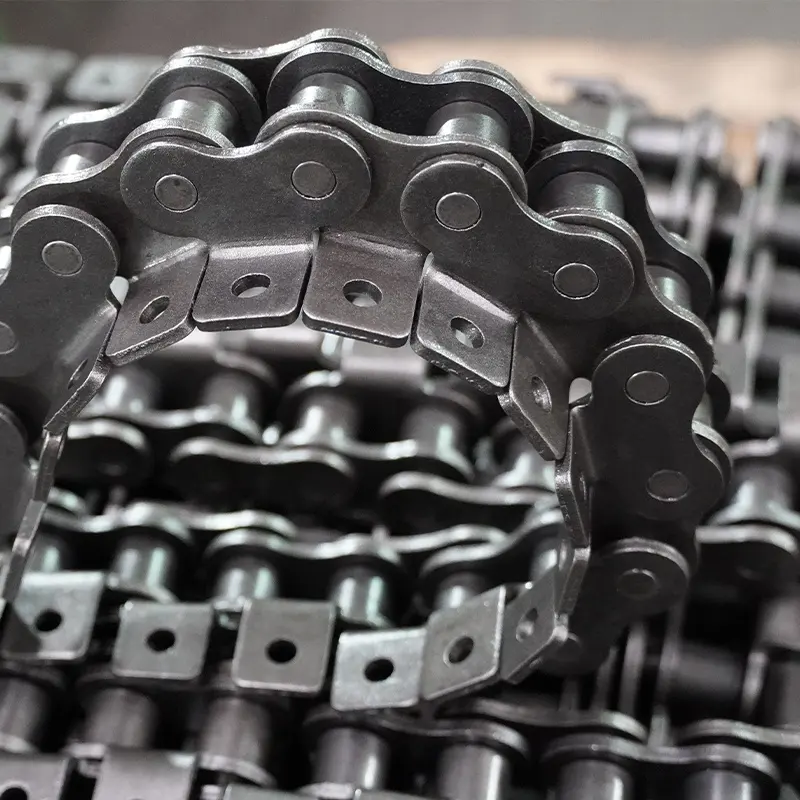
1. Flexibility: Roller chains have inherent flexibility, allowing them to adapt to slight misalignments between sprockets. The chain links can articulate and adjust their position to compensate for the angular misalignment. This flexibility helps to reduce stress on the chain and the sprockets.
2. Chain Articulation: The individual chain links in a roller chain are connected by pins, allowing them to rotate and articulate as the chain engages with the sprockets. This articulation enables the chain to follow the angular movement of the sprockets and maintain proper engagement. It helps to distribute the load evenly across the chain and minimize concentrated stresses on individual chain links.
3. Tolerance for Misalignment: Roller chains have a certain tolerance for angular misalignment between the sprockets. The exact amount of misalignment that a chain can handle depends on factors such as chain size, pitch, and design. However, it’s important to note that excessive misalignment can lead to accelerated wear, increased noise, and reduced chain life.
4. Proper Alignment: While roller chains can tolerate some degree of angular misalignment, it’s still essential to aim for proper sprocket alignment whenever possible. Proper alignment helps to optimize chain performance, minimize wear, and extend the lifespan of the chain and sprockets. Aligning the sprockets correctly ensures that the chain engages smoothly and uniformly with the sprocket teeth, reducing the risk of premature wear or failure.
5. Regular Inspection and Maintenance: To ensure optimal performance and longevity, it’s important to regularly inspect the roller chain system for any signs of misalignment or excessive wear. Routine maintenance, such as lubrication and tension adjustment, helps to mitigate the effects of misalignment and promotes smooth operation.
While roller chains can handle a certain degree of angular misalignment, it’s always recommended to minimize misalignment and strive for proper sprocket alignment to ensure optimal performance, efficiency, and longevity of the chain and sprocket system.
What are the signs of roller chain wear and when should it be replaced?
Roller chain wear is a natural occurrence due to the repetitive motion and load-bearing nature of the chain. Recognizing the signs of wear is important to ensure the safe and efficient operation of the chain. Here’s a detailed answer to the question:
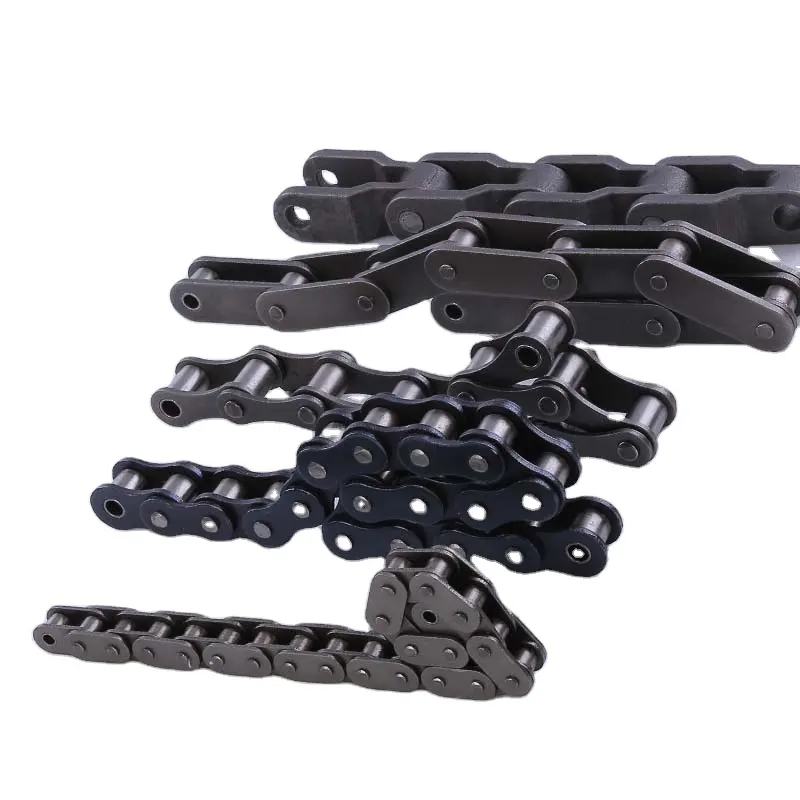
1. Elongation: Roller chains can elongate over time due to wear on the pins, bushings, and rollers. To check for elongation, measure the distance between a specific number of links (e.g., 10 or 12) over a known length. If the measured distance exceeds the standard pitch length, it indicates chain elongation and the need for replacement.
2. Chain Slack: Excessive chain slack or sag is another sign of wear. When the chain becomes elongated, it fails to maintain the proper tension, resulting in increased slack. Excessive chain slack can cause poor engagement with sprockets, resulting in skipping or jumping and affecting the overall performance of the chain.
3. Misalignment: As a roller chain wears, it may start to misalign with the sprockets. This misalignment can cause the chain to ride unevenly on the sprocket teeth, leading to accelerated wear on the chain and sprockets. If you notice the chain consistently riding to one side of the sprocket, it may be a sign of wear and misalignment.
4. Chain Noise: Worn roller chains can produce increased noise during operation. Excessive wear on the chain components can cause rattling, clicking, or grinding sounds. Unusual noises should be investigated, as they may indicate significant wear or damage to the chain.
5. Visible Signs of Wear: Inspect the chain visually for signs of wear, such as rust, discoloration, or visible damage to the rollers, pins, or bushings. Excessive wear on these components can affect the chain’s ability to properly engage with the sprockets and transmit power efficiently.
When to replace a roller chain depends on various factors, including the severity of wear, the criticality of the application, and the manufacturer’s recommendations. It is generally recommended to replace a roller chain when it has elongated beyond the allowable limits, exhibits excessive wear, or shows signs of damage that can compromise its performance and safety.
Regular inspection and maintenance of roller chains are essential to identify signs of wear and ensure timely replacement. Replacing the chain at the appropriate time helps prevent unexpected failures, reduces downtime, and maintains the overall efficiency of the machinery or equipment.


editor by CX 2023-11-03
China Standard Gearbox Transmission Belt Parts Attachment Products 15 a Series Short Pitch Precision Simplex Roller Chains and Bush Chains for Agriculture
Product Description
A Series Short pitch Precision Simplex Roller Chains & Bush Chains
| ISO/ANSI/ DIN Chain No. |
China Chain No. |
Pitch P mm |
Roller diameter
d1max |
Width between inner plates b1min mm |
Pin diameter
d2max |
Pin length | Inner plate depth h2max mm |
Plate thickness
Tmax |
Tensile strength
Qmin |
Average tensile strength Q0 kN |
Weight per meter q kg/m |
|
| Lmax mm |
Lcmax mm |
|||||||||||
| 15 | *03C | 4.7625 | 2.48 | 2.38 | 1.62 | 6.10 | 6.90 | 4.30 | 0.60 | 1.80/409 | 2.0 | 0.08 |
*Bush chain:d1 in the table indicates the external diameter of the bush
ROLLER CHAIN
Roller chain or bush roller chain is the type of chain drive most commonly used for transmission of mechanical power on many kinds of domestic, industrial and agricultural machinery, including conveyors, wire- and tube-drawing machines, printing presses, cars, motorcycles, and bicycles. It consists of a series of short cylindrical rollers held together by side links. It is driven by a toothed wheel called a sprocket. It is a simple, reliable, and efficient means of power transmission.
CONSTRUCTION OF THE CHAIN
Two different sizes of roller chain, showing construction.
There are 2 types of links alternating in the bush roller chain. The first type is inner links, having 2 inner plates held together by 2 sleeves or bushings CHINAMFG which rotate 2 rollers. Inner links alternate with the second type, the outer links, consisting of 2 outer plates held together by pins passing through the bushings of the inner links. The “bushingless” roller chain is similar in operation though not in construction; instead of separate bushings or sleeves holding the inner plates together, the plate has a tube stamped into it protruding from the hole which serves the same purpose. This has the advantage of removing 1 step in assembly of the chain.
The roller chain design reduces friction compared to simpler designs, resulting in higher efficiency and less wear. The original power transmission chain varieties lacked rollers and bushings, with both the inner and outer plates held by pins which directly contacted the sprocket teeth; however this configuration exhibited extremely rapid wear of both the sprocket teeth, and the plates where they pivoted on the pins. This problem was partially solved by the development of bushed chains, with the pins holding the outer plates passing through bushings or sleeves connecting the inner plates. This distributed the wear over a greater area; however the teeth of the sprockets still wore more rapidly than is desirable, from the sliding friction against the bushings. The addition of rollers surrounding the bushing sleeves of the chain and provided rolling contact with the teeth of the sprockets resulting in excellent resistance to wear of both sprockets and chain as well. There is even very low friction, as long as the chain is sufficiently lubricated. Continuous, clean, lubrication of roller chains is of primary importance for efficient operation as well as correct tensioning.
LUBRICATION
Many driving chains (for example, in factory equipment, or driving a camshaft inside an internal combustion engine) operate in clean environments, and thus the wearing surfaces (that is, the pins and bushings) are safe from precipitation and airborne grit, many even in a sealed environment such as an oil bath. Some roller chains are designed to have o-rings built into the space between the outside link plate and the inside roller link plates. Chain manufacturers began to include this feature in 1971 after the application was invented by Joseph Montano while working for Whitney Chain of Hartford, Connecticut. O-rings were included as a way to improve lubrication to the links of power transmission chains, a service that is vitally important to extending their working life. These rubber fixtures form a barrier that holds factory applied lubricating grease inside the pin and bushing wear areas. Further, the rubber o-rings prevent dirt and other contaminants from entering inside the chain linkages, where such particles would otherwise cause significant wear.[citation needed]
There are also many chains that have to operate in dirty conditions, and for size or operational reasons cannot be sealed. Examples include chains on farm equipment, bicycles, and chain saws. These chains will necessarily have relatively high rates of wear, particularly when the operators are prepared to accept more friction, less efficiency, more noise and more frequent replacement as they neglect lubrication and adjustment.
Many oil-based lubricants attract dirt and other particles, eventually forming an CHINAMFG paste that will compound wear on chains. This problem can be circumvented by use of a “dry” PTFE spray, which forms a solid film after application and repels both particles and moisture.
VARIANTS DESIGN
Layout of a roller chain: 1. Outer plate, 2. Inner plate, 3. Pin, 4. Bushing, 5. Roller
If the chain is not being used for a high wear application (for instance if it is just transmitting motion from a hand-operated lever to a control shaft on a machine, or a sliding door on an oven), then 1 of the simpler types of chain may still be used. Conversely, where extra strength but the smooth drive of a smaller pitch is required, the chain may be “siamesed”; instead of just 2 rows of plates on the outer sides of the chain, there may be 3 (“duplex”), 4 (“triplex”), or more rows of plates running parallel, with bushings and rollers between each adjacent pair, and the same number of rows of teeth running in parallel on the sprockets to match. Timing chains on automotive engines, for example, typically have multiple rows of plates called strands.
Roller chain is made in several sizes, the most common American National Standards Institute (ANSI) standards being 40, 50, 60, and 80. The first digit(s) indicate the pitch of the chain in eighths of an inch, with the last digit being 0 for standard chain, 1 for lightweight chain, and 5 for bushed chain with no rollers. Thus, a chain with half-inch pitch would be a #40 while a #160 sprocket would have teeth spaced 2 inches apart, etc. Metric pitches are expressed in sixteenths of an inch; thus a metric #8 chain (08B-1) would be equivalent to an ANSI #40. Most roller chain is made from plain carbon or alloy steel, but stainless steel is used in food processing machinery or other places where lubrication is a problem, and nylon or brass are occasionally seen for the same reason.
Roller chain is ordinarily hooked up using a master link (also known as a connecting link), which typically has 1 pin held by a horseshoe clip rather than friction fit, allowing it to be inserted or removed with simple tools. Chain with a removable link or pin is also known as cottered chain, which allows the length of the chain to be adjusted. Half links (also known as offsets) are available and are used to increase the length of the chain by a single roller. Riveted roller chain has the master link (also known as a connecting link) “riveted” or mashed on the ends. These pins are made to be durable and are not removable.
USE
An example of 2 ‘ghost’ sprockets tensioning a triplex roller chain system
Roller chains are used in low- to mid-speed drives at around 600 to 800 feet per minute; however, at higher speeds, around 2,000 to 3,000 feet per minute, V-belts are normally used due to wear and noise issues.
A bicycle chain is a form of roller chain. Bicycle chains may have a master link, or may require a chain tool for removal and installation. A similar but larger and thus stronger chain is used on most motorcycles although it is sometimes replaced by either a toothed belt or a shaft drive, which offer lower noise level and fewer maintenance requirements.
The great majority of automobile engines use roller chains to drive the camshaft(s). Very high performance engines often use gear drive, and starting in the early 1960s toothed belts were used by some manufacturers.
Chains are also used in forklifts using hydraulic rams as a pulley to raise and lower the carriage; however, these chains are not considered roller chains, but are classified as lift or leaf chains.
Chainsaw cutting chains superficially resemble roller chains but are more closely related to leaf chains. They are driven by projecting drive links which also serve to locate the chain CHINAMFG the bar.
Sea Harrier FA.2 ZA195 front (cold) vector thrust nozzle – the nozzle is rotated by a chain drive from an air motor
A perhaps unusual use of a pair of motorcycle chains is in the Harrier Jump Jet, where a chain drive from an air motor is used to rotate the movable engine nozzles, allowing them to be pointed downwards for hovering flight, or to the rear for normal CHINAMFG flight, a system known as Thrust vectoring.
WEAR
The effect of wear on a roller chain is to increase the pitch (spacing of the links), causing the chain to grow longer. Note that this is due to wear at the pivoting pins and bushes, not from actual stretching of the metal (as does happen to some flexible steel components such as the hand-brake cable of a motor vehicle).
With modern chains it is unusual for a chain (other than that of a bicycle) to wear until it breaks, since a worn chain leads to the rapid onset of wear on the teeth of the sprockets, with ultimate failure being the loss of all the teeth on the sprocket. The sprockets (in particular the smaller of the two) suffer a grinding motion that puts a characteristic hook shape into the driven face of the teeth. (This effect is made worse by a chain improperly tensioned, but is unavoidable no matter what care is taken). The worn teeth (and chain) no longer provides smooth transmission of power and this may become evident from the noise, the vibration or (in car engines using a timing chain) the variation in ignition timing seen with a timing light. Both sprockets and chain should be replaced in these cases, since a new chain on worn sprockets will not last long. However, in less severe cases it may be possible to save the larger of the 2 sprockets, since it is always the smaller 1 that suffers the most wear. Only in very light-weight applications such as a bicycle, or in extreme cases of improper tension, will the chain normally jump off the sprockets.
The lengthening due to wear of a chain is calculated by the following formula:
M = the length of a number of links measured
S = the number of links measured
P = Pitch
In industry, it is usual to monitor the movement of the chain tensioner (whether manual or automatic) or the exact length of a drive chain (one rule of thumb is to replace a roller chain which has elongated 3% on an adjustable drive or 1.5% on a fixed-center drive). A simpler method, particularly suitable for the cycle or motorcycle user, is to attempt to pull the chain away from the larger of the 2 sprockets, whilst ensuring the chain is taut. Any significant movement (e.g. making it possible to see through a gap) probably indicates a chain worn up to and beyond the limit. Sprocket damage will result if the problem is ignored. Sprocket wear cancels this effect, and may mask chain wear.
CHAIN STRENGTH
The most common measure of roller chain’s strength is tensile strength. Tensile strength represents how much load a chain can withstand under a one-time load before breaking. Just as important as tensile strength is a chain’s fatigue strength. The critical factors in a chain’s fatigue strength is the quality of steel used to manufacture the chain, the heat treatment of the chain components, the quality of the pitch hole fabrication of the linkplates, and the type of shot plus the intensity of shot peen coverage on the linkplates. Other factors can include the thickness of the linkplates and the design (contour) of the linkplates. The rule of thumb for roller chain operating on a continuous drive is for the chain load to not exceed a mere 1/6 or 1/9 of the chain’s tensile strength, depending on the type of master links used (press-fit vs. slip-fit)[citation needed]. Roller chains operating on a continuous drive beyond these thresholds can and typically do fail prematurely via linkplate fatigue failure.
The standard minimum ultimate strength of the ANSI 29.1 steel chain is 12,500 x (pitch, in inches)2. X-ring and O-Ring chains greatly decrease wear by means of internal lubricants, increasing chain life. The internal lubrication is inserted by means of a vacuum when riveting the chain together.
CHAIN STHangZhouRDS
Standards organizations (such as ANSI and ISO) maintain standards for design, dimensions, and interchangeability of transmission chains. For example, the following Table shows data from ANSI standard B29.1-2011 (Precision Power Transmission Roller Chains, Attachments, and Sprockets) developed by the American Society of Mechanical Engineers (ASME). See the references[8][9][10] for additional information.
ASME/ANSI B29.1-2011 Roller Chain Standard SizesSizePitchMaximum Roller DiameterMinimum Ultimate Tensile StrengthMeasuring Load25
| ASME/ANSI B29.1-2011 Roller Chain Standard Sizes | ||||
| Size | Pitch | Maximum Roller Diameter | Minimum Ultimate Tensile Strength | Measuring Load |
|---|---|---|---|---|
| 25 | 0.250 in (6.35 mm) | 0.130 in (3.30 mm) | 780 lb (350 kg) | 18 lb (8.2 kg) |
| 35 | 0.375 in (9.53 mm) | 0.200 in (5.08 mm) | 1,760 lb (800 kg) | 18 lb (8.2 kg) |
| 41 | 0.500 in (12.70 mm) | 0.306 in (7.77 mm) | 1,500 lb (680 kg) | 18 lb (8.2 kg) |
| 40 | 0.500 in (12.70 mm) | 0.312 in (7.92 mm) | 3,125 lb (1,417 kg) | 31 lb (14 kg) |
| 50 | 0.625 in (15.88 mm) | 0.400 in (10.16 mm) | 4,880 lb (2,210 kg) | 49 lb (22 kg) |
| 60 | 0.750 in (19.05 mm) | 0.469 in (11.91 mm) | 7,030 lb (3,190 kg) | 70 lb (32 kg) |
| 80 | 1.000 in (25.40 mm) | 0.625 in (15.88 mm) | 12,500 lb (5,700 kg) | 125 lb (57 kg) |
| 100 | 1.250 in (31.75 mm) | 0.750 in (19.05 mm) | 19,531 lb (8,859 kg) | 195 lb (88 kg) |
| 120 | 1.500 in (38.10 mm) | 0.875 in (22.23 mm) | 28,125 lb (12,757 kg) | 281 lb (127 kg) |
| 140 | 1.750 in (44.45 mm) | 1.000 in (25.40 mm) | 38,280 lb (17,360 kg) | 383 lb (174 kg) |
| 160 | 2.000 in (50.80 mm) | 1.125 in (28.58 mm) | 50,000 lb (23,000 kg) | 500 lb (230 kg) |
| 180 | 2.250 in (57.15 mm) | 1.460 in (37.08 mm) | 63,280 lb (28,700 kg) | 633 lb (287 kg) |
| 200 | 2.500 in (63.50 mm) | 1.562 in (39.67 mm) | 78,175 lb (35,460 kg) | 781 lb (354 kg) |
| 240 | 3.000 in (76.20 mm) | 1.875 in (47.63 mm) | 112,500 lb (51,000 kg) | 1,000 lb (450 kg |
For mnemonic purposes, below is another presentation of key dimensions from the same standard, expressed in fractions of an inch (which was part of the thinking behind the choice of preferred numbers in the ANSI standard):
| Pitch (inches) | Pitch expressed in eighths |
ANSI standard chain number |
Width (inches) |
|---|---|---|---|
| 1⁄4 | 2⁄8 | 25 | 1⁄8 |
| 3⁄8 | 3⁄8 | 35 | 3⁄16 |
| 1⁄2 | 4⁄8 | 41 | 1⁄4 |
| 1⁄2 | 4⁄8 | 40 | 5⁄16 |
| 5⁄8 | 5⁄8 | 50 | 3⁄8 |
| 3⁄4 | 6⁄8 | 60 | 1⁄2 |
| 1 | 8⁄8 | 80 | 5⁄8 |
Notes:
1. The pitch is the distance between roller centers. The width is the distance between the link plates (i.e. slightly more than the roller width to allow for clearance).
2. The right-hand digit of the standard denotes 0 = normal chain, 1 = lightweight chain, 5 = rollerless bushing chain.
3. The left-hand digit denotes the number of eighths of an inch that make up the pitch.
4. An “H” following the standard number denotes heavyweight chain. A hyphenated number following the standard number denotes double-strand (2), triple-strand (3), and so on. Thus 60H-3 denotes number 60 heavyweight triple-strand chain.
A typical bicycle chain (for derailleur gears) uses narrow 1⁄2-inch-pitch chain. The width of the chain is variable, and does not affect the load capacity. The more sprockets at the rear wheel (historically 3-6, nowadays 7-12 sprockets), the narrower the chain. Chains are sold according to the number of speeds they are designed to work with, for example, “10 speed chain”. Hub gear or single speed bicycles use 1/2″ x 1/8″ chains, where 1/8″ refers to the maximum thickness of a sprocket that can be used with the chain.
Typically chains with parallel shaped links have an even number of links, with each narrow link followed by a broad one. Chains built up with a uniform type of link, narrow at 1 and broad at the other end, can be made with an odd number of links, which can be an advantage to adapt to a special chainwheel-distance; on the other side such a chain tends to be not so strong.
Roller chains made using ISO standard are sometimes called as isochains.
WHY CHOOSE US
1. Reliable Quality Assurance System
2. Cutting-Edge Computer-Controlled CNC Machines
3. Bespoke Solutions from Highly Experienced Specialists
4. Customization and OEM Available for Specific Application
5. Extensive Inventory of Spare Parts and Accessories
6. Well-Developed CHINAMFG Marketing Network
7. Efficient After-Sale Service System
The 219 sets of advanced automatic production equipment provide guarantees for high product quality. The 167 engineers and technicians with senior professional titles can design and develop products to meet the exact demands of customers, and OEM customizations are also available with us. Our sound global service network can provide customers with timely after-sales technical services.
We are not just a manufacturer and supplier, but also an industry consultant. We work pro-actively with you to offer expert advice and product recommendations in order to end up with a most cost effective product available for your specific application. The clients we serve CHINAMFG range from end users to distributors and OEMs. Our OEM replacements can be substituted wherever necessary and suitable for both repair and new assemblies.
| Standard or Nonstandard: | Standard |
|---|---|
| Application: | Textile Machinery, Garment Machinery, Conveyer Equipment, Packaging Machinery, Electric Cars, Motorcycle, Food Machinery, Marine, Mining Equipment, Agricultural Machinery, Car |
| Surface Treatment: | Polishing |
| Samples: |
US$ 3/Meter
1 Meter(Min.Order) | Order Sample |
|---|
| Customization: |
Available
| Customized Request |
|---|
.shipping-cost-tm .tm-status-off{background: none;padding:0;color: #1470cc}
|
Shipping Cost:
Estimated freight per unit. |
about shipping cost and estimated delivery time. |
|---|
| Payment Method: |
|
|---|---|
|
Initial Payment Full Payment |
| Currency: | US$ |
|---|
| Return&refunds: | You can apply for a refund up to 30 days after receipt of the products. |
|---|
How do roller chains handle shock and impact loads?
Roller chains are designed to handle shock and impact loads, but their ability to withstand these loads depends on several factors:
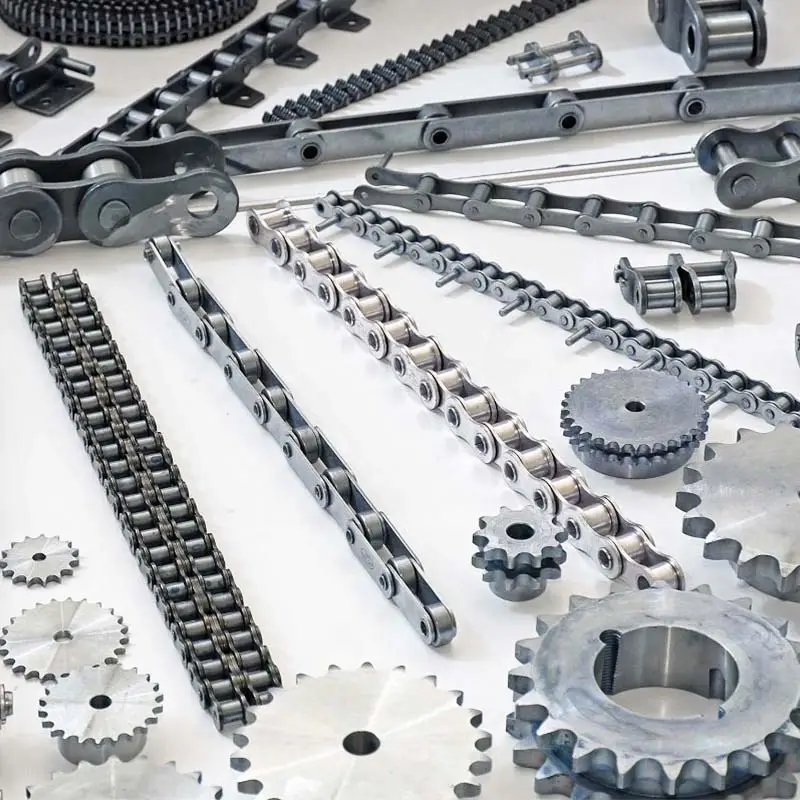
1. Chain Design: Roller chains are constructed with durable components, including rollers, pins, and plates, which are designed to handle the forces generated by shock and impact loads. The geometry and dimensions of these components contribute to the chain’s overall strength and ability to resist deformation.
2. Material Selection: High-quality materials are used in the manufacturing of roller chains to enhance their strength and durability. Common materials include carbon steel, stainless steel, or specialty alloys. The material selection depends on the specific application requirements and the level of shock and impact loads anticipated.
3. Chain Tension: Proper chain tension is important for handling shock and impact loads. Adequate tension helps maintain the engagement of the chain with the sprockets, preventing slippage and reducing the likelihood of damage due to sudden forces. However, excessive tension can also contribute to increased stress and potential failure, so it’s important to follow the manufacturer’s guidelines for chain tension.
4. Lubrication: Proper lubrication plays a crucial role in reducing friction and wear, which can be accelerated by shock and impact loads. Lubricants help minimize the generation of heat and provide a protective film between the chain components, reducing wear and extending the chain’s lifespan. Regular lubrication and maintenance are essential for optimal performance under shock and impact conditions.
5. Chain Inspection and Maintenance: Regular inspection and maintenance are necessary to identify any signs of wear, damage, or elongation in the roller chain. Chains should be inspected for bent or deformed links, worn-out rollers or pins, and excessive elongation. Any worn or damaged components should be replaced promptly to prevent further deterioration and ensure the chain’s ability to handle shock and impact loads.
It’s important to note that while roller chains are designed to handle shock and impact loads, excessive or repetitive shock loads can shorten their lifespan. Therefore, it’s recommended to assess the specific application requirements and consult with the manufacturer to ensure the appropriate chain design and maintenance practices are followed for optimal performance and longevity under shock and impact conditions.
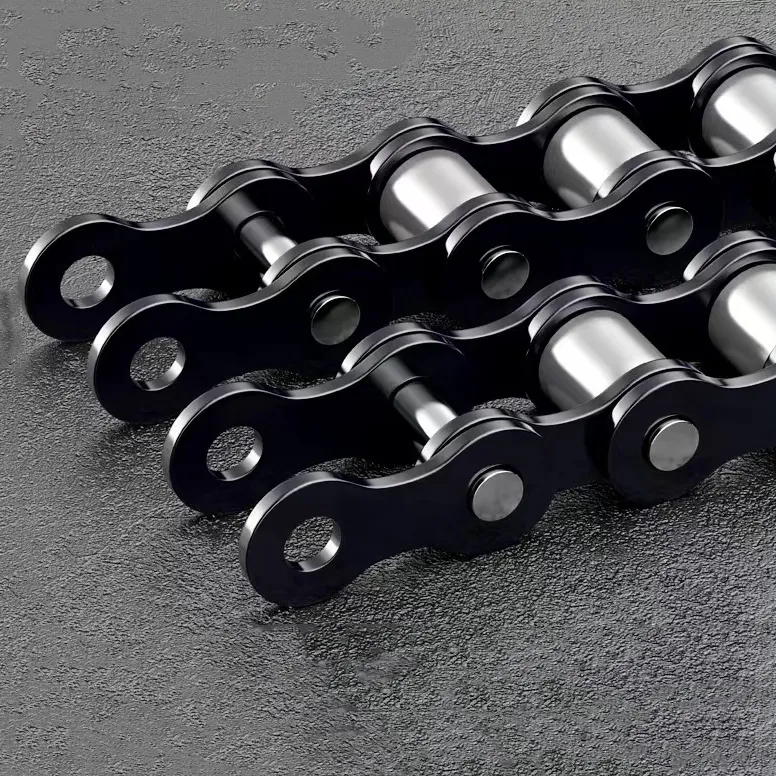
Can roller chains be used for power transmission in mining equipment?
Yes, roller chains can be used for power transmission in mining equipment. Here’s a detailed answer to the question:
Mining equipment often requires robust and reliable power transmission systems to handle the demanding conditions and heavy loads encountered in mining operations. Roller chains have proven to be a suitable choice for power transmission in mining equipment due to their various advantages:
1. High Strength and Durability: Roller chains are designed to withstand high loads and provide reliable power transmission in challenging environments. They are made from high-strength materials such as alloy steel, which enables them to handle the heavy loads typically encountered in mining applications.
2. Resistance to Shock and Impact: Mining equipment often operates in rugged environments with frequent shock and impact loads. Roller chains are engineered to handle such conditions and can withstand the sudden changes in load and direction without compromising their performance or integrity.
3. Flexibility and Adaptability: Roller chains have inherent flexibility, allowing them to accommodate misalignment and angular movement between sprockets. This flexibility helps to ensure smooth and efficient power transmission even in applications where slight misalignments may occur due to the nature of the mining equipment.
4. Resistance to Contaminants: Mining environments can be dusty and contain abrasive particles. Roller chains are designed to resist contamination and maintain their performance even in dirty and harsh conditions. Proper sealing and lubrication can further enhance their resistance to contaminants.
5. Easy Maintenance and Replacement: Roller chains are relatively easy to maintain and replace. Regular inspection, lubrication, and tension adjustment can help ensure optimal performance and extend the lifespan of the chain. In case of wear or damage, individual chain links can be replaced without the need for replacing the entire chain, making maintenance more cost-effective.
It’s important to note that when using roller chains in mining equipment, proper selection, installation, and maintenance are crucial. Working with reputable suppliers and following recommended guidelines for chain selection, lubrication, and tensioning can help maximize the performance and longevity of the roller chain system in mining applications.
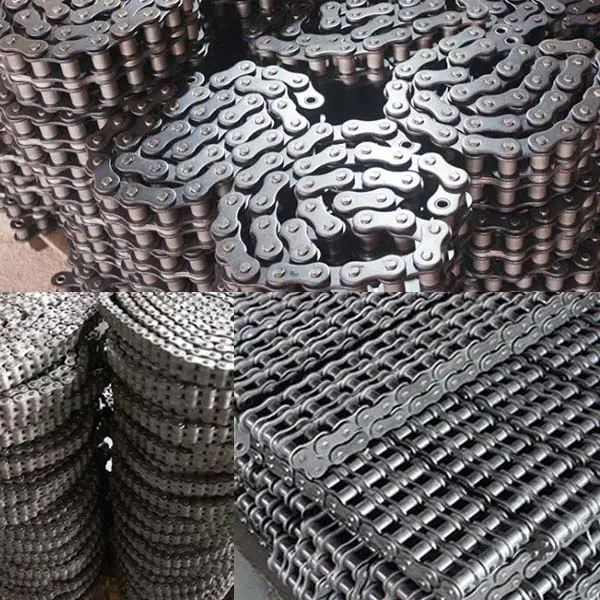
What is the expected lifespan of a roller chain?
The expected lifespan of a roller chain can vary depending on several factors, including the quality of the chain, the operating conditions, and the level of maintenance. Here’s a detailed answer to the question:
The lifespan of a roller chain is primarily influenced by the following factors:
1. Chain Quality: High-quality roller chains made from durable materials and manufactured to precise specifications tend to have a longer lifespan compared to lower-quality chains. Chains from reputable manufacturers often undergo rigorous testing and quality control processes to ensure their performance and durability.
2. Operating Conditions: The operating environment greatly affects the lifespan of a roller chain. Factors such as temperature, humidity, contamination, shock loads, and vibration can impact the chain’s wear and fatigue resistance. Chains operating in harsh conditions may require more frequent maintenance and replacement.
3. Lubrication and Maintenance: Proper lubrication is crucial for maintaining the lifespan of a roller chain. Regular lubrication helps reduce friction, wear, and corrosion, thereby extending the chain’s life. Additionally, regular inspection and maintenance, including tension adjustment, sprocket alignment, and cleaning, can help identify and address issues that could shorten the chain’s lifespan.
4. Load and Speed: The load and speed at which the roller chain operates also play a role in determining its lifespan. Chains operating under heavy loads or high speeds may experience increased wear and fatigue, shortening their lifespan. Choosing a chain with the appropriate strength and size for the application is important to ensure optimal performance and longevity.
Generally, a well-maintained roller chain can last for thousands of hours of operation. However, it is essential to monitor the chain’s condition regularly and replace it when signs of wear, elongation, or damage become apparent. Following the manufacturer’s recommendations for maintenance and replacement intervals is crucial for maximizing the lifespan of the roller chain.
editor by CX 2023-10-18
China Motorcycle Parts Chain Adjuster for Bajaj Bm150 / DJ151036 / DJ151037 pin bush chain
Item Description
| Specialist Provide Large Value-Efficient Motorbike Spare Components |
| BAJAJ | TVS | HONDA | YAMAHA | HERO | SUZUKI | HAOJUE | CHINESE BRAND | ||
| BAJAJ BOXER a hundred | TVS APACHE RTR150 | HONDA ACE/KYY/CB1 | HONDA CBF190R | YAMAHA FZ16 | YAMAHA YB125 | HERO DAWN 100 | SUZUKI GIXXER | HAOJUE Sophisticated | LONCIN |
| BAJAJ BM150 | TVS APACHE RTR160 | HONDA CBF125/one hundred fifty | HONDA INVICTA | YAMAHA FZ-S 2. | YAMAHA YBR125 | HERO DAWN 125 | SUZUKI GXT200 | HAOJUE HJ150-six | LIFAN |
| BAJAJ BM125X/BM150X | TVS APACHE RTR180 | HONDA CARGO | HONDA PCX150 | YAMAHA FZ-S 3. | YAMAHA YBR125G | HERO DAWN 150 | SUZUKI GD110/AX4 | HAOJUE EG125 | KEEWAY |
| BAJAJ CT100 | TVS APACHE RTR 4V | HONDA CGL125 Instrument | HONDA WAVE a hundred and ten | YAMAHA FZ25 | YAMAHA YBR125K | HERO GLAMOUR | SUZUKI AX100 | HAOJUE HJ110-two | HangZhou |
| BAJAJ Uncover 125ST | TVS Begin Activity | HONDA KVX125 | HONDA XL125L | YAMAHA SZ RR | YAMAHA XTZ125 | HERO SPLENDOR | SUZUKI GN125H | HAOJUE HJ150-three | FEKON |
| BAJAJ Uncover 125M | TVS VICTOR GLX125 | HONDA NXR BROSS | HONDA XR125L | YAMAHA R15 | YAMAHA CRUX | HERO HUNK | SUZUKI EN125-2A | HAOJUE HJ150-9 | SANLG |
| BAJAJ Discover one hundred thirty five | TVS Start off HLX125 | HONDA SPACEY | HONDA XR150L | YAMAHA DT125 | YAMAHA RX115 | SUZUKI AN125HK | HAOJUE HJ125-8 | XIHU (WEST LAKE) DIS. | |
| BAJAJ PLATINA | TVS Start off HLX150 | HONDA STORM | HONDA XR190L | YAMAHA DT175 | YAMAHA CRYPTON | VIVA115R SMASH | HAOJUE DM125 | DAYANG | |
| BAJAJ PULSAR a hundred thirty five | TVS MAX AR100 | HONDA TITAN | HONDA XLR250R | YAMAHA NMAX one hundred fifty five | YAMAHA AG200 | XIHU (WEST LAKE) DIS.N | |||
| BAJAJ PULSAR one hundred eighty | TVS Commence one hundred | ||||||||
| BAJAJ PULSAR 200NS | TVS CZPT 125 | ||||||||
| TVS WEGO | |||||||||
OUR WORKFLOWS
OUR FLAGSHIP Shop
Manufacturing unit-Tour
With specialist right after-market place motorbike parts & equipment providers, HAYPO gives continual industry-major merchandise for above 3000 classes, masking little motor and large motor motorcycle, scooters, dirt bikes, racing moto, ATV, and many others.
FAQ
1. When can I get the cost?
Re:The quotation need to be given inside of 24 several hours .
If it is really urgent, You should make an emphasis by remarks.
2. How to get the best cost from HAYPO?
Re: The bulk get price can be negotiated.
We will quote the least expensive ideal price according to the client closing purchase listing.
3.How can I get a sample to examine your good quality?
Re: Most sample could be free of charge for you , you require just to pay the freight to your spot.
Typically, the sample will be sent within 1 week. It relies upon on the inventory.
four. Can you do the packages as we need?
Indeed. Certainly ! we can do OEM Deal for you.
Just deliver me your element request,we can layout the deal for you.
5.What is your MOQ?
Re: For the spare components and equipment, it would depend on the comprehensive merchandise.
6.What is your supply time?
Re:Typically 15-thirty times
seven.What is your payment?
Re: We take T/T.
You can pick the 1 which is the most hassle-free or cost effective for you.
eight.What is your transportation?
Re:By air,by sea(LCL,FCL).
If anything at all else that you want to know ,remember to get in touch with us.
| To Be Negotiated | 100 Sets (Min. Order) |
###
| Type: | Chain |
|---|---|
| Trademark: | HAYPO |
| Origin: | China |
###
| Customization: |
Available
|
|---|
###
| Professional Supply High Cost-Effective Motorcycle Spare Parts |
###
| BAJAJ | TVS | HONDA | YAMAHA | HERO | SUZUKI | HAOJUE | CHINESE BRAND | ||
| BAJAJ BOXER 100 | TVS APACHE RTR150 | HONDA ACE/KYY/CB1 | HONDA CBF190R | YAMAHA FZ16 | YAMAHA YB125 | HERO DAWN 100 | SUZUKI GIXXER | HAOJUE ELEGANT | LONCIN |
| BAJAJ BM150 | TVS APACHE RTR160 | HONDA CBF125/150 | HONDA INVICTA | YAMAHA FZ-S 2.0 | YAMAHA YBR125 | HERO DAWN 125 | SUZUKI GXT200 | HAOJUE HJ150-6 | LIFAN |
| BAJAJ BM125X/BM150X | TVS APACHE RTR180 | HONDA CARGO | HONDA PCX150 | YAMAHA FZ-S 3.0 | YAMAHA YBR125G | HERO DAWN 150 | SUZUKI GD110/AX4 | HAOJUE EG125 | KEEWAY |
| BAJAJ CT100 | TVS APACHE RTR 4V | HONDA CGL125 TOOL | HONDA WAVE 110 | YAMAHA FZ25 | YAMAHA YBR125K | HERO GLAMOUR | SUZUKI AX100 | HAOJUE HJ110-2 | SANYA |
| BAJAJ DISCOVER 125ST | TVS START SPORT | HONDA KVX125 | HONDA XL125L | YAMAHA SZ RR | YAMAHA XTZ125 | HERO SPLENDOR | SUZUKI GN125H | HAOJUE HJ150-3 | FEKON |
| BAJAJ DISCOVER 125M | TVS VICTOR GLX125 | HONDA NXR BROSS | HONDA XR125L | YAMAHA R15 | YAMAHA CRUX | HERO HUNK | SUZUKI EN125-2A | HAOJUE HJ150-9 | SANLG |
| BAJAJ DISCOVER 135 | TVS START HLX125 | HONDA SPACEY | HONDA XR150L | YAMAHA DT125 | YAMAHA RX115 | SUZUKI AN125HK | HAOJUE HJ125-8 | HAOJIANG | |
| BAJAJ PLATINA | TVS START HLX150 | HONDA STORM | HONDA XR190L | YAMAHA DT175 | YAMAHA CRYPTON | VIVA115R SMASH | HAOJUE DM125 | DAYANG | |
| BAJAJ PULSAR 135 | TVS MAX AR100 | HONDA TITAN | HONDA XLR250R | YAMAHA NMAX 155 | YAMAHA AG200 | DAYUN | |||
| BAJAJ PULSAR 180 | TVS START 100 | ||||||||
| BAJAJ PULSAR 200NS | TVS PHOENIX 125 | ||||||||
| TVS WEGO | |||||||||
| To Be Negotiated | 100 Sets (Min. Order) |
###
| Type: | Chain |
|---|---|
| Trademark: | HAYPO |
| Origin: | China |
###
| Customization: |
Available
|
|---|
###
| Professional Supply High Cost-Effective Motorcycle Spare Parts |
###
| BAJAJ | TVS | HONDA | YAMAHA | HERO | SUZUKI | HAOJUE | CHINESE BRAND | ||
| BAJAJ BOXER 100 | TVS APACHE RTR150 | HONDA ACE/KYY/CB1 | HONDA CBF190R | YAMAHA FZ16 | YAMAHA YB125 | HERO DAWN 100 | SUZUKI GIXXER | HAOJUE ELEGANT | LONCIN |
| BAJAJ BM150 | TVS APACHE RTR160 | HONDA CBF125/150 | HONDA INVICTA | YAMAHA FZ-S 2.0 | YAMAHA YBR125 | HERO DAWN 125 | SUZUKI GXT200 | HAOJUE HJ150-6 | LIFAN |
| BAJAJ BM125X/BM150X | TVS APACHE RTR180 | HONDA CARGO | HONDA PCX150 | YAMAHA FZ-S 3.0 | YAMAHA YBR125G | HERO DAWN 150 | SUZUKI GD110/AX4 | HAOJUE EG125 | KEEWAY |
| BAJAJ CT100 | TVS APACHE RTR 4V | HONDA CGL125 TOOL | HONDA WAVE 110 | YAMAHA FZ25 | YAMAHA YBR125K | HERO GLAMOUR | SUZUKI AX100 | HAOJUE HJ110-2 | SANYA |
| BAJAJ DISCOVER 125ST | TVS START SPORT | HONDA KVX125 | HONDA XL125L | YAMAHA SZ RR | YAMAHA XTZ125 | HERO SPLENDOR | SUZUKI GN125H | HAOJUE HJ150-3 | FEKON |
| BAJAJ DISCOVER 125M | TVS VICTOR GLX125 | HONDA NXR BROSS | HONDA XR125L | YAMAHA R15 | YAMAHA CRUX | HERO HUNK | SUZUKI EN125-2A | HAOJUE HJ150-9 | SANLG |
| BAJAJ DISCOVER 135 | TVS START HLX125 | HONDA SPACEY | HONDA XR150L | YAMAHA DT125 | YAMAHA RX115 | SUZUKI AN125HK | HAOJUE HJ125-8 | HAOJIANG | |
| BAJAJ PLATINA | TVS START HLX150 | HONDA STORM | HONDA XR190L | YAMAHA DT175 | YAMAHA CRYPTON | VIVA115R SMASH | HAOJUE DM125 | DAYANG | |
| BAJAJ PULSAR 135 | TVS MAX AR100 | HONDA TITAN | HONDA XLR250R | YAMAHA NMAX 155 | YAMAHA AG200 | DAYUN | |||
| BAJAJ PULSAR 180 | TVS START 100 | ||||||||
| BAJAJ PULSAR 200NS | TVS PHOENIX 125 | ||||||||
| TVS WEGO | |||||||||
Choosing a drive chain for a belt conveyor
The drive chain is used to move heavy objects on the conveyor chain. Chains are magnetic, antistatic, high temperature, or chemical resistant, depending on the application. These types of drive chains are used in many different industries. A common machine that uses this type of drive is a chain hoist. Chain hoists are designed to lift heavy loads with minimal effort. Chains are often used to transport heavy loads.
roller chain
Whether using a roller chain as a drive chain or a belt conveyor can be tricky. Whether it’s a small low-speed drive with manual lubrication or a high-speed pump-lubricated drive with multiple sprockets, there are several factors to consider when choosing a roller chain. First, you need to consider motor horsepower and rpm. The speed of the motor determines how much chain you need. For example, if you are using a low-speed drive, you will need to choose a low-pitch, high-pitch chain. Another thing to consider is chain length – ideally, you can go for an even number of sprockets and chains, but never go smaller.
The lubrication system is also important because the lubrication system must be able to deliver enough oil. The type of oil used to lubricate a chain depends on its operating environment, temperature and speed. Wear is caused by pressure on the bearing, angular sliding of the pins, and rotation of the rollers. There are five different types of lubrication methods available, depending on the system used. A high-quality carbon steel chain is a major advantage when operating at high temperatures, as it can withstand higher temperatures.
The materials of construction for roller chains vary by application. Typically, the most common materials are steel and stainless steel, but sometimes alloy steels are used in food processing machinery that may have lubrication problems. Nylon and brass are also sometimes used. Some industries require heavy-duty chains. If you need an extremely heavy chain, you may want to consider a heavy-duty roller chain. If you are not sure which type of chain is best for your application, consult an industry expert.
Unlike other chains, roller chains are more efficient from a size and weight perspective. While solution chains are useful in some situations, drive chains are more effective for dirty work and slipping on tracks. They are commonly used in construction and manufacturing. There are other advantages to using a drive chain. They are generally stronger than belts, which is a huge benefit. So, if you’re wondering which is better, here are them: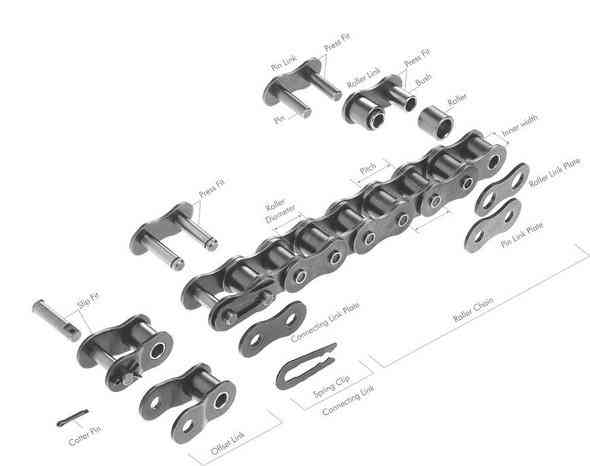
Multi-strand roller chain
The multi-strand roller chains for drive chains market is expected to grow at a CAGR of over 20% during the forecast period. Market reports cover product demand, supply, and cost. The report covers the global market including company profiles, product details, and contact information of key players. It also takes into account the revenue generated by different application areas. The report contains 159 pages of useful information and data. It is an essential tool for anyone involved in drive chain manufacturing.
The essential characteristics of multi-strand chains are their power ratings and allowable bearing area pressures. Power rating is an important characteristic that determines the chain’s ability to transmit a specific load. Typically, multi-strand chains are rated in the range of 12,000 watts per strand. However, their capabilities are limited by link plate fatigue, roller impact fatigue, and wear between pins and bushings.
Energy Series chains are ideal for high-speed and high shock load applications. The chain is designed to provide reliable power and withstand the rigors of the oil and gas industry. It uses high-strength steel and double-coated rolls. These chains come in different lengths and come in two types: single-strand and multi-strand. It is best to consult a professional to find out which chain best suits your needs.
The global multi-strand roller chains market is expected to grow at a CAGR of over 7% during the forecast period. From 2011 to 2019, the industry is expected to grow by nearly 6%. However, the outlook for this market is not optimistic, with some companies experiencing negative growth over the past year. Nonetheless, slowing global economic growth and tightening COVID-19 regulations are likely to hinder the market growth.
Although requirements vary by application, it must be remembered that the load on a multi-strand roller chain must not be greater than 1/9 or 1/6 of the tensile strength of the chain. If the load exceeds this threshold, the chainplates will fatigue. This is the main reason why roller chains are expensive. However, this is not always the case. Multi-strand roller chains are a great idea if you are looking for an affordable and reliable drive chain.
double chain
If you’re looking for an industrial-grade drive chain, you’ve probably considered a double chain. The chain meshes with the sprockets on either side of the gears. It comes in different styles, each with its own advantages and disadvantages. The CZPT duplex series has twice the power capacity of standard SC duplex chains. This type of chain is usually best for new applications. On the other hand, SC double chain chains are the cheapest but have less weight and power capacity.
Another option is a triple drive chain. This type of drive chain has an additional row of plates and contains three sprockets. Its unique design reduces the weight and impact velocity of the timing chain. It is usually used in automotive applications. It is ideal for low to medium-load timing applications. It is also available in acoustically optimized versions. Three-quarter inch pitch double chain chains are widely used in gasoline engine aids and timing drives.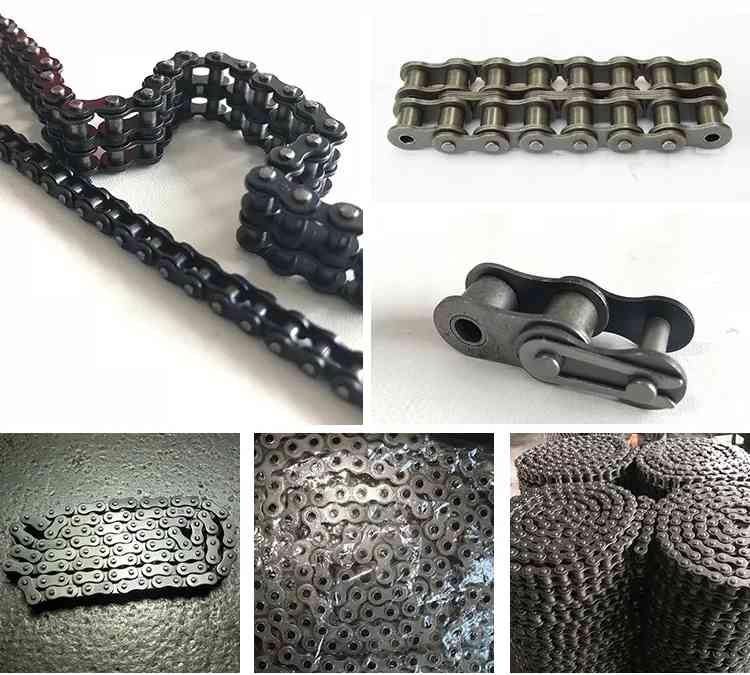
flat top chain
High friction rubber is usually installed on the top or bottom of a flat top drive chain to improve its high friction surface and prevent interference during side bend conveying. The chain plate can be customized with thin rubber layer or thick elastic polyurethane rubber according to customer requirements. In addition to providing high friction, the flat top chain also provides excellent anti-slip properties for glass bottles.
Premium steel flat top chain with high quality surface finish and excellent wear resistance. They have a high level of noise reduction and can be used in heavy duty conveying applications. These chains are available in a variety of alloys such as stainless steel or aluminum. Some models are designed to be very rugged and last longer. Aluminum and galvanized steel chains are popular choices for these chains.
Flat Top Drive Chain Conveyors are versatile and come in an endless combination of configurations. Drives can be connected end-to-end to form long conveyor lines, while side-curved flat-top chains are versatile enough to handle tandem, serpentine or carousel configurations. Standard and heavy duty models are also available. Flat top chains can be used in many different applications including food, beverages and other commodities.
Standard flat top chains are usually rectangular or L-shaped and designed for use on straight conveyors. In some cases, space constraints may require a U-shaped or rectangular conveyor line. For smoother conveying, side-curved flat-top chains can be used. These chains are paired with regular rectangular chain plates and tall pins for high load capacity. They come in different widths, including multi-strand chains.
editor by czh 2022-12-30
China Cg125 Gn Bajaj Cgl Boxer Motorcycle Engine Parts Sprocket and Chain Kit bush chain excavator
Merchandise Description
Motorcycle Motor Parts Sprocket and Chain Kit
| OUR Major MMOTORCYCLE Model | ||||
| HONDA | C100, C110, C125, SUPRA one hundred ten,WAVE110, SPACY110, WAVE125, INOVA i125, ECO DELUXE one hundred, CD100 Hero Splendor, WH100, WH125, PCX125, PCX150, CG125, CG150, CG200, CG250, CG300, WY125, WY150, CGL125, CB110, CB125, CB150, STORM125, CB1-a hundred twenty five, CBZ160, CB190, CBR250, CBX250, NXR125 BROSS, NXR150 BROSS, NXR200 BROSS, CTX200, CBF125, CBF150,…etc. | |||
| SUZUKI | AX100, AX4, GD110,QS110, SMASH110, VIVAX115, AN125, AN150, GN125, EN125, GS125, GS150R, GIXXER GSX150, DR200,…and many others. | |||
| YAMAHA | T50, T80, V50, JOG50, BWS50, V80, CY80, BWS50, RX100, RX115, YB100, JOG100, BWS100, CRUX110, JY110 CRYPTON, T105, RS110, RX125, BWS125, DT125, DTK125, DT175, DTK175, YBR125, SRZ125, SRZ150, XTZ125, XTZ150, FAZER150, XT200, LC135, FZ16, …etc. | |||
| BAJAJ | CT100, Boxer BM100, BM150,Pulsar135, Puslar150, Pulsar180, Pulsar200, Pulsar200 NS, Pulsar220, Pulsar220 NS, XCD125,XCD135, Platina125, Caliper, KB4S, 3W4S, RE205D, RE4S,…and many others. | |||
| SOUTH America | BAJAJ BOXER CT100,BAJAJ BOXER BM100,BAJAJ BOXER BM150, BAJAJ PULSAR135, BAJAJ PULSAR1150, BAJAJ PULSAR180, BAJAJ PULSAR200, BAJAJ PULSAR220, BAJAJ DISCOVER125, BAJAJ DISCOVER135, BAJAJ XCD125, BAJAJ 2T 3W, BAJAJ 4T 3W, BAJAJ CALIBER115, HONDA C100 WAVE, HONDA CGL125, HONDA NXR125 BROS, HONDA STORM125CC, HONDA Twister 250CC, HONDA XLR250-XR250, HONDA XL/XR/NX200, XIHU (WEST LAKE) DIS. JH100-2, XIHU (WEST LAKE) DIS. JH125-6, XIHU (WEST LAKE) DIS. JH150T , XIHU (WEST LAKE) DIS. ,…and so on. | |||
| OTHER Brands | JH70, JH90, DY90, DY100, CD110, JH110, KTM100, KTM125, LF110, LX110, LX125, LX150, DY125, DY150, ZS200, KEEWAY, TVS commence, TVS Activity, TVS king, TVS victor, TVS apache160, TVS apache180, HERO, XY125, XY150, XY200GY-6, XY200GY-8, XY200GY, GY200, CROSS200, BROSS200, GY6-fifty, GY6-eighty, GY6-a hundred, GY6-one hundred twenty five, GY6-a hundred and fifty, SYM125, MIO100, CBT125, CM150, TIGER150, TIGER200, QJ125, HJ125-8, HJ150,…etc. | |||
| OUR MOTORCYCLE Products | |||||||||
| Cylinder Head | Valve | Crankshaft | Piston Ring | Brake Sneakers | Handle Swap | Spark Plug | Front Shock Absorber | Foot Pegs | Chain |
| Cylinder Kit | Clutch | Camshaft | Wheel Hub | Brake Pad | Sprocket Kit | Ignition Coil | Rear Shock Absorber | Shift Lever | Seat |
| Piston Kit | Motor | Clutch Plate | Side Mirror | Brake Cylinder | Speedometer | Lighting series | Front Shock Absorber | Clutch Line | Fuel Tank |
| Carburetor | Tire | Timing Chain | Wheel Rim | Lock Program | Headlight | Fuel Tank | Transmission Shaft Assy | Front brake line | Side Include |
Introduction of HangZhou HangZhoung:
HangZhou HangZhoung Vehicle Parts Trading Co., Ltd. was proven in 2009, found in Xihu (West Lake) Dis. District, HangZhou Town, construction spot of 3000 square meters, the existing domestic and foreign personnel more than 200. The firm mostly engaged in bike elements, involving the product sales of practically 5000 elements of a lot more than thirty models It also owns 6 impartial manufacturers this kind of as HangZhoung, Evocs, UFC, Maersk, CZPT and Hanchi. The company has set up offices in CZPT d’ivoire, Ghana and Burikina faso, and its items are bought to 7 nations around the world in South The us, Middle East, Africa and other areas.
Firm Rewards
1,OEM services & owns 6 independent manufacturers this sort of as HangZhoung, Evocs, UFC, Maersk, CZPT and Hanchi.
2,Reputable& aggressive price tag.
3,On time supply & Reliable following-revenue provider.
4,Extensive assortment of parts for more designs accessible.
5,We have career expertise about Motorbike components ,much more than twelve years expertise in motorcycle components.
FAQ
1. How to get the very best price tag?
Re: The bulk buy cost can be negotiated.
We will quotation the newest ideal price tag according to the consumer final purchase listing.
2.Can I get a sample to verify your high quality?
Re: Sure! For most solution sample for totally free, but all other expense require to pay out by customer.
Freight will be returned in very first purchase.
three.What is your delivery time?
Re: Typically 30 operating days
Generally speaking, we propose that you commence inquiry 1 months before the day you would like to get the goods at your country.
4.What is your terms of packing?
Re:Normally, we pack our products in Our Brand Paper Carton Box. If you have lawfully registered patent,we can pack the merchandise in your branded bins right after getting your authorization letters.
Thx for reading ours introduction.
|
Shipping Cost:
Estimated freight per unit. |
To be negotiated |
|---|
###
| Type: | Chain |
|---|---|
| Material: | 45#Steel |
| Certification: | ISO9001:2001 |
###
| Samples: |
US$ 6.53/Set
1 Set(Min.Order) 12 PCS/Carton
|
|---|
###
| Customization: |
Available
|
|---|
###
| OUR MAIN MMOTORCYCLE MODEL | ||||
| HONDA | C100, C110, C125, SUPRA 110,WAVE110, SPACY110, WAVE125, INOVA i125, ECO DELUXE 100, CD100 Hero Splendor, WH100, WH125, PCX125, PCX150, CG125, CG150, CG200, CG250, CG300, WY125, WY150, CGL125, CB110, CB125, CB150, STORM125, CB1-125, CBZ160, CB190, CBR250, CBX250, NXR125 BROSS, NXR150 BROSS, NXR200 BROSS, CTX200, CBF125, CBF150,…etc. | |||
| SUZUKI | AX100, AX4, GD110,QS110, SMASH110, VIVAX115, AN125, AN150, GN125, EN125, GS125, GS150R, GIXXER GSX150, DR200,…etc. | |||
| YAMAHA | T50, T80, V50, JOG50, BWS50, V80, CY80, BWS50, RX100, RX115, YB100, JOG100, BWS100, CRUX110, JY110 CRYPTON, T105, RS110, RX125, BWS125, DT125, DTK125, DT175, DTK175, YBR125, SRZ125, SRZ150, XTZ125, XTZ150, FAZER150, XT200, LC135, FZ16, …etc. | |||
| BAJAJ | CT100, Boxer BM100, BM150,Pulsar135, Puslar150, Pulsar180, Pulsar200, Pulsar200 NS, Pulsar220, Pulsar220 NS, XCD125,XCD135, Platina125, Caliper, KB4S, 3W4S, RE205D, RE4S,…etc. | |||
| SOUTH AMERICA | BAJAJ BOXER CT100,BAJAJ BOXER BM100,BAJAJ BOXER BM150, BAJAJ PULSAR135, BAJAJ PULSAR1150, BAJAJ PULSAR180, BAJAJ PULSAR200, BAJAJ PULSAR220, BAJAJ DISCOVER125, BAJAJ DISCOVER135, BAJAJ XCD125, BAJAJ 2T 3W, BAJAJ 4T 3W, BAJAJ CALIBER115, HONDA C100 WAVE, HONDA CGL125, HONDA NXR125 BROS, HONDA STORM125CC, HONDA TWISTER 250CC, HONDA XLR250-XR250, HONDA XL/XR/NX200, JIALING JH100-2, JIALING JH125-6, JIALING JH150T , JIALING ,…etc. | |||
| OTHER BRANDS | JH70, JH90, DY90, DY100, CD110, JH110, KTM100, KTM125, LF110, LX110, LX125, LX150, DY125, DY150, ZS200, KEEWAY, TVS start, TVS Sport, TVS king, TVS victor, TVS apache160, TVS apache180, HERO, XY125, XY150, XY200GY-6, XY200GY-8, XY200GY, GY200, CROSS200, BROSS200, GY6-50, GY6-80, GY6-100, GY6-125, GY6-150, SYM125, MIO100, CBT125, CM150, TIGER150, TIGER200, QJ125, HJ125-8, HJ150,…etc. | |||
###
| OUR MOTORCYCLE PRODUCTS | |||||||||
| Cylinder Head | Valve | Crankshaft | Piston Ring | Brake Shoes | Handle Switch | Spark Plug | Front Shock Absorber | Foot Pegs | Chain |
| Cylinder Kit | Clutch | Camshaft | Wheel Hub | Brake Pad | Sprocket Kit | Ignition Coil | Rear Shock Absorber | Shift Lever | Seat |
| Piston Kit | Motor | Clutch Plate | Side Mirror | Brake Cylinder | Speedometer | Lighting series | Front Shock Absorber | Clutch Line | Fuel Tank |
| Carburetor | Tire | Timing Chain | Wheel Rim | Lock System | Headlight | Fuel Tank | Transmission Shaft Assy | Front brake line | Side Cover |
|
Shipping Cost:
Estimated freight per unit. |
To be negotiated |
|---|
###
| Type: | Chain |
|---|---|
| Material: | 45#Steel |
| Certification: | ISO9001:2001 |
###
| Samples: |
US$ 6.53/Set
1 Set(Min.Order) 12 PCS/Carton
|
|---|
###
| Customization: |
Available
|
|---|
###
| OUR MAIN MMOTORCYCLE MODEL | ||||
| HONDA | C100, C110, C125, SUPRA 110,WAVE110, SPACY110, WAVE125, INOVA i125, ECO DELUXE 100, CD100 Hero Splendor, WH100, WH125, PCX125, PCX150, CG125, CG150, CG200, CG250, CG300, WY125, WY150, CGL125, CB110, CB125, CB150, STORM125, CB1-125, CBZ160, CB190, CBR250, CBX250, NXR125 BROSS, NXR150 BROSS, NXR200 BROSS, CTX200, CBF125, CBF150,…etc. | |||
| SUZUKI | AX100, AX4, GD110,QS110, SMASH110, VIVAX115, AN125, AN150, GN125, EN125, GS125, GS150R, GIXXER GSX150, DR200,…etc. | |||
| YAMAHA | T50, T80, V50, JOG50, BWS50, V80, CY80, BWS50, RX100, RX115, YB100, JOG100, BWS100, CRUX110, JY110 CRYPTON, T105, RS110, RX125, BWS125, DT125, DTK125, DT175, DTK175, YBR125, SRZ125, SRZ150, XTZ125, XTZ150, FAZER150, XT200, LC135, FZ16, …etc. | |||
| BAJAJ | CT100, Boxer BM100, BM150,Pulsar135, Puslar150, Pulsar180, Pulsar200, Pulsar200 NS, Pulsar220, Pulsar220 NS, XCD125,XCD135, Platina125, Caliper, KB4S, 3W4S, RE205D, RE4S,…etc. | |||
| SOUTH AMERICA | BAJAJ BOXER CT100,BAJAJ BOXER BM100,BAJAJ BOXER BM150, BAJAJ PULSAR135, BAJAJ PULSAR1150, BAJAJ PULSAR180, BAJAJ PULSAR200, BAJAJ PULSAR220, BAJAJ DISCOVER125, BAJAJ DISCOVER135, BAJAJ XCD125, BAJAJ 2T 3W, BAJAJ 4T 3W, BAJAJ CALIBER115, HONDA C100 WAVE, HONDA CGL125, HONDA NXR125 BROS, HONDA STORM125CC, HONDA TWISTER 250CC, HONDA XLR250-XR250, HONDA XL/XR/NX200, JIALING JH100-2, JIALING JH125-6, JIALING JH150T , JIALING ,…etc. | |||
| OTHER BRANDS | JH70, JH90, DY90, DY100, CD110, JH110, KTM100, KTM125, LF110, LX110, LX125, LX150, DY125, DY150, ZS200, KEEWAY, TVS start, TVS Sport, TVS king, TVS victor, TVS apache160, TVS apache180, HERO, XY125, XY150, XY200GY-6, XY200GY-8, XY200GY, GY200, CROSS200, BROSS200, GY6-50, GY6-80, GY6-100, GY6-125, GY6-150, SYM125, MIO100, CBT125, CM150, TIGER150, TIGER200, QJ125, HJ125-8, HJ150,…etc. | |||
###
| OUR MOTORCYCLE PRODUCTS | |||||||||
| Cylinder Head | Valve | Crankshaft | Piston Ring | Brake Shoes | Handle Switch | Spark Plug | Front Shock Absorber | Foot Pegs | Chain |
| Cylinder Kit | Clutch | Camshaft | Wheel Hub | Brake Pad | Sprocket Kit | Ignition Coil | Rear Shock Absorber | Shift Lever | Seat |
| Piston Kit | Motor | Clutch Plate | Side Mirror | Brake Cylinder | Speedometer | Lighting series | Front Shock Absorber | Clutch Line | Fuel Tank |
| Carburetor | Tire | Timing Chain | Wheel Rim | Lock System | Headlight | Fuel Tank | Transmission Shaft Assy | Front brake line | Side Cover |
Roller Chain Basics
Before choosing the right roller chain for your machine, it is necessary to learn some basics. Learn about sprockets, tensile strength, pitch, and width. Read this article to learn more. It will help you make an informed decision. Getting the right product is critical, but it’s not always as simple as choosing a brand name. You need to choose a company that supports its products and provides good service.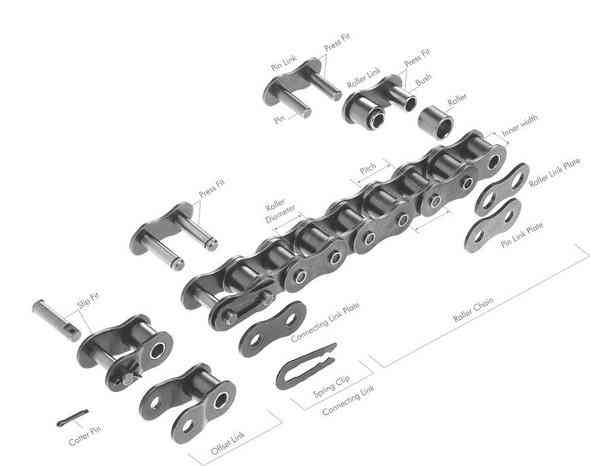
Roller sprocket
If you are planning to purchase roller sprockets for your application, you should first look at the various types available. Sprockets available for single-strand roller chains are manufactured by Boston Steel – Type B sprockets are drilled to size. They are available in 1/4, 3/8, 1/2, 5/8, 3/4 and 1″ pitch sizes.
The diameter of the sprocket is important when choosing the right sprocket for your application. Using a caliper to measure the diameter of a toothless plate is a good way to determine the exact size of the sprocket. A caliper is the diameter of a plate without teeth. On Type B and C sprockets, the hub diameter measures the thickness of the hub.
Another type of sprocket is the steel split sprocket, which is split in diameter. This type is easy to install and remove, and is held together by bolts in the hub. Typically, split sprockets have chain pitches ranging from 40 to 240 and bores ranging from 3/4″ to 6″. The split sprockets are designed with one pointing towards the ceiling and the other two parallel to the floor.
When shopping for sprockets, it is important to remember that they are designed specifically for a specific chain. All chains are manufactured to specific standards. In the United States, the most common standard is ANSI. The chain pitch is the distance between the center of each pin and the center of the next pin. In the US, the standard is always measured in eight-inch intervals.
In addition to sprocket size, sprocket pitch and the surface area also affect chain life. Unlike belt sprockets, which are made of forged steel, the teeth on roller sprockets are stamped from steel sheet or pressed from powdered metal. The harder the teeth, the longer the chain will last.
Roller chain pitch
The pitch of a roller chain is the distance between the sprocket and the pin. The smaller the thread pitch, the smaller the bushing wear. Generally speaking, the smaller the pitch, the longer the life of the chain. For best performance and longest life, manufacturers recommend a minimum chain pitch of 2% to 3%. Chain pitch is important to ensure proper performance, and the manufacturer recommends that you replace the chain when it reaches 2% to 3% of normal.
To determine the correct chain pitch for a particular chain, first determine the sprocket size and pitch. Pitch is the distance between pin centers, measured in 1/8 inch increments. The pin diameter of the chain is also important. If you’re not sure about the pin diameter of your chain, measure a few links to get a good average reading. Alternatively, use a caliper to measure the inside diameter of the sprocket and count the number of teeth.
When sizing a sprocket, measure the chain between the gears with a caliper and compare it to the measurements on the chain size chart. Make sure you have checked all the specs and checked the correct chain pitch. Then, choose the correct chain pitch for your needs. This is a critical step in choosing the right chain. So get the correct pitch for your roller chain. Correct pitch helps ensure maximum performance and safety.
To identify a specific type of roller chain, measure its tensile strength. This represents the amount of load the chain can withstand before breaking. Another key parameter to consider is fatigue strength. Chains with high fatigue strength are more resistant to rust and wear than chains with low fatigue strength. The numbers on the right in the standard numbering represent normal or light duty chains, while the numbers on the left represent the pitch of heavy-duty chains.
Double pitch roller chains are a variant of single pitch chains. They are manufactured according to ISO 606 and meet the same standards as single pitch chains. They are mainly used in applications with lower requirements for speed and power transmission. The plates of double pitch roller chains are also longer than single pitch chains. The double pitch drive series is also used for elevator and long conveyor drives. There are three main types of roller chains: single-pitch chains, double-pitch carriers, and oversized rollers.
Roller chain width
When buying a roller chain, one of the first decisions you must make is its width. To make this determination, you need to measure the overall width of the chain, the diameter, and the width of each roller. You must also know the height and thickness of the board. After taking these measurements, you can start shopping for the perfect roller chain. But before you buy a new chain, it’s important to know what to expect from the chain itself.
There are many different types of roller chains. These chains are available for ANSI and metric measurements. They come in single-stranded and double-stranded variants. They are usually used for power transmission. Other types include agricultural, automotive, conveyor, multi-strand, and four-strand chains. These charts also include a chart so you can easily see the exact size you need. Listed below are some of the benefits of buying a roller chain.
Roller diameter and pin diameter are important factors in choosing the correct chain width. The width of the chain is the nearest binary fraction of 5/8 of an inch. It should be at least half the thickness of the sprocket, and the plate thickness is one-eighth the width of the chain. Overweight chains are indicated with the suffix H. The pitch and width of the chain are determined by the working load and machine speed.
The outer links of the roller chain are called pin links. These pins are inserted into the bushings of the adjacent roller links. They are held in place by cotter pins. Pin links are usually pressed into the pins of heavy-duty chains. These pins are used to hold the rollers in place. However, these pin chains can reduce the power rating of roller chains by up to 20%.
The ANSI 29.1 Steel Chain Specification specifies a minimum pitch in inches and ultimate strength of 12,500 x pitch in inches. At the same time, the O-ring chain greatly reduces wear due to its lubricating effect. O-ring and X-ring chains contain a lubricant injected by vacuum when riveting the chain together. Transmission chains are tested and governed by standards bodies such as ANSI. In 2011, the American Society of Mechanical Engineers developed a standard for precision power transmission chains.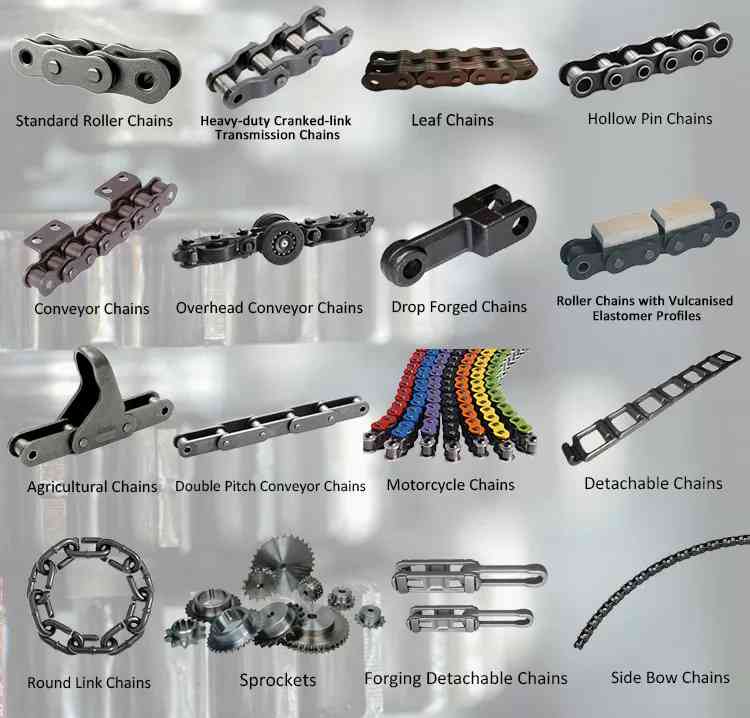
Roller chain tensile strength
One of the most important indicators of roller chain strength is tensile strength. This measurement refers to the amount of load the chain can withstand before breaking. Another measure, called fatigue strength, refers to the maximum load a chain can withstand before it breaks. The strength of a roller chain depends on its size, the quality of the steel used in its construction, and the heat treatment. There are also differences in the types of shot peening used to treat steel, pitch holes, and link plates.
When choosing a roller chain, the workload is critical. This is the maximum load the chain can withstand before fatigue failure occurs. This measurement is critical because it helps determine the type of load applied to the chain. When deciding which roller chain to buy, be sure to consider the mechanical type and desired strength. Then, make sure it meets strength and load-carrying capacity requirements.
The ultimate tensile strength of a roller chain is based on the manufacturer’s recommended maximum tensile strength. However, the actual tensile strength may be higher or lower than this value. The working load limit of a roller chain can also be calculated by multiplying the chain diameter by the grade. The working load limit of a chain is the highest tension it can withstand before breaking. This value is usually expressed in points.
The maximum tensile strength of roller chains varies by chain type. The single-strand heavy chain has thick side plates for higher shock loads. Single strand heavy-duty roller chains, also known as “bushing” roller chains, are also available. Double-stranded heavy chains are structurally similar, but they have two layers of steel connected by pins that are nearly twice as strong as standard roller chains.
The tensile strength of a single-strand roller chain is approximately 500 tons. In comparison, a single-chain blockchain has a tensile strength of 900. The tensile strength of the two is similar, and it is not recommended to choose one or the other. Although steel and titanium chains are considered the strongest materials for roller chains, these materials are not magnetic.
editor by czh 2022-12-25