Packaging & inspection
Short machine footprints and closely spaced stations can favor small pitch and tightly controlled pin projection. Cross rods and carriers should clear guards, sensors and product guides over the complete sprocket path.
Japan market
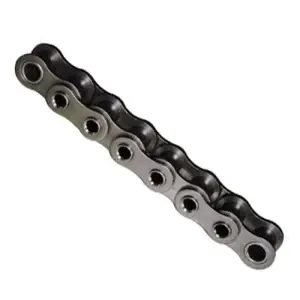
Japan’s packaging and food-equipment market combines compact machine design, careful dimensional control and growing labor-saving automation. Hollow pin chain is especially useful when a machine needs closely spaced carriers, removable cross rods or fixtures that must repeat accurately through indexing and transfer sections.
Japan Packaging Institute reported packaging-related machinery production of ¥530.9 billion in 2025.
The 2025 production value increased 4.8% from the revised 2024 level.
JPI reported about 257,400 packaging-related machinery units produced in 2025.
METI continues programs around robot-friendly environments and labor-saving automation in food manufacturing.
Short machine footprints and closely spaced stations can favor small pitch and tightly controlled pin projection. Cross rods and carriers should clear guards, sensors and product guides over the complete sprocket path.
Japanese food-factory automation increasingly combines conveyors with robots, inspection and hygienic equipment. Where cleaning is frequent, chain material, rod material, drainage and lubrication restrictions need to be considered together.
Fixture conveyors require stable carrier location from station to station. The chain pitch, strand matching and attachment tolerances should be treated as part of the positioning system rather than as an isolated replacement component.
For a replacement, exact geometry matters. Measure several pitches, the hollow bore, inner width, roller or bush diameter and overall pin projection, then compare the chain against the sprocket and guide rather than relying only on visual similarity.
In a compact conveyor, a small dimensional mismatch can create contact with covers, sensor brackets or neighboring mechanisms. When sending an RFQ, include not only chain width but the maximum side-to-side envelope of the hollow pin, retaining hardware and cross rod. If the machine has an indexing stop, explain whether the chain itself establishes position or whether the station locates the carrier independently.
For parallel chains joined by rods or pallets, the distance between strand centerlines is critical. If the carrier is rigid, ask whether the chains need matched length. Unequal elongation can skew the carrier and increase guide friction. This is especially important where a robot, vision system or insertion station expects the fixture to arrive square.
| Requirement | Good starting family | What to confirm |
|---|---|---|
| Compact indexing conveyor | Short-Pitch | Pitch accuracy, bore, small-sprocket clearance and carrier spacing |
| General packaging conveyor | MC Series | Metric dimensions, roller style, guide rail and pin projection |
| Wide cross-rod arrangement | FVC Series | Strand centre distance, rod deflection, load and matched length |
| Custom fixture conveyor | ZC Series | Envelope, carrier attachment, guide contact and sprocket fit |
| Food / washdown service | Stainless Steel | Cleaning chemistry, material requirement and lubrication |
Model markings are useful, but the fastest technical check usually combines the model with a drawing or measured dimensions. Send the machine type, pitch, hollow bore, inner width, roller diameter, pin projection, strand count, chain length, sprocket tooth count and quantity. If a fixture or cross rod passes through the hollow pin, include its diameter, material and retaining method. For a new machine, add the carrier pitch and tolerance that matters to the process.
Japan’s packaging-related machinery output remains substantial, and compact packaging, food production and factory automation are important application areas. In a compact machine, there is less room to absorb a wrong chain envelope. Confirm not only pitch but also side-plate height, overall width, pin projection, roller or bush diameter and the clearance around the attachment. A hollow pin that is only slightly too small for the intended rod can force an unnecessary redesign of the carrier system.
For indexing equipment, the chain should be treated as one part of a positioning system. Sprocket quality, shaft alignment, guide support, chain tension and the stiffness of cross rods all influence how consistently a fixture arrives at the work station. If two chains support one carrier, provide chain centre distance, carrier width and whether matched strand lengths are required. This is more useful than asking for a chain by pitch alone.
Japan continues to promote labor-saving and robot-friendly approaches in food production. In these lines, hollow pins can support removable bars, trays, lightweight flights or fixtures, but the attachment should be designed for cleaning and maintenance access. Tell us whether parts are removed for sanitation, whether water or detergent reaches the chain, and whether the conveyor operates in a dry, humid or washdown zone.
Stainless hollow pin chain is a useful starting category where moisture or corrosion is a concern. However, the final decision should also consider guide material, sprocket compatibility, cleaning chemistry and lubrication. For dry packaging and electronics assembly, compact short-pitch chains may be more important than corrosion resistance because machine size, smooth indexing and fixture spacing dominate the design.
For OEM projects, keep the chain model and attachment drawing under revision control. Record finished length or pitch count, connecting arrangement, rod diameter, rod retention method and sprocket details. If an application uses a custom carrier, separate the carrier drawing from the chain model so replacement chain can be reordered without assuming the entire attachment assembly is standard.
Short-pitch hollow pin chains are often attractive where the conveyor must fit inside a compact machine or where attachment intervals need to be fine. MC, FVC and ZC families can suit larger conveyor geometries and different roller arrangements. Rather than selecting by industry label, compare the actual chain envelope and attachment method with the machine. Send a drawing if the carrier or rod geometry is critical; that is the fastest way to rule out a family that will not fit.
Include the chain model or measured dimensions, attachment or cross-rod drawing, sprocket information, operating speed and load, environment, quantity and delivery destination. We can review a new-machine requirement or a replacement chain.
Request a Quote
Send the chain model or dimensions, attachment drawing, sprocket information, operating speed and load, environment and quantity. We will help you identify a suitable hollow pin chain configuration.