Germany
€16.1B food-processing and packaging machinery production reported for 2024, with €10.6B in exports. Buyers often value metric documentation, reliable interchange data, hygienic design awareness and long service life.
International supply
Compare hollow pin conveyor chains for machine building, line upgrades and replacement projects across Germany, the United States, Japan, Italy, India, Southeast Asia and Mexico. The market guides below combine the local machinery landscape with practical chain selection, attachment design and RFQ information.
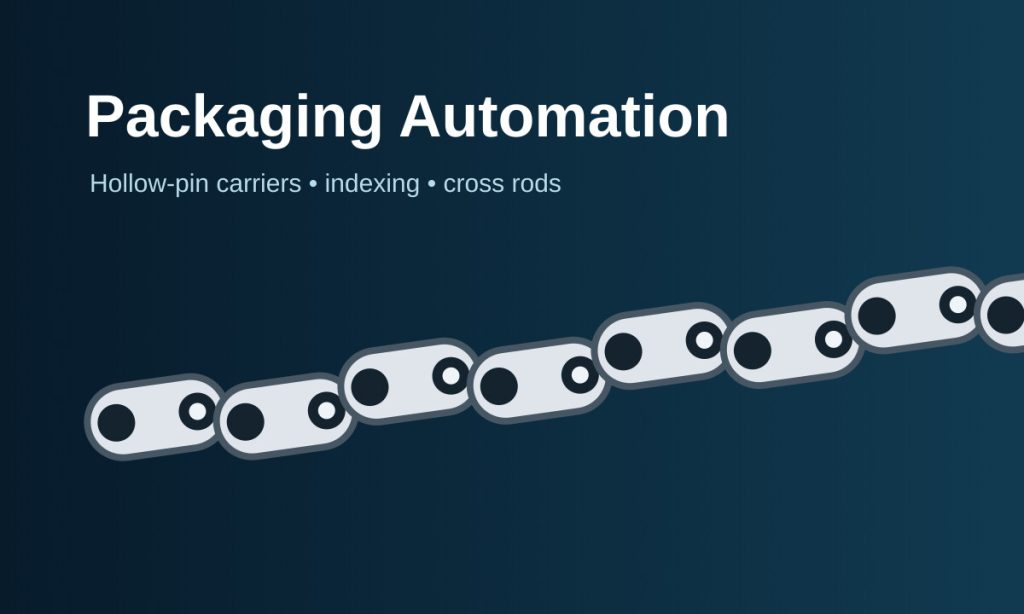
A hollow pin chain can perform the same mechanical role in every country, but the buying context is not the same. German and Italian OEMs sit inside major export-oriented food and packaging machinery clusters. U.S. plants emphasize uptime, flexible changeovers and serviceability across a large installed base. Japan combines compact equipment, precision automation and food-factory labor saving. India is expanding packaging automation across FMCG, pharmaceuticals and co-packing. Southeast Asia is highly diverse, with supplier service, spare-parts response, EPR policies and automation maturity varying by country. Mexico combines packaging investment with nearshoring-driven manufacturing growth.
€16.1B food-processing and packaging machinery production reported for 2024, with €10.6B in exports. Buyers often value metric documentation, reliable interchange data, hygienic design awareness and long service life.
The U.S. packaging machinery market reached $11.3B in 2024. High-SKU production, compact retrofits, labor constraints and downtime reduction keep flexible, serviceable conveyor components relevant.
Japan reported ¥530.9B of packaging-related machinery production in 2025, up 4.8% by value. Compact layouts, accurate carrier spacing and food-factory automation are strong design themes.
Italian packaging machinery turnover reached about €10.46B in 2025, with more than €8.1B exported. Food, beverage and pharmaceutical machinery are central end-user sectors.
Current packaging investment is shaped by food, beverages, personal care, pharmaceuticals, co-packing, urban consumption and e-commerce. Buyers increasingly compare automation, localization and format flexibility together.
PMMI’s 2026 regional study highlights six markets with different automation maturity, workforce pressures, EPR frameworks and supplier-service expectations. Indonesia is especially important in packaging machinery imports.
Mexico’s 2026 packaging investment is concentrated in food, beverage and personal care, while nearshoring and labor pressures are reinforcing phased automation, digital tools and capacity upgrades.
German, Italian and Japanese projects are usually metric from the start; U.S. replacement work may arrive in inch dimensions. The RFQ should preserve the original model code and clearly state units.
U.S., Mexican and Southeast Asian plants often place strong weight on spares, serviceability and quick replacement. A chain that is easy to identify and reorder can be as important as the initial machine specification.
Germany, Japan, Italy and the United States all have substantial food-processing and packaging equipment sectors. Stainless construction may be relevant where moisture, cleaning chemistry or hygiene requirements affect the conveyor.
Japan, Germany and Italy have strong machine-building ecosystems, while India, Mexico and Southeast Asia are adding automation quickly. Hollow pins support removable rods, fixtures and carriers when attachment positions must repeat at chain pitch.
Export-oriented OEMs may specify a chain during design. Maintenance teams may only have a worn sample. The website therefore supports both model-based selection and dimensional reverse identification.
Destination, annual demand, required documentation, packaging, matched strands and inspection needs should be stated early so the quotation reflects the real purchasing requirement.
Market context helps predict the questions a buyer may ask, but chain selection is still governed by geometry and duty. Confirm pitch, hollow-pin bore, inner width, roller or bush arrangement, side-plate envelope, sprocket fit and attachment geometry. Then describe product load, conveyor speed, starts and stops, contamination, temperature, moisture, cleaning, lubrication restrictions and the number of parallel strands.
| Requirement | Good starting family | What to confirm |
|---|---|---|
| Compact packaging and indexing | Short-Pitch Hollow Pin Chains | Pitch, sprocket diameter, bore, carrier spacing and speed |
| General cross-rod conveyor | MC Series | Pitch, bore, roller arrangement, guide support and rod span |
| Larger conveyor envelope | FVC Series | Load, chain center distance, attachment hardware and sprocket |
| Alternative conveyor geometry | ZC Series | Chain envelope, roller type, guide rail and carrier position |
| Moisture or washdown | Stainless Steel Hollow Pin Chains | Material requirement, cleaning chemistry, lubrication and load |
For a new machine, define the chain at the same time as the sprocket, guide rail and attachment system. Export-oriented machinery builders usually need repeatable part identification, drawing control and a stable replacement path for the end user. Tell us the destination market, machine type, expected annual build quantity and whether the chain will be used in matched parallel strands.
For packaging and automation equipment, also state the product format range and changeover concept. Hollow pins can make removable carrier hardware practical, but the bore, rod diameter and retention method should be chosen as a system rather than as separate parts.
Maintenance teams often start with a worn chain, a machine manual or an old part number. Measure several pitches under light tension, record hollow bore, inner width, roller or bush diameter and overall pin projection, then photograph the chain on the sprocket and guide. This is especially useful where the installed machine mixes inch and metric components.
If the line is critical, include the required shutdown window, number of chains in service, normal replacement interval and whether matched lengths are needed. That lets the quotation focus on interchange risk as well as the chain itself.
International buyers may ask for more than a dimensionally correct chain. Packaging OEMs can require drawings that remain stable across repeat machines. Food processors may ask about stainless material, cleaning compatibility or lubrication restrictions. Plants with imported equipment may need an interchange against an unavailable original model. Multi-site groups may want one chain family standardized across several factories.
Use the country guides to understand the local machinery context, then use the selection guide and live product catalogue to confirm the mechanical details. The final chain choice should always be based on the machine interface and operating duty, not on geography alone.
Include the chain model or measured dimensions, attachment or cross-rod drawing, sprocket information, operating speed and load, environment, quantity and delivery destination. We can review a new-machine requirement or a replacement chain.
Request a Quote
Send the chain model or dimensions, attachment drawing, sprocket information, operating speed and load, environment and quantity. We will help you identify a suitable hollow pin chain configuration.