High-SKU consumer goods
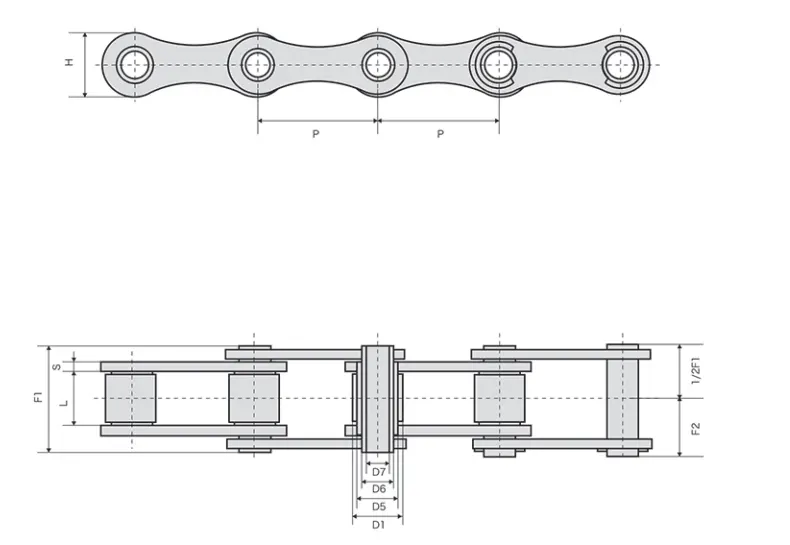
Flexible packaging and secondary packaging lines often need adjustable pushers, carriers and guides. Hollow pins make it easier to mount removable hardware at repeating chain intervals.
India market
India’s packaging machinery market is being reshaped by urban consumption, e-commerce, manufacturing expansion and growing automation across food, beverages, personal care, pharmaceuticals and co-packing. Hollow pin chain is a useful platform for flexible carriers and attachments where machinery must handle more formats without becoming difficult to maintain.
PMMI’s 2025 India study highlights expanding demand across food and beverage packaging machinery.
Pharmaceutical, personal-care and co-packing operations are also important automation markets.
Buyers increasingly compare imported technology with local integration, service capability and localization of parts.
Retail and e-commerce growth increase the need for machinery that can handle varied materials, SKUs and package formats.
Indian projects can range from new high-speed packaging lines to cost-sensitive upgrades of existing conveyors. The chain should therefore be specified around the machine duty rather than by a single “heavy duty” label. A compact packaging machine may need short pitch and accurate fixture spacing. A wider food conveyor may need two matched strands with cross rods. A retrofit may need exact interchange with an existing sprocket so the project can avoid replacing more of the machine than necessary.
Flexible packaging and secondary packaging lines often need adjustable pushers, carriers and guides. Hollow pins make it easier to mount removable hardware at repeating chain intervals.
Moisture, product residue and cleaning vary widely by plant. If stainless is required, state the grade and cleaning conditions; if carbon steel is acceptable, focus on lubrication, contamination control and wear.
Pharma packaging can require clean machine construction and documentation. Chain geometry, attachment hardware and requested certificates should be written into the RFQ rather than assumed.
Contract packers may run many customer formats. A modular carrier system using hollow pins can support change parts, provided the attachment hardware is designed for quick, repeatable installation.
PMMI’s India research points to growing automation and localization. For a chain buyer, the practical implication is that spare parts and repeat identification should be planned at the same time as the first machine. Record the final chain model, pitch count, attachment drawing revision and sprocket data in the machine BOM. If a custom cross rod or carrier is used, keep that drawing separate from the chain model so each item can be reordered correctly.
Dust, heat, washdown and lubricant availability vary by industry and plant. A food line, a pharmaceutical packer and a warehouse conveyor can therefore require very different chain materials even when the pitch is similar. Provide the operating environment, hours per day, speed, product load and cleaning routine before choosing between a standard carbon-steel family and a stainless option.
| Requirement | Good starting family | What to confirm |
|---|---|---|
| Compact packaging and cartoning | Short-Pitch | Carrier spacing, sprocket size, bore and high-SKU changeover |
| General FMCG conveyor | MC Series | Pitch, roller style, guide rail, load and attachment geometry |
| Wide processing conveyor | FVC Series | Strand spacing, cross-rod span, matched length and duty |
| Custom plant conveyor | ZC Series | Machine envelope, guide support and sprocket interchange |
| Wet food / pharma zone | Stainless Steel | Grade requirement, cleaning chemistry, lubrication and quantity |
A visually similar chain may create hidden retrofit cost if the bore, pin projection or roller geometry is different. Before approving an interchange, compare the chain against the existing sprocket, rail and attachment hardware. The most economical replacement is usually the one that preserves the machine interfaces and reduces installation work, not simply the one with the lowest piece price.
One group of buyers is specifying new automation for food, beverage, personal-care, pharmaceutical and co-packing lines. Another is localizing replacement parts for imported or older machines. These projects should not be quoted the same way. A new-machine RFQ can define pitch, bore, carrier geometry and sprocket from the beginning. A localization project should first preserve the existing machine interfaces before looking for cost or lead-time improvements.
PMMI’s India market work points to automation, e-commerce, urban consumption and localization as important forces. For high-SKU packaging, hollow-pin chains are useful when a machine needs modular carriers or pushers that can be changed for different products. Tell us the smallest and largest format, carrier spacing, changeover frequency and whether the same chain is expected to support multiple attachment sets.
Operating environments can range from climate-controlled pharmaceutical production to dusty dry-food handling, humid beverage plants and general factory conveyors. State ambient temperature, dust or product residue, cleaning frequency, daily run time and lubricant availability. Stainless construction can be considered for wet or corrosive zones, while a standard steel conveyor chain may be appropriate in dry service when lubrication and contamination control are reliable.
For long conveyors or wider cross-rod systems, provide the distance between strands and the mass carried by each rod or fixture. The hollow pin is an attachment point, not a guarantee that any rod span is acceptable. Rod stiffness, guide support and side loading must be considered so the attachment does not overload the chain or pull the strands out of alignment.
When replacing an imported chain, compare the worn sample with the machine drawing and sprocket. Measure several pitches, because an old chain may have elongated. Record hollow bore, inner width, roller size, plate height and total width. Photograph the sprocket tooth form and guide rail. If the original machine uses two synchronized strands, note whether the existing chain was supplied as a matched pair.
Once the replacement is confirmed, keep the approved chain model, pitch count or finished length, connection type, attachment drawing revision and sprocket data in the plant spare-parts system. This prevents future maintenance teams from restarting the identification process and makes multi-plant purchasing easier to standardize.
Include the chain model or measured dimensions, attachment or cross-rod drawing, sprocket information, operating speed and load, environment, quantity and delivery destination. We can review a new-machine requirement or a replacement chain.
Request a Quote
Send the chain model or dimensions, attachment drawing, sprocket information, operating speed and load, environment and quantity. We will help you identify a suitable hollow pin chain configuration.