Processing conveyors
Carry removable product supports, rods or fixtures between processing stations.
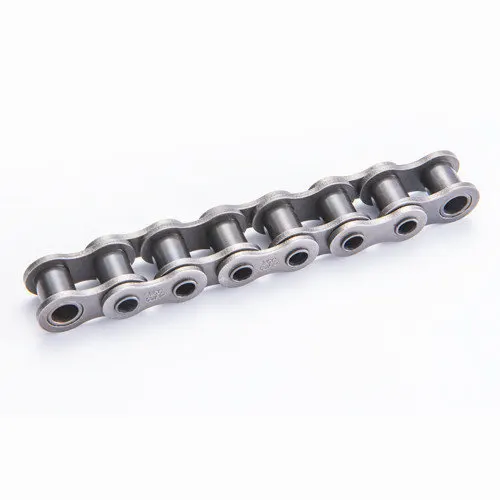
Hollow pin conveyor chains for food and beverage machinery where removable carriers, moisture resistance and washdown-friendly chain selection matter.
Carry removable product supports, rods or fixtures between processing stations.
Use repeatable attachment spacing for guides, pushers and carrier elements around filling or handling equipment.
Select stainless or corrosion-resistant configurations for areas exposed to water and frequent cleaning.
Continue product control into tray, carton or case handling using the same hollow-pin attachment concept.
Stainless steel hollow pin chains are the main family to compare for frequent moisture or cleaning. Short-pitch stainless models can suit compact machinery, while other hollow-pin families may be considered where the environment allows a different material or surface treatment.
Send the chain model or pitch, bore, inner width, attachment drawing, speed, load, cleaning frequency, water temperature, cleaning chemicals, lubrication requirements, requested stainless grade if specified, strand quantity and chain length.
Food-processing environments vary widely. Specify the actual washdown chemistry, temperature, humidity, product residue and lubrication restrictions instead of selecting stainless material by appearance alone.
If you are replacing an existing chain, include the machine make/model when available, photos of the chain on the sprocket and guide, several measured pitches, hollow bore, inner width, roller or bush diameter, overall pin projection and attachment dimensions. This makes it much easier to compare the existing conveyor with a suitable hollow pin chain model.
Send your drawing, dimensions and operating conditions. We can help you compare a suitable series and model for the conveyor.
Food plants often contain several very different conveyor environments. A chain near open product, water or foam cleaning has different needs from a chain on a dry carton or case conveyor. Tell us exactly where the hollow-pin conveyor sits in the process. This avoids selecting stainless material for an area that does not need it—or using a standard construction where repeated moisture would make maintenance difficult.
Describe water exposure, cleaning frequency, detergent chemistry and whether the chain is rinsed or left damp. Attachment rods and sprockets should be reviewed together with the chain material.
Flour, powders, crumbs or other residue can affect lubrication and wear. Guide access and cleaning intervals can matter as much as corrosion resistance.
Dry packaged product may prioritize compact transfer, format change and uptime rather than full washdown construction.
Hollow pins can support removable hardware when the joint is easy to clean and does not create inaccessible product traps.
When stainless hollow-pin chain is requested, specify the grade if your machine standard requires one. Also state the material of rods, fasteners, sprockets and guides. Mixed materials, trapped moisture and cleaning chemicals can create problems that are not solved by changing the chain alone. The conveyor should allow inspection and cleaning around the attachment interface.
Lubrication needs must also be discussed early. Some food zones restrict lubricants or require a particular approved product. If lubrication is limited, speed, load, wear surfaces and maintenance interval deserve extra attention. Do not assume a corrosion-resistant chain can run indefinitely without suitable maintenance.
A cross rod passing through two hollow-pin strands can carry trays, flights, supports or product fixtures. Provide the strand spacing, rod diameter and material, unsupported rod length and load. A long rod can bend and impose side load on the chain. If carriers are removed for cleaning, show the retention method so operators can reinstall them consistently.
| Condition | Information to send | Why it matters |
|---|---|---|
| Foam washdown | Cleaning chemistry, frequency and rinse practice | Material and lubrication discussion |
| Dry dusty product | Residue type and cleaning interval | Wear and lubricant contamination risk |
| Two-chain carrier | Centre distance, rod span and load | Alignment and rod bending |
| Direct product area | Machine hygiene requirements | Attachment access and cleanability |
Food equipment is easier to maintain when operators can see the chain, attachment and guide at representative locations. During design, leave access for visual inspection of rod retention, side-plate wear and sprocket engagement. If guards must be removed, make the inspection interval part of the maintenance procedure so problems are found before a carrier becomes loose.
After sanitation, look for standing water, trapped residue or a joint that no longer articulates freely. These observations help distinguish corrosion, contamination and alignment issues. A stainless chain should still move freely through every joint and remain correctly aligned with the guide.
For seasonal products or recipe changes, also identify whether carrier spacing or product supports change during the year. A removable attachment can make the conveyor more flexible, but the replacement hardware should be labeled and stored so the correct parts return to the correct chain positions after sanitation.
Request a Quote
Send the chain model or dimensions, attachment drawing, sprocket information, operating speed and load, environment and quantity. We will help you identify a suitable hollow pin chain configuration.