Fixture conveyors
Mount workpiece nests or removable fixtures at repeatable chain intervals.
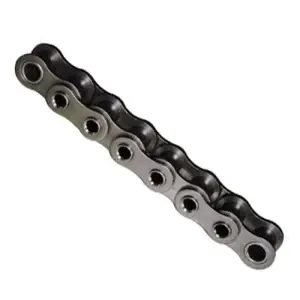
Hollow pin chains for fixture conveyors, indexing systems and assembly automation that need repeatable workpiece carriers and custom attachments.
Mount workpiece nests or removable fixtures at repeatable chain intervals.
Keep carriers synchronized as parts move between assembly, test and inspection operations.
Use cross rods, pushers or supports to move components through compact production cells.
Replace special chain arrangements where the existing attachment can be recreated around a hollow pin.
Short-pitch chains are well suited to compact indexing and close fixture spacing. MC, FVC and ZC families offer additional size and roller choices when the conveyor envelope or support arrangement is larger.
Send pitch, hollow bore, chain center distance, fixture drawing, fixture weight, product weight, conveyor speed, index cycle, number of strands, sprocket data, guide arrangement and any critical side clearances.
State whether the line is dry, dusty, oily, humid or washed. Also describe temperature and lubrication practice because these conditions affect chain construction and maintenance.
If you are replacing an existing chain, include the machine make/model when available, photos of the chain on the sprocket and guide, several measured pitches, hollow bore, inner width, roller or bush diameter, overall pin projection and attachment dimensions. This makes it much easier to compare the existing conveyor with a suitable hollow pin chain model.
Send your drawing, dimensions and operating conditions. We can help you compare a suitable series and model for the conveyor.
Assembly and light automation lines often use the conveyor to present a workpiece to sensors, robots or manual stations. Hollow pins can provide repeatable mounting positions for pallets, nests, brackets or cross rods. The key design question is not only whether the chain can pull the load, but whether the complete conveyor keeps fixtures aligned through acceleration, stopping and sprocket travel.
Correct tooth form and aligned shafts help both strands advance together. Worn or mismatched sprockets can create timing variation even with new chain.
Guide rails support the chain and resist side movement. Check roller or bush position against the rail and keep cross rods clear through curves or transfers.
A heavy fixture or an off-centre workpiece can twist the attachment. Provide total fixture mass, centre of gravity and the distance from the hollow-pin centreline.
Matched chain lengths and equal tension can be important when one pallet bridges two chains. Include chain-centre distance and pallet width in the RFQ.
Frequent indexing can create higher dynamic forces than steady conveying. State the cycle time, acceleration/deceleration method, fixture mass and number of starts per hour. If a mechanical stop or locator takes final positioning load, describe it. The chain should transport the fixture into position without being used as an unintended precision stop.
| Automation goal | Hollow-pin use | Buyer check |
|---|---|---|
| Workpiece pallet | Mount cross bars or pallet brackets | Fixture weight, strand spacing and matched length |
| Indexing station | Repeat carrier interval | Pitch, sprocket, tension and stop frequency |
| Sensor trigger | Attach flag or marker hardware | Clearance, repeat position and retention |
| Quick product change | Exchange removable fixtures | Bore, rod fit and operator access |
Before loading workpieces, verify that both chains have equal effective length and similar tension. Move the conveyor by hand or at low speed and watch one carrier through the sprockets and guides. If the carrier skews, do not force the system by increasing tension; check shaft alignment, sprocket position, guide friction and attachment geometry first.
After production begins, inspect the hollow-pin attachment for fretting, looseness or uneven wear. A fixture that repeatedly pushes sideways against a station can transmit that load into the chain. Correcting the station alignment early is usually more effective than simply fitting a heavier chain.
Assembly stations often use locators, clamps or robot tooling that contacts the workpiece after the carrier arrives. Make sure these devices do not push the carrier sideways against the chain. If a locator supplies final precision, allow the conveyor to present the part consistently without forcing the chain to absorb the locating load.
For future product variants, keep spare hollow-pin positions or a modular carrier pattern where practical. A well-documented attachment interface can let the machine accept a new fixture without redesigning the entire chain path.
If station timing is controlled electronically, record the encoder or sensor relationship to carrier pitch. When the chain is replaced, this makes it easier to restore the original setup. Where a pallet is located mechanically at each station, check that the locating device takes the final process load instead of pushing continuously against the conveyor chain.
Request a Quote
Send the chain model or dimensions, attachment drawing, sprocket information, operating speed and load, environment and quantity. We will help you identify a suitable hollow pin chain configuration.