High-SKU packaging lines
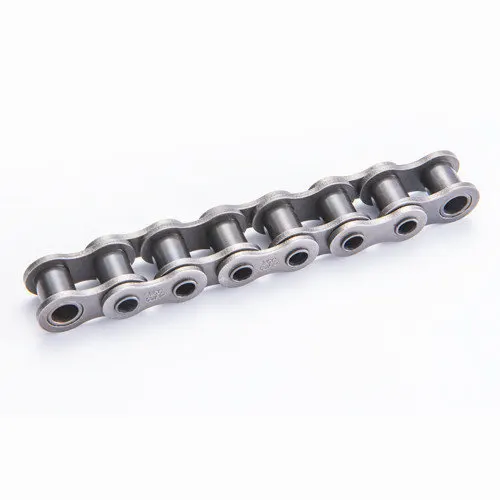
Frequent format changes make removable pushers, guides and carrier fixtures valuable. Hollow pins give the machine builder a repeatable attachment point without requiring a permanently extended pin on every location.
United States market
U.S. buyers often balance new automation with a very large installed base of packaging, processing and material-handling equipment. Hollow pin chain is useful when plants need repeatable carriers, cross rods or removable fixtures and when maintenance teams must identify a replacement from a model number, drawing or worn sample.
PMMI reported U.S. packaging machinery sales of $11.3 billion in 2024.
PMMI’s 2025 industry outlook forecast modest U.S. packaging machinery growth while buyers focused on practical efficiency.
PMMI/FPSA reported 2025 U.S. food and beverage processing machinery shipments at about $6.2 billion.
Current research emphasizes sanitation, workforce constraints, aftermarket support, flexible formats and maintainability.
Frequent format changes make removable pushers, guides and carrier fixtures valuable. Hollow pins give the machine builder a repeatable attachment point without requiring a permanently extended pin on every location.
Sanitation, inspection access and maintenance intervals matter in food plants. Stainless hollow pin chains can be evaluated where moisture or cleaning exposure is significant, while the full conveyor still needs correct guides and lubrication practice.
U.S. plants often keep productive equipment in service for many years. A replacement inquiry may arrive with an old ANSI-style reference, an OEM drawing or only a worn sample, so dimensional identification and sprocket compatibility are central.
Fixture conveyors and material-handling systems may use cross rods, pallets or pushers. Plants looking to reduce manual handling often want attachments that can be serviced without rebuilding the complete conveyor.
U.S. inquiries may mix inch and metric data, especially when an imported machine uses metric chain but the maintenance department measures in inches. Do not convert model markings or silently round dimensions. Send the original model code, state the unit system for every dimension and measure several chain pitches rather than one worn joint. If the conveyor uses two strands, include centre distance and whether the chains need to be matched.
Provide the model, total pitches or length, sprocket tooth count, photos of wear, guide condition and the date the machine must return to service. If a chain has stretched enough to damage engagement, plan to inspect the sprockets rather than installing a new chain on severely worn teeth.
Provide the desired carrier pitch, product range, changeover method, load, speed and attachment concept. High-SKU lines benefit when fixture parts can be removed or changed without disturbing the base chain.
PMMI’s recent reporting emphasizes automated changeovers, versatile machinery, compact equipment footprints and pressure to minimize downtime. Those priorities translate directly to the conveyor interface. A hollow pin does not create flexibility by itself; the benefit appears when rods, spacers, pushers or pallets are designed so a maintenance team can access and replace them quickly. For retrofit projects, confirm the available side clearance because a retaining clip or bolt that fits a new drawing may interfere with an existing guard.
Food and beverage processors are also investing in sanitation and inspection capability. In wet areas, specify the actual cleaning routine and any material requirements for rods and fasteners as well as the chain. In dry secondary packaging, corrosion resistance may matter less than wear life, quiet tracking, compact sprocket geometry and predictable reorder information.
| Requirement | Good starting family | What to confirm |
|---|---|---|
| Compact packaging / legacy retrofit | Short-Pitch | Actual pitch, inch/metric units, sprocket fit, bore and guard clearance |
| General OEM conveyor | MC Series | Roller style, guide rail, pin projection and attachment hardware |
| Wide carrier conveyor | FVC Series | Cross-rod span, matched strands, load and start-stop duty |
| Alternative conveyor envelope | ZC Series | Machine clearance, roller geometry, carrier location and sprocket |
| Washdown processing | Stainless Steel | Cleaning chemistry, requested material, dry/wet operation and lubrication |
For an MRO order, send the current chain model, number of pitches, number of strands, required quantity and shipping destination, then attach a drawing or dimensioned photos if the chain has nonstandard hardware. For a new conveyor, add product weight, carrier weight, speed, accumulation, shock loads, guide arrangement and expected operating hours. If the quote must include documentation, special packaging or inspection records, list those items before pricing.
The U.S. has a large installed base of packaging and processing machinery from domestic and international builders. A single plant can therefore contain ANSI/inch components beside metric European or Asian equipment. For replacement work, always identify units explicitly and keep the original chain marking when it exists. If no drawing is available, measure multiple pitches, hollow bore, inner width, roller or bush diameter, side-plate height and overall pin length, then compare the chain against the installed sprocket.
PMMI’s current packaging research highlights flexible production, automated changeovers, compact equipment, labor constraints and downtime reduction. Those priorities translate directly into component decisions. A hollow-pin chain used for carriers or pushers should make format changes repeatable without creating loose hardware, difficult adjustment or alignment problems. If the machine runs many SKUs, describe the carrier spacing options and whether attachments are removed during changeover.
For a critical line, the chain RFQ should include more than a part number. State operating hours, average and peak product load, conveyor speed, starts/stops, washdown or dust exposure and the number of chains required for one complete machine. If two strands run together, request matched lengths when the carrier geometry requires synchronization. If a worn chain has already damaged sprocket teeth or guides, replacing the chain alone may not restore smooth engagement.
U.S. maintenance teams also benefit from a clear reordering record. Keep the confirmed model, pitch count or finished length, attachment drawing, sprocket data and any special material requirement in the maintenance system. When the next shutdown arrives, the replacement can be quoted against controlled information rather than a second round of reverse measurement.
Food and beverage equipment brings sanitation, moisture and cleaning into the selection. Where a chain is near wet processing or frequent washdown, identify the actual cleaning routine and chemical exposure. Stainless construction may be appropriate, while dry end-of-line packaging can have different priorities such as speed, low maintenance and carrier flexibility. If lubricant use is restricted, say so at quotation stage rather than treating lubrication as an installation detail.
Include the chain model or measured dimensions, attachment or cross-rod drawing, sprocket information, operating speed and load, environment, quantity and delivery destination. We can review a new-machine requirement or a replacement chain.
Request a Quote
Send the chain model or dimensions, attachment drawing, sprocket information, operating speed and load, environment and quantity. We will help you identify a suitable hollow pin chain configuration.