Product Description
Product Description
Specification
|
Product Name |
Wholesale Price Conveyor Chain 12b-2 Roller Chains with Sprocket For Machinery |
|
Type |
Roller Chain |
|
MOQ |
1meter |
|
Brand |
CHINAMFG |
|
OEM |
YES,We also can produce special chain according to your requirements,also produce matched sprocket/wheel. |
|
Package |
According to customer’s requirements |
|
Weight |
0.56kg/Meter |
|
Delivery time |
7 days |
other models
| Chain No. | P | h2 | H | $ | T |
| 08AF29 | 12.700 | 10^)0 | 15.6 | – | 1.50 |
| O8BF9O | 12.700 | 10^0 | 17.0 | 0.3 | 1.60 |
| 0M-1STCF15 | 12.700 | 1571 | 17.0 | 1.60 | |
| 10AF2 | 15.875 | 13.00 | 17.0 | 0.3 | 2.(0 |
| 10AF15 | 15.875 | 15.09 | 17.0 | – | 2.03 |
| 10AF23 | 15.875 | 13.00 | 2(18 | 0.3 | 2.03 |
| 10AF48 | 15«5 | 1100 | 16.9 | « | 2.03 |
| 10BF50 | 15B75 | 13.70 | 17.0 | 0.3 | 1.70 |
| 10AF5« | 15^75 | 1SX)9 | 17.0 | . | 2.03 |
| P | h2 | h | 1 | S | a | |
| Chain No. | ||||||
| 08BF25 | 12.7XJ | 10.6 | 15.6 | 1.60 | 30, | |
| 08BF29 | 12. TO | 1&6 | 14.5 | 1.60 | as | 30* |
| 08BF30 | 12 | 1G6 | 14.5 | l.g | Q3 | 30* |
| 08BF35 | 12. W | ia6 | 21.5 | 1.60 | 0.6 | 30* |
| 08BF67 | 12.TO | ia6 | 16.1 | 1.60 | as | 30* |
| 0fflF195 | 12.70 | 10.6 | 45 | 1.60 | 0.4 | 30, |
| 08AF10 | 12.70 | 10.6 | L50 | – | 30* | |
| 12B-1STCF1 | 19.05 | 15.0 | 19.0 | 1.85 | – | 30, |
| 12AF33 | 19.05 | 15.6 | 19.7 | 2.42 | 0£ | 18* |
| P | hl | h2 | h | A | Q | |
| Chain No. | ||||||
| 08BF21 | 12.7 | 10 | 1Q6 | 15.0 | 10 | 0 |
Company Profile
HangZhou Terry Machinery Co.Ltd is a leading supplier of bearings, Linear motion system for CNC , Ball transfer
Unit and transmission component .the growing industrial and Favorable policy of HangZhou benefit the developm
ent of Terry Machinery .Our products are utilized in industrial, motorcycle, vehicle and Automation applications.
Now we are exporting to 46 countries. including USA, GBR , Germany , Spain, Poland ,Turkey ect .The Goal o
f Terry Machinery to provide out customers with widest range of products at competitive prices, backed with the
best Service.OUR ADVANTAGE Products Our major products & Supplied:Meet all the international standards
and ISO9001 -TS1694 Certificate Big volume in Stock, No MOQ required Personnel Our salespersons are well
trained to accommodate your requests and speak English for your conveniences.Our technicians and engineers
Experience in the Industry area exceeds 23 years Service &Quality control ,We supply detailed drawings and
offer when ever necessary,We help all customers promote and improve their sales.We inspect every piece of
products by ourselves before delivery.
Application
related product
product-list-1.html
Packing &Delivery
Customer Praise
FAQ
/* January 22, 2571 19:08:37 */!function(){function s(e,r){var a,o={};try{e&&e.split(“,”).forEach(function(e,t){e&&(a=e.match(/(.*?):(.*)$/))&&1
| Standard Or Nonstandard: | Standard |
|---|---|
| Application: | Motor, Electric Cars, Motorcycle, Machinery, Marine, Toy, Agricultural Machinery, Car |
| Hardness: | Hardened Tooth Surface |
| Samples: |
US$ 5.84/Piece
1 Piece(Min.Order) | Order Sample |
|---|
.shipping-cost-tm .tm-status-off{background: none;padding:0;color: #1470cc}
| Shipping Cost:
Estimated freight per unit. |
about shipping cost and estimated delivery time. |
|---|
| Payment Method: |
|
|---|---|
|
Initial Payment Full Payment |
| Currency: | US$ |
|---|
| Return&refunds: | You can apply for a refund up to 30 days after receipt of the products. |
|---|
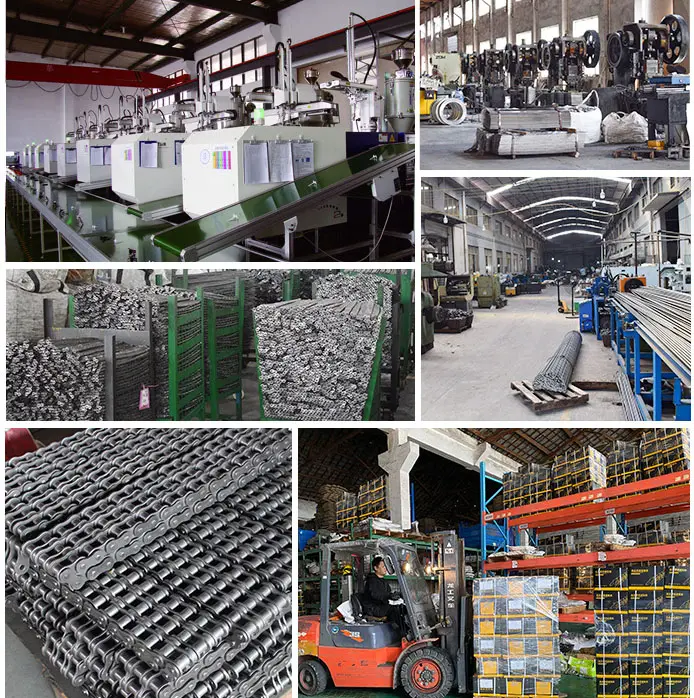
How do roller chains handle side loads?
Roller chains are designed to primarily handle axial (or in-line) loads, which are forces applied along the axis of the chain. However, they do have some capability to handle limited side loads. Here’s a detailed answer to the question:
1. Roller Design: The rollers in a roller chain are cylindrical in shape and rotate freely between the inner and outer plates. This design allows the chain to accommodate limited side loads by allowing the rollers to roll and adjust their position within the chain.
2. Bearing Surfaces: Roller chains have bearing surfaces between the pins and the bushings or rollers. These bearing surfaces help distribute the load and reduce friction, allowing the chain to handle some degree of side loads.
3. Tolerance for Misalignment: Roller chains have some tolerance for misalignment between the sprockets, which can help compensate for minor side loads. However, excessive misalignment can lead to increased wear and decreased chain life.
4. Limitations: It’s important to note that roller chains are primarily designed for transmitting power and handling axial loads. While they can tolerate some side loads, their ability to handle significant side loads is limited. Excessive side loads can cause increased wear, premature chain failure, and reduced overall performance.
To ensure the longevity and reliable performance of a roller chain, it is essential to minimize side loads as much as possible. Proper alignment of the sprockets, appropriate tensioning of the chain, and avoiding excessive side loads are important considerations when using roller chains in an application.
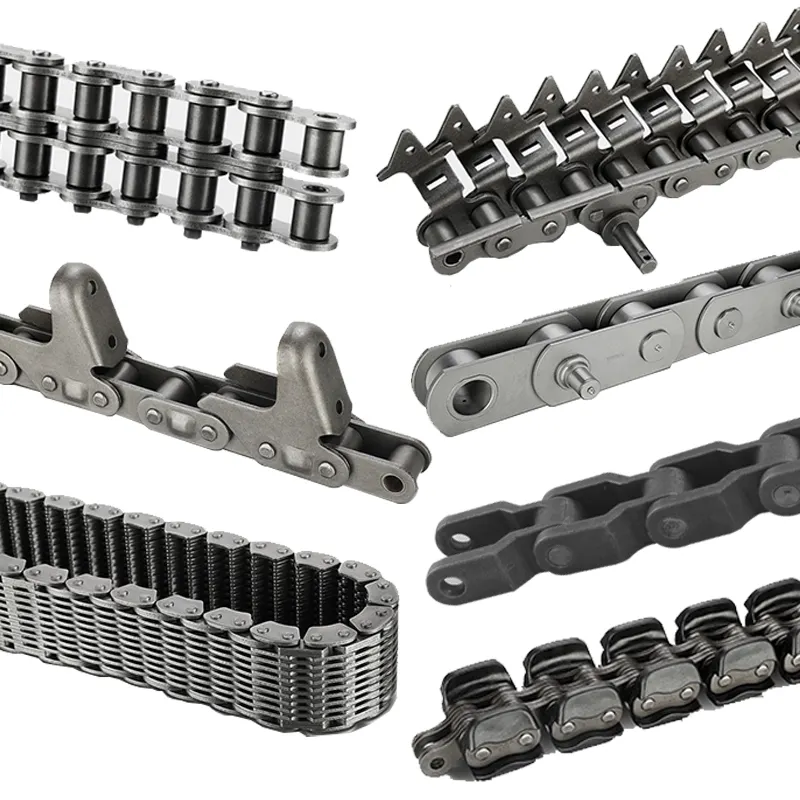
Can roller chains be used for power transmission in pumps and compressors?
Yes, roller chains can be used for power transmission in pumps and compressors. Here’s a detailed answer to the question:
1. Power Transmission: Roller chains are widely used in various industries for transmitting power between rotating components. In pumps and compressors, roller chains can efficiently transfer power from the motor to the impeller or compressor wheel, enabling the pumping or compression action.
2. Versatility: Roller chains are available in different sizes, pitches, and configurations, making them suitable for various power transmission requirements. They can accommodate a wide range of power levels and speeds, allowing pumps and compressors to operate effectively in different applications and conditions.
3. Load Handling: Pumps and compressors typically involve dynamic loads due to the movement of fluids and gases. Roller chains are designed to handle these dynamic loads effectively. The multiple rollers and pins in the chain distribute the load evenly, minimizing stress concentrations and ensuring smooth power transmission.
4. Durability: Roller chains are known for their durability and resistance to wear. They are designed to withstand demanding operating conditions, including high speeds, fluctuating loads, and exposure to contaminants. Proper lubrication and maintenance further enhance their longevity and reliability in pump and compressor applications.
5. Easy Installation and Maintenance: Roller chains offer ease of installation and maintenance. They can be easily installed, adjusted, and tensioned to ensure proper alignment and operation. Routine maintenance tasks such as lubrication and inspection can help optimize chain performance and identify any potential issues.
It’s important to select the appropriate roller chain based on the specific requirements of the pump or compressor, considering factors such as power transmission capacity, speed, load characteristics, and environmental conditions. Regular inspection and maintenance are crucial to ensure optimal performance and to detect any signs of wear or damage that may require replacement or repair.
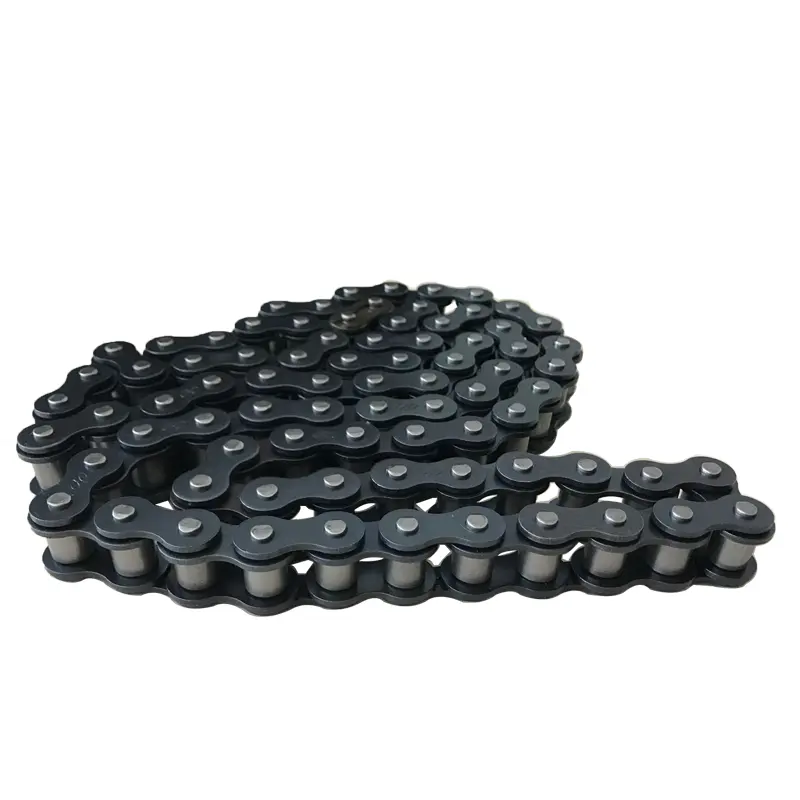
How do roller chains compare to belt drives in terms of efficiency?
Roller chains and belt drives are both widely used power transmission systems, but they differ in terms of efficiency. Here’s a detailed answer to the question:
1. Mechanical Efficiency: Roller chains generally have higher mechanical efficiency compared to belt drives. The engagement between the chain and sprockets provides a positive drive with minimal slippage, resulting in efficient power transfer. Belt drives, on the other hand, can experience some slip, especially in high-torque or heavy-load applications, leading to lower efficiency.
2. Size and Length: Roller chains are typically more compact and have a shorter pitch length compared to belt drives. This allows for more compact machine design and closer shaft spacing, reducing the overall size and weight of the power transmission system.
3. Load Capacity: Roller chains are known for their high load-carrying capacity, making them suitable for heavy-duty applications. They can handle high loads and transmit significant amounts of power without compromising performance. Belt drives have lower load-carrying capacity and are more commonly used in lighter-duty applications.
4. Speed and Torque: Roller chains are suitable for both high-speed and high-torque applications. They can operate at high rotational speeds while transmitting significant torque. Belt drives, on the other hand, may have limitations in terms of speed and torque capacity, especially in demanding applications.
5. Maintenance and Durability: Roller chains require regular lubrication and maintenance to ensure optimal performance and longevity. Belt drives, on the other hand, are generally considered maintenance-free. However, if a belt drive becomes misaligned or experiences excessive wear, it may need to be replaced entirely. Roller chains, with proper maintenance, can be more durable and have longer service life.
It’s important to note that the choice between roller chains and belt drives depends on various factors, including the specific application requirements, load conditions, speed requirements, and space constraints. Each system has its advantages and considerations, and selecting the most suitable option should be based on a careful evaluation of these factors.


editor by CX 2024-04-08
China best CZPT Brand Wholesale Price China Industry Carbon Steel Stainless Plastic Conveyor Transmission 12b-1 12b-2 12b-3 Roller Chains with Sprocket for Machinery
Product Description
Product Description
Specification
|
Product Name |
Wholesale Price Conveyor Chain 12b-2 Roller Chains with Sprocket For Machinery |
|
Type |
Roller Chain |
|
MOQ |
1meter |
|
Brand |
CHINAMFG |
|
OEM |
YES,We also can produce special chain according to your requirements,also produce matched sprocket/wheel. |
|
Package |
According to customer’s requirements |
|
Weight |
0.56kg/Meter |
|
Delivery time |
7 days |
other models
| Chain No. | P | h2 | H | $ | T |
| 08AF29 | 12.700 | 10^)0 | 15.6 | – | 1.50 |
| O8BF9O | 12.700 | 10^0 | 17.0 | 0.3 | 1.60 |
| 0M-1STCF15 | 12.700 | 1571 | 17.0 | 1.60 | |
| 10AF2 | 15.875 | 13.00 | 17.0 | 0.3 | 2.(0 |
| 10AF15 | 15.875 | 15.09 | 17.0 | – | 2.03 |
| 10AF23 | 15.875 | 13.00 | 2(18 | 0.3 | 2.03 |
| 10AF48 | 15«5 | 1100 | 16.9 | « | 2.03 |
| 10BF50 | 15B75 | 13.70 | 17.0 | 0.3 | 1.70 |
| 10AF5« | 15^75 | 1SX)9 | 17.0 | . | 2.03 |
| P | h2 | h | 1 | S | a | |
| Chain No. | ||||||
| 08BF25 | 12.7XJ | 10.6 | 15.6 | 1.60 | 30, | |
| 08BF29 | 12. TO | 1&6 | 14.5 | 1.60 | as | 30* |
| 08BF30 | 12 | 1G6 | 14.5 | l.g | Q3 | 30* |
| 08BF35 | 12. W | ia6 | 21.5 | 1.60 | 0.6 | 30* |
| 08BF67 | 12.TO | ia6 | 16.1 | 1.60 | as | 30* |
| 0fflF195 | 12.70 | 10.6 | 45 | 1.60 | 0.4 | 30, |
| 08AF10 | 12.70 | 10.6 | L50 | – | 30* | |
| 12B-1STCF1 | 19.05 | 15.0 | 19.0 | 1.85 | – | 30, |
| 12AF33 | 19.05 | 15.6 | 19.7 | 2.42 | 0£ | 18* |
| P | hl | h2 | h | A | Q | |
| Chain No. | ||||||
| 08BF21 | 12.7 | 10 | 1Q6 | 15.0 | 10 | 0 |
Company Profile
HangZhou Terry Machinery Co.Ltd is a leading supplier of bearings, Linear motion system for CNC , Ball transfer
Unit and transmission component .the growing industrial and Favorable policy of HangZhou benefit the developm
ent of Terry Machinery .Our products are utilized in industrial, motorcycle, vehicle and Automation applications.
Now we are exporting to 46 countries. including USA, GBR , Germany , Spain, Poland ,Turkey ect .The Goal o
f Terry Machinery to provide out customers with widest range of products at competitive prices, backed with the
best Service.OUR ADVANTAGE Products Our major products & Supplied:Meet all the international standards
and ISO9001 -TS1694 Certificate Big volume in Stock, No MOQ required Personnel Our salespersons are well
trained to accommodate your requests and speak English for your conveniences.Our technicians and engineers
Experience in the Industry area exceeds 23 years Service &Quality control ,We supply detailed drawings and
offer when ever necessary,We help all customers promote and improve their sales.We inspect every piece of
products by ourselves before delivery.
Application
related product
product-list-1.html
Packing &Delivery
Customer Praise
FAQ
/* March 10, 2571 17:59:20 */!function(){function s(e,r){var a,o={};try{e&&e.split(“,”).forEach(function(e,t){e&&(a=e.match(/(.*?):(.*)$/))&&1
| Standard Or Nonstandard: | Standard |
|---|---|
| Application: | Motor, Electric Cars, Motorcycle, Machinery, Marine, Toy, Agricultural Machinery, Car |
| Hardness: | Hardened Tooth Surface |
| Samples: |
US$ 5.84/Piece
1 Piece(Min.Order) | Order Sample |
|---|
.shipping-cost-tm .tm-status-off{background: none;padding:0;color: #1470cc}
| Shipping Cost:
Estimated freight per unit. |
about shipping cost and estimated delivery time. |
|---|
| Payment Method: |
|
|---|---|
|
Initial Payment Full Payment |
| Currency: | US$ |
|---|
| Return&refunds: | You can apply for a refund up to 30 days after receipt of the products. |
|---|
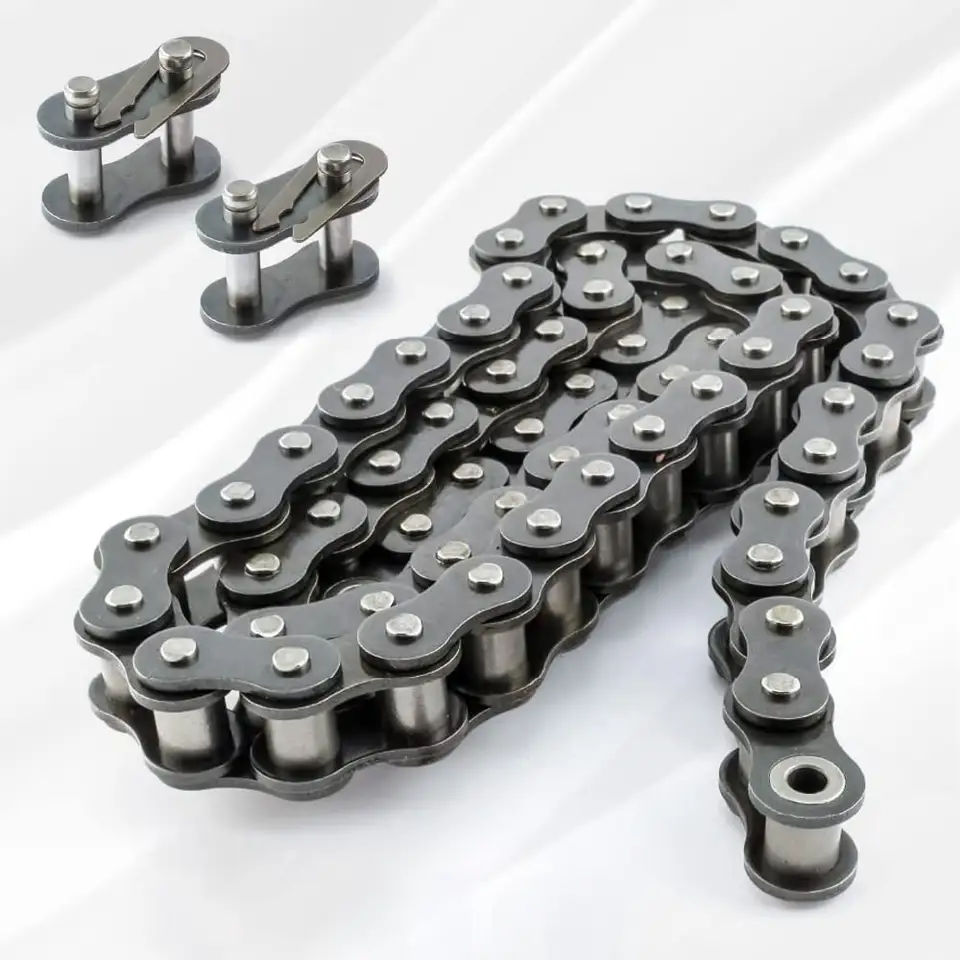
Are there any environmental considerations when using roller chains?
Yes, there are several environmental considerations to keep in mind when using roller chains. Here’s a detailed answer to the question:
1. Lubricants: The choice of lubricant for roller chains can have an environmental impact. It’s important to select lubricants that are environmentally friendly and comply with any relevant regulations. Biodegradable lubricants or those with low toxicity are often preferred to minimize environmental harm in case of leaks or spills.
2. Contamination: Roller chains can be susceptible to contamination from dust, dirt, or other particles present in the operating environment. Contaminants can accelerate wear and reduce the lifespan of the chain. Implementing proper sealing measures, such as using protective covers or enclosures, can help prevent contamination and maintain chain performance.
3. Noise and Vibration: Roller chains can generate noise and vibration during operation, which may have environmental implications, especially in noise-sensitive areas. Employing noise reduction measures, such as using noise-dampening materials or implementing sound barriers, can help mitigate the impact of chain noise on the surrounding environment.
4. Corrosion Protection: In corrosive environments, protecting the roller chain from corrosion is crucial. Corrosion not only affects the performance and lifespan of the chain but can also lead to the release of harmful substances into the environment. Using corrosion-resistant materials or applying appropriate coatings can help minimize environmental risks.
5. Energy Efficiency: Roller chains should be properly tensioned and maintained to ensure efficient power transmission. By optimizing the performance of the chain, energy consumption can be minimized, resulting in reduced environmental impact.
6. Recycling and Disposal: When roller chains reach the end of their lifespan, proper disposal or recycling should be considered. Some components of the chain, such as metal links, can be recycled to minimize waste and conserve resources. Local regulations and recycling facilities should be consulted for guidance on the proper disposal or recycling methods.
It’s important to assess the specific environmental requirements and regulations in the operating environment and choose roller chain solutions that align with sustainable practices and minimize any negative environmental impacts.
How do roller chains handle reverse motion?
Roller chains are capable of handling reverse motion in applications where the direction of movement needs to be reversed. Here’s a detailed answer to the question:
1. Bi-Directional Operation: Roller chains are designed to operate in both forward and reverse directions. The chain links and rollers are constructed to engage with the sprockets in either direction, allowing the chain to smoothly transfer power and motion.
2. Engagement with Sprockets: When the roller chain is in reverse motion, the rollers on the chain engage with the sprocket teeth in the opposite direction compared to forward motion. The engagement between the chain and the sprockets ensures a secure and reliable power transmission, allowing the chain to efficiently transfer motion in reverse.
3. Lubrication and Maintenance: Proper lubrication is essential for the smooth operation of roller chains, including during reverse motion. Adequate lubrication reduces friction and wear, ensuring the chain’s longevity and performance. Regular maintenance, including lubrication and inspection, helps identify any issues that may affect the chain’s ability to handle reverse motion and allows for timely corrective actions.
4. Proper Tensioning: Maintaining proper tension in the roller chain is crucial for its performance in both forward and reverse motion. Adequate tension ensures the chain remains engaged with the sprockets and prevents slippage or disengagement during reverse operation. Proper tensioning can be achieved through tensioning devices or adjustable mounting arrangements.
5. Load Capacity: Roller chains are designed to handle various loads, including reverse motion. However, it’s important to consider the specific application requirements and select a roller chain with the appropriate load capacity and strength to withstand the forces experienced during reverse operation.
6. Alignment and Installation: Proper alignment of the roller chain and the sprockets is essential for reliable performance in both forward and reverse motion. Ensuring correct installation, including proper alignment and tensioning, helps maintain the chain’s engagement with the sprockets and ensures smooth operation in reverse.
It’s worth noting that the specific application requirements, such as speed, load, environmental conditions, and the type of roller chain, should be considered when determining the suitability of roller chains for reverse motion. Consulting the manufacturer’s guidelines and recommendations is important to ensure proper selection, installation, and maintenance of roller chains in applications involving reverse operation.
How do you properly lubricate a roller chain?
Proper lubrication is crucial for the performance and longevity of a roller chain. Here’s a detailed answer to the question:
1. Clean the Chain: Before lubricating the roller chain, ensure that it is clean and free from dirt, debris, and old lubricant. Use a suitable cleaning agent or solvent to remove any contaminants.
2. Select the Right Lubricant: Choose a high-quality lubricant specifically designed for roller chains. Consider factors such as the operating conditions, load capacity, speed, and temperature range when selecting the lubricant. Consult the manufacturer’s recommendations for the appropriate lubricant type and viscosity.
3. Apply the Lubricant: Apply the lubricant evenly to the entire length of the roller chain. You can use a lubrication system, brush, or spray applicator for effective coverage. Ensure that the lubricant penetrates between the rollers and bushings, as well as the pins and inner plates.
4. Remove Excess Lubricant: After applying the lubricant, remove any excess oil or grease from the chain. Excessive lubrication can attract dirt and debris, leading to accelerated wear and chain failure. Wipe off any excess lubricant using a clean cloth.
5. Reapply Lubricant Regularly: Roller chains require regular lubrication to maintain optimal performance. The frequency of lubrication depends on the operating conditions and the manufacturer’s recommendations. In general, lubrication should be done at regular intervals or when the chain shows signs of dryness or wear.
6. Monitor and Inspect: Regularly monitor the condition of the lubricated roller chain. Look for any signs of wear, rust, or inadequate lubrication. If necessary, reapply the lubricant or adjust the lubrication frequency based on the chain’s performance and operating conditions.
Proper lubrication helps reduce friction, wear, and heat generation, ensuring smooth operation and extending the life of the roller chain. Following the manufacturer’s recommendations and best practices for lubrication will help maintain the chain’s performance and prevent premature failure.
editor by CX 2024-01-08
China best CZPT Brand Wholesale Price China Industry Carbon Steel Stainless Plastic Conveyor Transmission 12b-1 12b-2 12b-3 Roller Chains with Sprocket for Machinery
Product Description
Product Description
Specification
|
Product Name |
Wholesale Price Conveyor Chain 12b-2 Roller Chains with Sprocket For Machinery |
|
Type |
Roller Chain |
|
MOQ |
1meter |
|
Brand |
CSZBTR |
|
OEM |
YES,We also can produce special chain according to your requirements,also produce matched sprocket/wheel. |
|
Package |
According to customer’s requirements |
|
Weight |
0.56kg/Meter |
|
Delivery time |
7 days |
other models
| Chain No. | P | h2 | H | $ | T |
| 08AF29 | 12.700 | 10^)0 | 15.6 | – | 1.50 |
| O8BF9O | 12.700 | 10^0 | 17.0 | 0.3 | 1.60 |
| 0M-1STCF15 | 12.700 | 1571 | 17.0 | 1.60 | |
| 10AF2 | 15.875 | 13.00 | 17.0 | 0.3 | 2.(0 |
| 10AF15 | 15.875 | 15.09 | 17.0 | – | 2.03 |
| 10AF23 | 15.875 | 13.00 | 2(18 | 0.3 | 2.03 |
| 10AF48 | 15«5 | 1100 | 16.9 | « | 2.03 |
| 10BF50 | 15B75 | 13.70 | 17.0 | 0.3 | 1.70 |
| 10AF5« | 15^75 | 1SX)9 | 17.0 | . | 2.03 |
| P | h2 | h | 1 | S | a | |
| Chain No. | ||||||
| 08BF25 | 12.7XJ | 10.6 | 15.6 | 1.60 | 30, | |
| 08BF29 | 12. TO | 1&6 | 14.5 | 1.60 | as | 30* |
| 08BF30 | 12 | 1G6 | 14.5 | l.g | Q3 | 30* |
| 08BF35 | 12. W | ia6 | 21.5 | 1.60 | 0.6 | 30* |
| 08BF67 | 12.TO | ia6 | 16.1 | 1.60 | as | 30* |
| 0fflF195 | 12.70 | 10.6 | 45 | 1.60 | 0.4 | 30, |
| 08AF10 | 12.70 | 10.6 | L50 | – | 30* | |
| 12B-1STCF1 | 19.05 | 15.0 | 19.0 | 1.85 | – | 30, |
| 12AF33 | 19.05 | 15.6 | 19.7 | 2.42 | 0£ | 18* |
| P | hl | h2 | h | A | Q | |
| Chain No. | ||||||
| 08BF21 | 12.7 | 10 | 1Q6 | 15.0 | 10 | 0 |
Company Profile
HangZhou Terry Machinery Co.Ltd is a leading supplier of bearings, Linear motion system for CNC , Ball transfer
Unit and transmission component .the growing industrial and Favorable policy of HangZhou benefit the developm
ent of Terry Machinery .Our products are utilized in industrial, motorcycle, vehicle and Automation applications.
Now we are exporting to 46 countries. including USA, GBR , Germany , Spain, Poland ,Turkey ect .The Goal o
f Terry Machinery to provide out customers with widest range of products at competitive prices, backed with the
best Service.OUR ADVANTAGE Products Our major products & Supplied:Meet all the international standards
and ISO9001 -TS1694 Certificate Big volume in Stock, No MOQ required Personnel Our salespersons are well
trained to accommodate your requests and speak English for your conveniences.Our technicians and engineers
Experience in the Industry area exceeds 23 years Service &Quality control ,We supply detailed drawings and
offer when ever necessary,We help all customers promote and improve their sales.We inspect every piece of
products by ourselves before delivery.
Application
related product
product-list-1.html
Packing &Delivery
Customer Praise
FAQ
| Standard Or Nonstandard: | Standard |
|---|---|
| Application: | Motor, Electric Cars, Motorcycle, Machinery, Marine, Toy, Agricultural Machinery, Car |
| Hardness: | Hardened Tooth Surface |
| Manufacturing Method: | Rolling Gear |
| Toothed Portion Shape: | Spur Gear |
| Material: | 45mn |
| Samples: |
US$ 5.84/Piece
1 Piece(Min.Order) | |
|---|
Can roller chains be used for power transmission in motorcycles?
Yes, roller chains are commonly used for power transmission in motorcycles. Here’s a detailed answer to the question:
Roller chains have several advantages that make them suitable for power transmission in motorcycles:
1. Efficient Power Transfer: Roller chains offer high efficiency in transmitting power from the engine to the rear wheel of a motorcycle. They have minimal power loss due to their low friction and high load-carrying capacity.
2. Compact Design: Roller chains have a compact and lightweight design, making them well-suited for motorcycles where space and weight are critical considerations. Their small size allows for efficient power transfer without adding excessive weight to the motorcycle.
3. High Strength and Durability: Roller chains are designed to withstand high loads and endure the demanding operating conditions of motorcycles. They are constructed using high-strength materials such as alloy steel and undergo heat treatment to enhance their strength and durability.
4. Flexibility and Adaptability: Roller chains can accommodate various sprocket sizes, allowing for flexibility in gear ratios and customization of motorcycle performance. This enables riders to optimize the power delivery to match their riding preferences and specific road conditions.
5. Easy Maintenance: Roller chains are relatively easy to maintain in motorcycles. Regular lubrication and tension adjustment are necessary to ensure optimal performance and prolong the chain’s lifespan. Proper maintenance practices can help prevent chain elongation, reduce wear, and minimize the risk of chain failure.
However, it’s important to note that roller chains require regular inspection and maintenance to ensure safe and reliable operation. This includes checking for proper tension, lubrication, and signs of wear or damage. It’s also crucial to follow the manufacturer’s recommendations regarding chain replacement intervals and lubrication specifications.
Overall, roller chains provide an efficient and reliable method of power transmission in motorcycles, offering durability, flexibility, and ease of maintenance.
Can roller chains be used for power transmission in pumps and compressors?
Yes, roller chains can be used for power transmission in pumps and compressors. Here’s a detailed answer to the question:
1. Power Transmission: Roller chains are widely used in various industries for transmitting power between rotating components. In pumps and compressors, roller chains can efficiently transfer power from the motor to the impeller or compressor wheel, enabling the pumping or compression action.
2. Versatility: Roller chains are available in different sizes, pitches, and configurations, making them suitable for various power transmission requirements. They can accommodate a wide range of power levels and speeds, allowing pumps and compressors to operate effectively in different applications and conditions.
3. Load Handling: Pumps and compressors typically involve dynamic loads due to the movement of fluids and gases. Roller chains are designed to handle these dynamic loads effectively. The multiple rollers and pins in the chain distribute the load evenly, minimizing stress concentrations and ensuring smooth power transmission.
4. Durability: Roller chains are known for their durability and resistance to wear. They are designed to withstand demanding operating conditions, including high speeds, fluctuating loads, and exposure to contaminants. Proper lubrication and maintenance further enhance their longevity and reliability in pump and compressor applications.
5. Easy Installation and Maintenance: Roller chains offer ease of installation and maintenance. They can be easily installed, adjusted, and tensioned to ensure proper alignment and operation. Routine maintenance tasks such as lubrication and inspection can help optimize chain performance and identify any potential issues.
It’s important to select the appropriate roller chain based on the specific requirements of the pump or compressor, considering factors such as power transmission capacity, speed, load characteristics, and environmental conditions. Regular inspection and maintenance are crucial to ensure optimal performance and to detect any signs of wear or damage that may require replacement or repair.
How do you properly lubricate a roller chain?
Proper lubrication is crucial for the performance and longevity of a roller chain. Here’s a detailed answer to the question:
1. Clean the Chain: Before lubricating the roller chain, ensure that it is clean and free from dirt, debris, and old lubricant. Use a suitable cleaning agent or solvent to remove any contaminants.
2. Select the Right Lubricant: Choose a high-quality lubricant specifically designed for roller chains. Consider factors such as the operating conditions, load capacity, speed, and temperature range when selecting the lubricant. Consult the manufacturer’s recommendations for the appropriate lubricant type and viscosity.
3. Apply the Lubricant: Apply the lubricant evenly to the entire length of the roller chain. You can use a lubrication system, brush, or spray applicator for effective coverage. Ensure that the lubricant penetrates between the rollers and bushings, as well as the pins and inner plates.
4. Remove Excess Lubricant: After applying the lubricant, remove any excess oil or grease from the chain. Excessive lubrication can attract dirt and debris, leading to accelerated wear and chain failure. Wipe off any excess lubricant using a clean cloth.
5. Reapply Lubricant Regularly: Roller chains require regular lubrication to maintain optimal performance. The frequency of lubrication depends on the operating conditions and the manufacturer’s recommendations. In general, lubrication should be done at regular intervals or when the chain shows signs of dryness or wear.
6. Monitor and Inspect: Regularly monitor the condition of the lubricated roller chain. Look for any signs of wear, rust, or inadequate lubrication. If necessary, reapply the lubricant or adjust the lubrication frequency based on the chain’s performance and operating conditions.
Proper lubrication helps reduce friction, wear, and heat generation, ensuring smooth operation and extending the life of the roller chain. Following the manufacturer’s recommendations and best practices for lubrication will help maintain the chain’s performance and prevent premature failure.
editor by CX 2023-09-13
China wholesaler Steel Detachable Chain for Farm Agricultural Machinery roller chain design
Product Description
Detachable Chain For Farm Machinery
Steel Detachable Chain Specification
Chain No.:
32(pitch 29.39mm)
32W(pitch 29.39mm)
T32(pitch 29.39mm)
45(pitch 41.40mm)
52(pitch 38.30mm)
55(pitch 41.40mm)
62(pitch 42.01mm)
67H(pitch 58.75mm)
Pack Detail:
Company Profile:
1. TAI with sophisticated CNC equipment, advanced technology and perfect inspection equipment produce all kinds of chains, sprockets and other transmission equipments which can make the customers’ trust. The company since its establishment has passed ISO9/15862544283
Fax:
tran-auto
**************************************
| Chain | Links Per 10 ft | Approc Weight per 100 ft Ibs | Average Ultimate Strength Ibs | Minimum Tensile Strength Ibs | Pitch |
| 25 | 133 | 20 | 950 | 760 | 22.96 |
| 32 | 104 | 32 | 1650 | 1320 | 29.39 |
| 32W | 104 | 39 | 1650 | 1320 | 29.39 |
| 33 | 86 | 34 | 1600 | 1300 | 35.41 |
| 42 | 87 | 50 | 2300 | 1680 | 34.92 |
| 50H | 87 | 63 | 2600 | 2240 | 34.92 |
| 51 | 106 | 40 | 2100 | 1680 | 28.78 |
| 52 | 80 | 66 | 2700 | 2160 | 38.3 |
| 55 | 74 | 62 | 2800 | 2240 | 41.4 |
| 62 | 73 | 90 | 4200 | 3520 | 42.01 |
| 62A | 72 | 131 | 5500 | 4000 | 42.26 |
| 62H | 73 | 112 | 4400 | 3600 | 42.01 |
| 67H | 52 | 137 | 5500 | 4400 | 58.75 |
| 67XH | 52 | 145 | 6800 | 5500 | 58.75 |
| 67W | 52 | 144 | 4800 | 3800 | 58.75 |
| 70 | 60 | 130 | 4800 | 4000 | 51.13 |
| 72 | 59 | 131 | 4800 | 4000 | 51.43 |
| Usage: | Dedicated Special Chain |
|---|---|
| Material: | Carbon Steel |
| Surface Treatment: | Polishing |
| Feature: | Heat Resistant |
| Chain Size: | All |
| Structure: | Agriculture Chain |
| Customization: |
Available
| Customized Request |
|---|
drive chain type
Drive chains are used in a variety of industrial applications. Unlike roller chains, which are more efficient in terms of weight and size, drive chains slide on steel guides. Drive chains are often used for dirty work. Here’s what you need to know about the various types of drive chains. In this article, we’ll look at pin chains, engineered steel chains, bushing roller chains, and timing chains. These types are the most common and the most commonly used.
time chain
There are several factors to consider when deciding which drive chain to buy. What matters is how long the chain will last, as the timing chain will stretch over time. However, they are pre-stretched during manufacture to reduce the risk of stretching. Timing chains can also be noisy compared to toothed belt drives, but rails and chain tensioners can alleviate this problem. Timing chains also wear slower than belts, reducing repair costs.
Timing chains require little maintenance compared to belt drives. When well lubricated, timing chains require little maintenance. The only maintenance really required is checking the engine oil level and following the manufacturer’s recommended service intervals. Timing chains of drive chains are also safer than belt drives and can be dangerous if the toothed belt tears. Also, the timing chain only needs minor repairs and replacements. Garages can purchase complete timing chain kits that contain all the parts needed for repairs.
Drive chains can be equipped with roller chains or timing chains, depending on the load on the engine. The style of the timing chain depends on the type of motor used. However, the roller chain is the most common choice due to its high strength and NVH properties. The roller chain has two tabs pressed into the eyes, and two rollers above them. These components work together to improve engine performance.
Many modern vehicles use timing chains. Timing gears synchronize the camshaft and crankshaft so that the valves open and close at the appropriate times. This is critical to the running quality, power output, and fuel consumption of the engine. The timing chain also reduces the amount of pollution emitted by the vehicle. Over the past two decades, many OEMs have turned to time chains for OHC/DOHC engines.
pin chain
Steel pivot chains feature open barrels to reduce blocking and material buildup. These chains are designed for power transmission and transportation applications, often used in agricultural applications. They can be custom welded using specialized accessories. These chains can be used in agricultural, industrial and municipal applications. Here’s a closer look at each. Read on to learn about the benefits of steel pivot chains.
The Long Pitch Class 700 Pivot Chain is a versatile chain for conveying and lifting products. Its T-head pins fit snugly so dust doesn’t get into the pin holes. It is also constructed with a closed bearing structure to prevent elongation due to wear. Steel pivot chains are designed for high fatigue applications and are versatile.
Engineering Steel Chain
Engineered steel drive chain provides maximum power transfer while minimizing weight. Engineering chains are often used for tough oil drilling operations. Designed for durability and tight tolerances, these chains can be used in a variety of industrial equipment. Whether you need to lift heavy objects or store a lot of items, engineered steel chains will do the job. Read on to learn more about the benefits of engineering chains.
Engineered steel chains consist of links or pin joints with large gaps between the components. The material of these chains is designed to handle abrasives. While many of these chains are used as conveyors, some are designed for drives. You can find these chains on conveyors, forklifts, bucket elevators, oil rigs and more. To get the most out of them, they should be able to withstand the power produced by the prime mover.
The chain can withstand high tensile stresses and is ductile enough to withstand fatigue. The center-to-center distance between the chain and sprockets is between 30% and 50% of the pitch. On smaller sprockets, the arc of contact between the teeth and chain must be at least 120 degrees. The resistance of the chain drive depends on the use environment, including vibration, noise, fatigue strength and other factors.
There are many types of engineering steel drive chains, each with a different function. The most commonly used type is the elevator. Its lift mechanism raises and lowers the carriage. Most cranes are attached to the load with hooks. Another type of chain is the oval link. Its links are welded and the sprocket has receivers for each link. It is used in low speed applications for elevators, chain hoists and anchors in offshore operations.
Bushing Roller Chain
Typically, a bushing roller chain as a drive chain consists of two link assemblies. The inner link consists of two plates held together by two sleeves, while the outer link consists of two plates connected by pins that pass through the inner link. However, there are some differences between bushing roller chains. The main difference is the type of link and the amount of lubrication required. If you want to learn more about bushing roller chains, keep reading.
While roller chains are generally stronger and more durable than bushing chains, they are not immune to wear. During the driving cycle, they lengthen and undergo a process called articulation. The rate at which they elongate depends on the lubrication and load applied to them. The frequency of pin and bushing articulation is also critical. Like other wear parts, the manufacture of critical wear parts requires close attention to detail to ensure optimum performance. Correct raw material selection, part fabrication, and assembly are key factors in achieving optimum performance. Improperly prepared parts can affect wear life and performance.
Consider your application and load distribution when selecting a bushing roller chain as your drive chain. The length of the chain must be between 30 and 50 times its pitch. The arc of contact between the small sprocket teeth must be at least 120 degrees. The resistance of the drive chain depends on the usage environment, which will determine its fatigue strength and vibration level. It’s a good idea to check the chain length before deciding to replace it.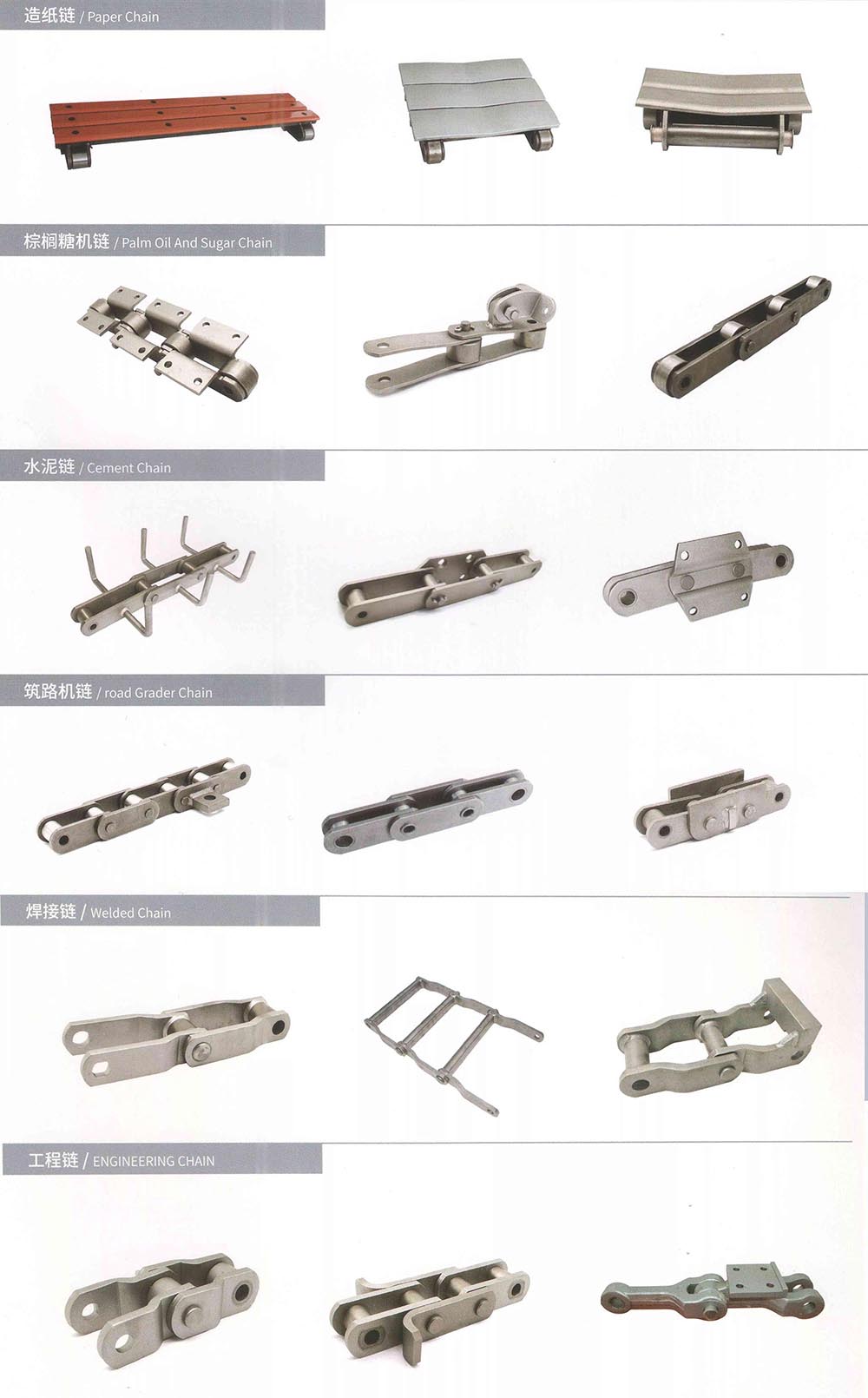
flat top chain
The TSplus flat top drive chain is the most flexible conveying medium on the market today. They can be connected end-to-end to create extended conveyor lines. The side bend design allows it to be used with a variety of conveyor types including inline, snake, and carousel conveyors. These chains are available in a variety of sizes, ranging in width from 3 feet to 20 feet.
A variety of materials are available for flat-top chains, including steel and plastic. Steel chains are ideal for applications requiring wear resistance. They are sturdy and well made. Plastic chains are particularly durable, but not suitable for harsh environments. Stainless steel flat top chains are suitable for a variety of applications, and some manufacturers make them from stainless steel or even aluminum. If your application requires a durable flat top chain, choose a chain made from iwis hardened stainless steel.
Another type of flat-top drive chain is the side bend chain. Suitable for flexible machinery requiring efficient conveying. It is equipped with a single hinge pin or double hinge pin. Either option will do, but each hinge pin has its advantages. Single hinge pin chains are suitable for smaller light-duty conveyors, while double hinge pins are more suitable for medium and heavy-duty applications.
CZPT is a modular flat top chain conveyor system. Its standardized components and modules can be easily integrated into any production process. And because it’s a single track, you can lengthen or shorten it as needed. Its versatile design makes it compatible with other conveyor systems such as belts and sprockets. This monorail modular design allows system lengths up to 40 meters and is compatible with other conveyor systems.
editor by CX 2023-05-31
China China Manufacturer of Standard Iron Drop Forged Conveyor Roller Drive Chain with Dog Caterpillar for Industrial Transmission Machinery X348 X458 X678 a2050 roller chain
Item Description
About Factory
With a lot more than 18 years’ histiory, we are a professinal manufacturer for fall forged goods these kinds of as forged chain (X348 X458 X658 X678 X698 F100 F160), scraper chain (10160, 14218, 14226, 142N), conveyor trolley (X348, X458, X678, XT160), and generate chain (X348, X458, X678), and so forth normal moulds of chain.
Besides, we can also create as per your drawing or sample, special hyperlink chain, pusher, pin and plate, according to customers’ distinctive needs.
Solution Description
one) Materials: Alloy metal, 40Cr, 42CrMo and so on.
two) Sorts: Regular types, X348 X458 X678, and so on. (Or as per your drawing)
three) Procedure: Moulding→Forging→Polishing & Blasting→Fine machining→Heat treatment→Blasting→Inspecting & testing→Packing
Merchandise Demonstrate
Specialized Information
| Product | Dimension | Bodyweight (Kg) | Content | Hardness | Working Load (KN) | Restrict Load (KN) | ||||||
| P | T | C | S | F | R | D | ||||||
| 10160B | one hundred and one.six | 24 | 36 | thirteen | fourteen | 6 | fourteen | .32 | 20CrMnTi | Surface area HRC56-64° Depth .6-1.2mm |
18 | 100 |
| 10160 | one zero one.six | 30 | 36 | thirteen | fourteen.five | nine | 14 | .36 | 20CrMnTi | Floor HRC56-64° Depth .6-1.2mm | 21.6 | 120 |
| 14218 | 142 | 42 | 50 | 19 | 20.five | eleven | 25 | 1.fifteen | 20CrMnTi | Surface area HRC56-64° Depth .6-1.2mm | forty eight.6 | 270 |
| 14226 | 142 | sixty two | fifty | 28 | 30 | 15 | 25 | 1.75 | 20CrMnTi | Area HRC56-64° Depth .6-1.2mm | 61.2 | 340 |
| 2571 | two hundred | sixty six | sixty | 30 | 32 | eighteen | thirty | two.8 | 20CrMnTi | Floor HRC56-64° Depth .6-1.2mm | 72 | 400 |
| 26014 | 260 | 70 | seventy five | 31 | 33 | 20 | 34 | five.two | 20CrMnTi | Surface area HRC56-64° Depth .6-1.2mm | one hundred thirty five | 750 |
| 142N | 142 | 43 | 50 | 19 | 22 | 12.5 | twenty five | 1.2 | 40Cr | Quench HRC36-44° | seventy five.6 | 420 |
| 150D | 142 | forty two | 50 | 19 | 20.5 | eleven | twenty five | 1.15 | 40Cr | Quench HRC36-44° | seventy five.6 | 420 |
| MG20 | 200 | 70 | fifty | 27 | 29 | 17 | 35 | three.78 | 40Cr | Quench HRC36-44° | 144 | 800 |
| MG20B | two hundred | 70 | 50 | 27 | 29 | seventeen | thirty | 3.82 | 40Cr | Quench HRC36-44° | one hundred forty.four | 780 |
| MG20C | two hundred | 70 | fifty | 27 | 29 | 17 | 28 | 3.eighty five | 40Cr | Quench HRC36-44° | 122.four | 680 |
| MS32 | 200 | forty two | 50 | twenty | 22 | twelve | twenty five | one.four | 40Cr | Quench HRC36-44° | 75.six | 420 |
| MS55 | two hundred | 80 | 70 | 35 | 38 | 25 | 28 | 4.36 | 40Cr | Quench HRC36-44° | 138.six | 770 |
| 3006 | two hundred | 65 | 70 | 30 | 33 | 24 | 32 | 3.six | 40Cr | Quench HRC36-44° | 160.two | 890 |
| MS63 | 250 | 70 | 80 | thirty | 33 | 20 | 32 | four.93 | 40Cr | Quench HRC36-44° | 147.six | 820 |
| S16 | one hundred | thirty | 27 | 15 | 16 | eight | 14 | .three | 40Cr | Quench HRC36-44° | 16 | 88 |
| S20 | one hundred twenty five | 34 | 33 | seventeen | eighteen | eight | seventeen | .37 | 40Cr | Quench HRC36-44° | 19.four | 108 |
| S25 | 160 | forty eight | 39 | 23 | twenty five | 13 | 20 | 1.28 | 40Cr | Quench HRC36-44° | 55.eight | 310 |
| S30 | 142 | forty six | 49 | 22 | 23.five | 14 | 25 | 1.three | 40Cr | Quench HRC36-44° | ninety one.8 | 510 |
| Z16 | a hundred | forty | 35 | 18 | twenty | twelve | seventeen | .4 | 40Cr | Quench HRC36-44° | 32.4 | one hundred eighty |
| Z20 | 125 | 50 | forty six | 24 | 26 | 15 | 20 | .67 | 40Cr | Quench HRC36-44° | fifty nine.four | 330 |
| Z20D | a hundred twenty five | 52 | 60 | 24 | 26 | sixteen | 26 | 1.15 | 40Cr | Quench HRC36-44° | 82.eight | 460 |
| Z25 | one hundred sixty | 58 | 55 | 28 | 30 | 18 | 25 | two.25 | 40Cr | Quench HRC36-44° | 82.eight | 460 |
| Z25D | one hundred sixty | sixty six | 64 | 29 | 31 | 22 | 28 | two.six | 40Cr | Quench HRC36-44° | 120.six | 670 |
| Z30 | 142 | sixty four | fifty | 29 | thirty.five | eighteen | twenty five | one.8 | 40Cr | Quench HRC36-44° | 111.6 | 620 |
Goods & Tests Equipments
Goods Software
Packing & Delivery
Why Decide on Us?
one. We are engaged in chain business above 15 a long time with prosperous marketplace encounter. We keep improving manufacturing techniques. All the products have longer working existence and have handed the industry test.
two. We can design the proper chains with high high quality content, excellent abrasion resistance, great corrosion, high bolster and etc as per your ask for or the chain application.
three. We are the chain maker you can directly purchase the item from us with lower price and higher high quality.
four. We have a professional staff for worldwide trade, they have ample activities and are usually completely ready to solve troubles for customers. So you have absolutely nothing to worry about.
5. We have the extended-time period cooperative forwarder who can give us the most affordable freight. And it can help you to conserve the freight. What’s a lot more, for the FCL, we will design the deals as per the container sizes with the largest potential to help save the delivery cost for each of us.
| Standard or Nonstandard: | Standard |
|---|---|
| Application: | Textile Machinery, Garment Machinery, Conveyer Equipment, Packaging Machinery, Electric Cars, Motorcycle, Food Machinery, Mining Equipment, Agricultural Machinery, Coating, Spraying, Mining, Slaughtering, Assembly |
| Surface Treatment: | Polishing |
| Structure: | Combined Chain |
| Material: | Alloy |
| Type: | Cranked Link Chain |
###
| Samples: |
US$ 5/Piece
1 Piece(Min.Order) |
|---|
###
| Customization: |
Available
|
|---|
###
| Model | Dimension | Weight (Kg) | Material | Hardness | Working Load (KN) | Limit Load (KN) | ||||||
| P | T | C | S | F | R | D | ||||||
| 10160B | 101.6 | 24 | 36 | 13 | 14 | 6 | 14 | 0.32 | 20CrMnTi | Surface HRC56-64° Depth 0.6-1.2mm |
18 | 100 |
| 10160 | 101.6 | 30 | 36 | 13 | 14.5 | 9 | 14 | 0.36 | 20CrMnTi | Surface HRC56-64° Depth 0.6-1.2mm | 21.6 | 120 |
| 14218 | 142 | 42 | 50 | 19 | 20.5 | 11 | 25 | 1.15 | 20CrMnTi | Surface HRC56-64° Depth 0.6-1.2mm | 48.6 | 270 |
| 14226 | 142 | 62 | 50 | 28 | 30 | 15 | 25 | 1.75 | 20CrMnTi | Surface HRC56-64° Depth 0.6-1.2mm | 61.2 | 340 |
| 20028 | 200 | 66 | 60 | 30 | 32 | 18 | 30 | 2.8 | 20CrMnTi | Surface HRC56-64° Depth 0.6-1.2mm | 72 | 400 |
| 26014 | 260 | 70 | 75 | 31 | 33 | 20 | 34 | 5.2 | 20CrMnTi | Surface HRC56-64° Depth 0.6-1.2mm | 135 | 750 |
| 142N | 142 | 43 | 50 | 19 | 22 | 12.5 | 25 | 1.2 | 40Cr | Quench HRC36-44° | 75.6 | 420 |
| 150D | 142 | 42 | 50 | 19 | 20.5 | 11 | 25 | 1.15 | 40Cr | Quench HRC36-44° | 75.6 | 420 |
| MG20 | 200 | 70 | 50 | 27 | 29 | 17 | 35 | 3.78 | 40Cr | Quench HRC36-44° | 144 | 800 |
| MG20B | 200 | 70 | 50 | 27 | 29 | 17 | 30 | 3.82 | 40Cr | Quench HRC36-44° | 140.4 | 780 |
| MG20C | 200 | 70 | 50 | 27 | 29 | 17 | 28 | 3.85 | 40Cr | Quench HRC36-44° | 122.4 | 680 |
| MS32 | 200 | 42 | 50 | 20 | 22 | 12 | 25 | 1.4 | 40Cr | Quench HRC36-44° | 75.6 | 420 |
| MS55 | 200 | 80 | 70 | 35 | 38 | 25 | 28 | 4.36 | 40Cr | Quench HRC36-44° | 138.6 | 770 |
| 3006 | 200 | 65 | 70 | 30 | 33 | 24 | 32 | 3.6 | 40Cr | Quench HRC36-44° | 160.2 | 890 |
| MS63 | 250 | 70 | 80 | 30 | 33 | 20 | 32 | 4.93 | 40Cr | Quench HRC36-44° | 147.6 | 820 |
| S16 | 100 | 30 | 27 | 15 | 16 | 8 | 14 | 0.3 | 40Cr | Quench HRC36-44° | 16 | 88 |
| S20 | 125 | 34 | 33 | 17 | 18 | 8 | 17 | 0.37 | 40Cr | Quench HRC36-44° | 19.4 | 108 |
| S25 | 160 | 48 | 39 | 23 | 25 | 13 | 20 | 1.28 | 40Cr | Quench HRC36-44° | 55.8 | 310 |
| S30 | 142 | 46 | 49 | 22 | 23.5 | 14 | 25 | 1.3 | 40Cr | Quench HRC36-44° | 91.8 | 510 |
| Z16 | 100 | 40 | 35 | 18 | 20 | 12 | 17 | 0.4 | 40Cr | Quench HRC36-44° | 32.4 | 180 |
| Z20 | 125 | 50 | 46 | 24 | 26 | 15 | 20 | 0.67 | 40Cr | Quench HRC36-44° | 59.4 | 330 |
| Z20D | 125 | 52 | 60 | 24 | 26 | 16 | 26 | 1.15 | 40Cr | Quench HRC36-44° | 82.8 | 460 |
| Z25 | 160 | 58 | 55 | 28 | 30 | 18 | 25 | 2.25 | 40Cr | Quench HRC36-44° | 82.8 | 460 |
| Z25D | 160 | 66 | 64 | 29 | 31 | 22 | 28 | 2.6 | 40Cr | Quench HRC36-44° | 120.6 | 670 |
| Z30 | 142 | 64 | 50 | 29 | 30.5 | 18 | 25 | 1.8 | 40Cr | Quench HRC36-44° | 111.6 | 620 |
| Standard or Nonstandard: | Standard |
|---|---|
| Application: | Textile Machinery, Garment Machinery, Conveyer Equipment, Packaging Machinery, Electric Cars, Motorcycle, Food Machinery, Mining Equipment, Agricultural Machinery, Coating, Spraying, Mining, Slaughtering, Assembly |
| Surface Treatment: | Polishing |
| Structure: | Combined Chain |
| Material: | Alloy |
| Type: | Cranked Link Chain |
###
| Samples: |
US$ 5/Piece
1 Piece(Min.Order) |
|---|
###
| Customization: |
Available
|
|---|
###
| Model | Dimension | Weight (Kg) | Material | Hardness | Working Load (KN) | Limit Load (KN) | ||||||
| P | T | C | S | F | R | D | ||||||
| 10160B | 101.6 | 24 | 36 | 13 | 14 | 6 | 14 | 0.32 | 20CrMnTi | Surface HRC56-64° Depth 0.6-1.2mm |
18 | 100 |
| 10160 | 101.6 | 30 | 36 | 13 | 14.5 | 9 | 14 | 0.36 | 20CrMnTi | Surface HRC56-64° Depth 0.6-1.2mm | 21.6 | 120 |
| 14218 | 142 | 42 | 50 | 19 | 20.5 | 11 | 25 | 1.15 | 20CrMnTi | Surface HRC56-64° Depth 0.6-1.2mm | 48.6 | 270 |
| 14226 | 142 | 62 | 50 | 28 | 30 | 15 | 25 | 1.75 | 20CrMnTi | Surface HRC56-64° Depth 0.6-1.2mm | 61.2 | 340 |
| 20028 | 200 | 66 | 60 | 30 | 32 | 18 | 30 | 2.8 | 20CrMnTi | Surface HRC56-64° Depth 0.6-1.2mm | 72 | 400 |
| 26014 | 260 | 70 | 75 | 31 | 33 | 20 | 34 | 5.2 | 20CrMnTi | Surface HRC56-64° Depth 0.6-1.2mm | 135 | 750 |
| 142N | 142 | 43 | 50 | 19 | 22 | 12.5 | 25 | 1.2 | 40Cr | Quench HRC36-44° | 75.6 | 420 |
| 150D | 142 | 42 | 50 | 19 | 20.5 | 11 | 25 | 1.15 | 40Cr | Quench HRC36-44° | 75.6 | 420 |
| MG20 | 200 | 70 | 50 | 27 | 29 | 17 | 35 | 3.78 | 40Cr | Quench HRC36-44° | 144 | 800 |
| MG20B | 200 | 70 | 50 | 27 | 29 | 17 | 30 | 3.82 | 40Cr | Quench HRC36-44° | 140.4 | 780 |
| MG20C | 200 | 70 | 50 | 27 | 29 | 17 | 28 | 3.85 | 40Cr | Quench HRC36-44° | 122.4 | 680 |
| MS32 | 200 | 42 | 50 | 20 | 22 | 12 | 25 | 1.4 | 40Cr | Quench HRC36-44° | 75.6 | 420 |
| MS55 | 200 | 80 | 70 | 35 | 38 | 25 | 28 | 4.36 | 40Cr | Quench HRC36-44° | 138.6 | 770 |
| 3006 | 200 | 65 | 70 | 30 | 33 | 24 | 32 | 3.6 | 40Cr | Quench HRC36-44° | 160.2 | 890 |
| MS63 | 250 | 70 | 80 | 30 | 33 | 20 | 32 | 4.93 | 40Cr | Quench HRC36-44° | 147.6 | 820 |
| S16 | 100 | 30 | 27 | 15 | 16 | 8 | 14 | 0.3 | 40Cr | Quench HRC36-44° | 16 | 88 |
| S20 | 125 | 34 | 33 | 17 | 18 | 8 | 17 | 0.37 | 40Cr | Quench HRC36-44° | 19.4 | 108 |
| S25 | 160 | 48 | 39 | 23 | 25 | 13 | 20 | 1.28 | 40Cr | Quench HRC36-44° | 55.8 | 310 |
| S30 | 142 | 46 | 49 | 22 | 23.5 | 14 | 25 | 1.3 | 40Cr | Quench HRC36-44° | 91.8 | 510 |
| Z16 | 100 | 40 | 35 | 18 | 20 | 12 | 17 | 0.4 | 40Cr | Quench HRC36-44° | 32.4 | 180 |
| Z20 | 125 | 50 | 46 | 24 | 26 | 15 | 20 | 0.67 | 40Cr | Quench HRC36-44° | 59.4 | 330 |
| Z20D | 125 | 52 | 60 | 24 | 26 | 16 | 26 | 1.15 | 40Cr | Quench HRC36-44° | 82.8 | 460 |
| Z25 | 160 | 58 | 55 | 28 | 30 | 18 | 25 | 2.25 | 40Cr | Quench HRC36-44° | 82.8 | 460 |
| Z25D | 160 | 66 | 64 | 29 | 31 | 22 | 28 | 2.6 | 40Cr | Quench HRC36-44° | 120.6 | 670 |
| Z30 | 142 | 64 | 50 | 29 | 30.5 | 18 | 25 | 1.8 | 40Cr | Quench HRC36-44° | 111.6 | 620 |
How to choose a roller chain for a conveyor
When choosing a roller chain for your conveyor, the easiest way is to refer to the horsepower and RPM charts. The horsepower and rpm of the small drive sprocket will determine the size and number of teeth of the chain. Conveyor chains are available in a variety of options, including moving products horizontally, vertically, or around a bend radius. When choosing a conveyor chain, consider the purpose of the chain. For example, if you’re delivering products to customers’ doorsteps, you might choose chains that can move products up and down a hallway or warehouse.
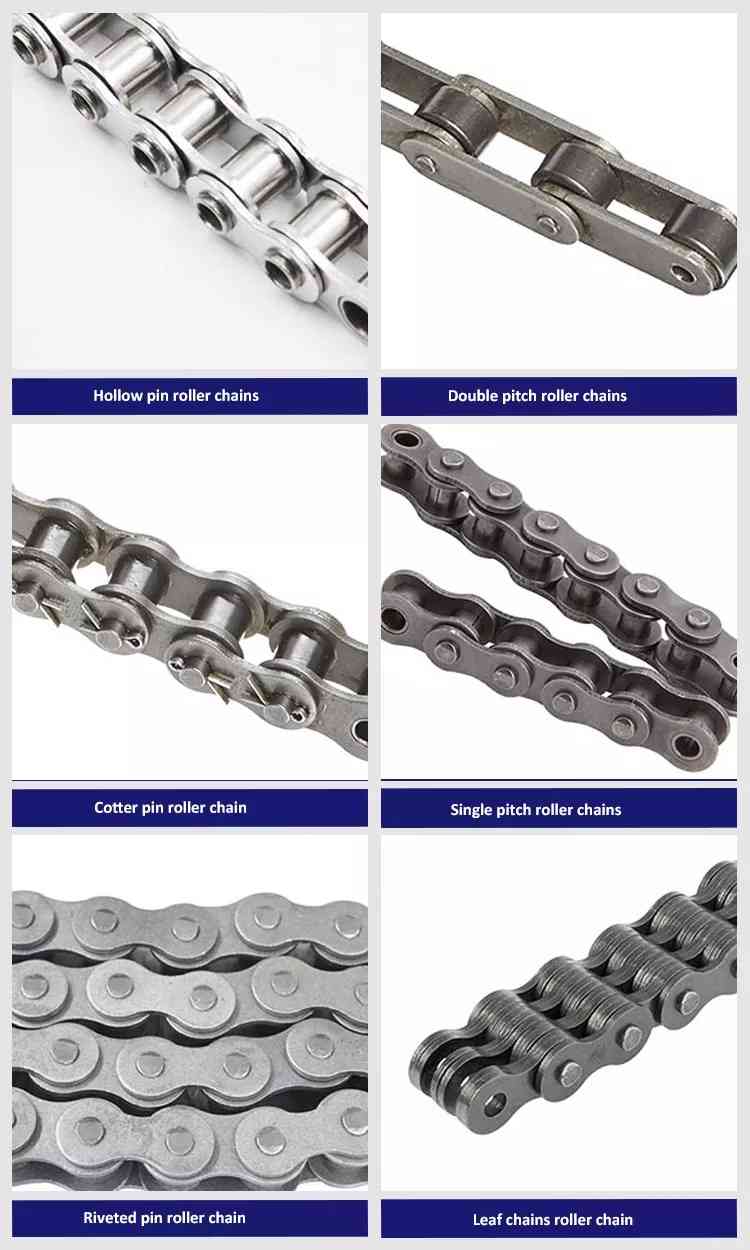
Double pitch
Double pitch roller chains are a popular way to drive agricultural equipment. It has twice the pitch of a standard roller chain and is ideal for light-duty drives. Extended pitch increases performance at lower speeds, but requires fewer components per foot than standard single-pitch chains. Compared to single-pitch roller chains, double-pitch chainplates are longer and are suitable for lighter loads. Read on to learn more about double pitch chains and how they can improve your operation.
The most common type of conveyor chain is double pitch. It is used in the auto parts industry, as well as in the precision machinery industry. It is made from the same components as the standard drive roller chain, except it has longer side plates. Double pitch chains are often used on slow-moving conveyors to reduce the stress placed on them. Industries that commonly use double pitch conveyor chains include airport equipment manufacturers, lumber mills, and fruit packing plants.
RS series roller chains are manufactured from high-quality stainless steel. It has excellent chemical and abrasion resistance and is available in a variety of cord lengths. RS sprockets have over 30 teeth. They contain all the necessary connection links for easy installation. PEER Chain offers double pitch roller chain attachments including pre-stretched chains, sprockets, and other attachments.
Double pitch roller chains have several advantages over standard chains. Double pitch chains have double the pitch, making them ideal for conveying applications such as conveyors. In addition to that, it also provides ANSI-compliant styles. These chains also have free connection links. When shopping for a double pitch roller chain, be sure to choose the one that fits your requirements and budget. They will last longer and save you money in the long run.
Double pitch roller chains to ANSI standards feature oversized rollers. These chains are best suited for applications where the product is mounted on top of the chain. They are ideal for agricultural applications where cotton is on top of the drum. Also, this type of chain is used in light-duty conveyors and agricultural applications. You can find double pitch roller chains in a variety of sizes and styles. And, as long as you know what you want, you’ll be happy with the results.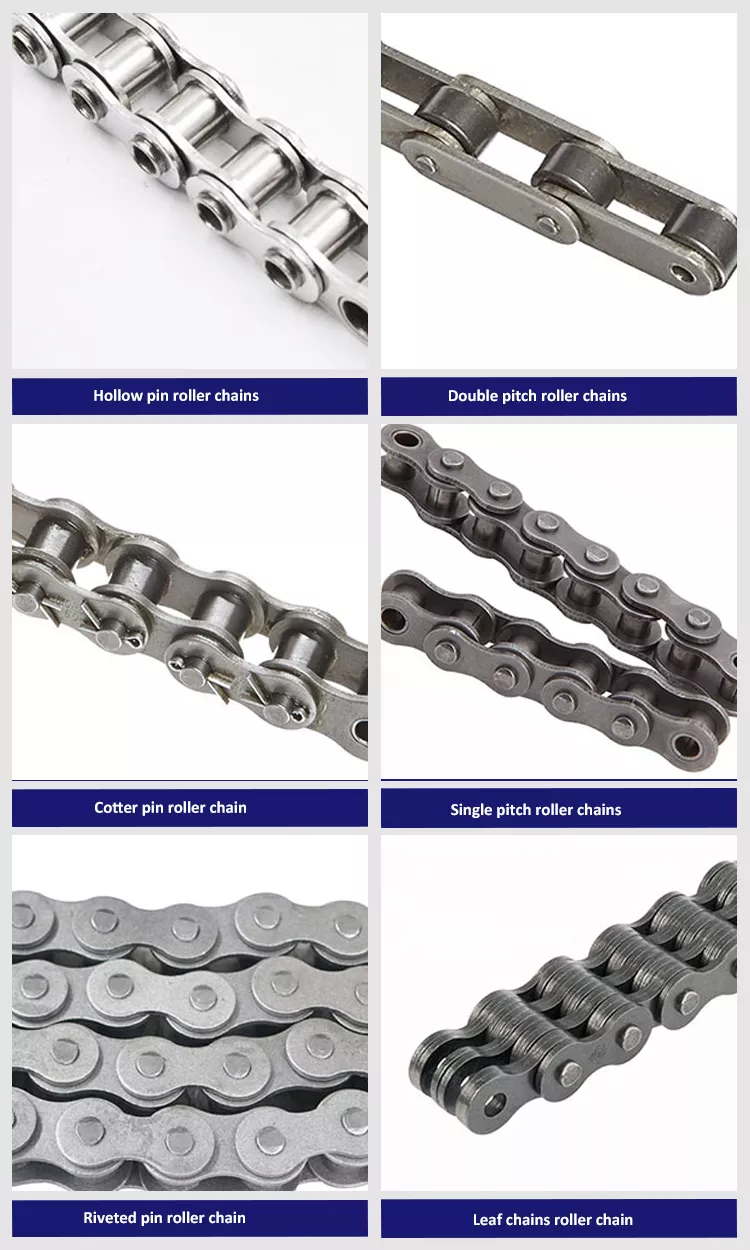
Self-lubricating
Self-lubricating roller chains eliminate the need for manual relubrication, providing long-lasting operation and reducing maintenance costs. These chains are particularly popular in industries such as the food and beverage industry, textiles, printing, and sawmills. They can also replace standard roller chain drives and conveyor chains. Manufactured to the specific standard ISO R606, these chains are ideal replacements for conventional chains. PC chains are particularly beneficial for food and beverage production and packaging applications due to their anti-corrosion properties.
Self-lubricating roller chains meet ISO, ASME/ANSI, and DIN standards. They are interchangeable with standard chains of the same size and shape and can be used in a variety of industrial applications. Self-lubricating chains have special oil-impregnated sleeves to reduce maintenance time. These chains are also suitable for applications where cleanliness is an issue.
Self-lubricating roller chains are manufactured with unique RS attachments. Rather than a traditional roller chain with an external lubricating ring, this type of chain retains the lubricant within its bushings. During operation, the application generates heat, heating the lubricant, which flows out of the pin and bushing area. Therefore, CZPT roller chains are ideal for certain food conveying applications.
In addition to self-lubricating roller chains, carbon steel, stainless steel or nickel-plated steel are also available. Self-lubricating roller chains are available in different sizes depending on the application, including 0.375″ wide profile straight-chain, extended pin chain, and four-link. In addition, these chains are also available in ANSI and BS chain specifications.
Accumulation
Whether you need to move large or small loads, accumulating roller chains are a viable solution. This chain conveyor is designed with low back pressure to transport large and bulky items with minimal noise. Free-running rollers within the chain help create a smooth build-up surface. These chains are available in a variety of options, including accumulating rollers of different pitches.
The accumulation and release roller chain 14 includes an upper part 15 and a lower part 16. The upper part 15 rests in the upper subspace 28, while the lower part 16 rests on the top side 20 of the profile. As the upper belt 15 rolls around the accumulation roller chain 14, it aligns with the lower chain 16 to form a continuous receiving space. This arrangement allows the accumulation roller chain 14 to rest on the top surface of the support profile 11.
A cumulative roller chain consists of many individual parts. Each section of the chain has an elongated cylindrical shape and is connected to each other by hinged joints. Each chain section also has an accumulation and release roller associated therewith. Each roller protrudes from the upper side 20 and the lower side 21 of the chain portion. The accumulation rollers are movable about an axis 22 extending transversely to the longitudinal axis of the chain.
A feature of the stacking and releasing roller chain is its simplicity. The conveyor has a profiled section that is permanently divided into two cross-sectional spaces. The bottom space is closed from all sides. The upper space accommodates the conveyor line. The contoured portion includes an opening that guides the bottom strap. A shunt can also be inserted between the two sections. The accumulating roller chain system is a convenient and versatile way to move bulky items.
There are many different types of accumulating roller chains. Some chains have offset rollers for optimal load distribution. Others have protection to prevent machine wear. Some run without lubricant, which is a safety advantage. In addition to protection, cumulative chains can also provide protection. The side bow version of the accumulation and release roller chain with offset accumulation and release rollers is designed for conveyor systems with very small bend radii.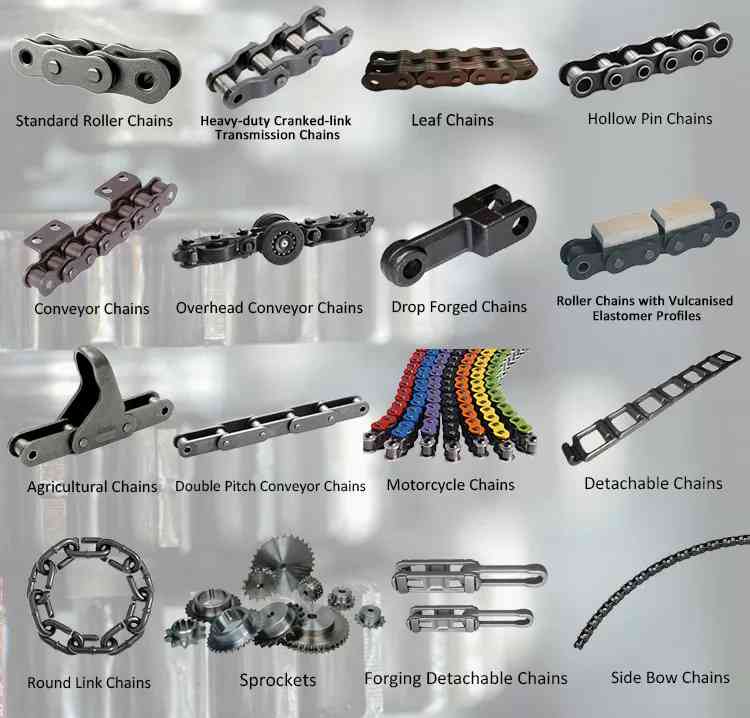
Without bushing
Bushless roller chains are the most common type of industrial chain. They are simple in design and require only regular maintenance. Regular maintenance includes lubricating, assessing wear, and replacing worn sprockets. For more information, please read the following information:
The outer chainplates and the inner chain plates are alternately arranged in pairs. The connecting pin extends through the hole in the inner link plate. The rollers thus positioned can be rotated on the connecting pins. Oil provided between the outer circumferential surfaces of each connecting pin serves to lubricate the chain. This system reduces noise and wears caused by collisions between inner chain plates and sprockets.
Compared to traditional roller chains, bushings roller chains have rollers around the bushing. These rollers are in rolling contact with the sprocket teeth, providing low friction and excellent wear resistance. To ensure smooth operation, bushings roller chains must be greased to prevent rust and keep the chain properly tensioned. Lubricated chains run smoother and last longer.
In a bushingless chain, the inner links are shaped like half bushings and ride on the rollers. The pins go through the outer plate and connect the inner links to the rollers. The outer plates overlap the inner links and open the pins. This system is also known as a heterochain. This type of chain is more common than traditional roller chains. If you are not sure which type of bushingless roller chain to choose, you may need to purchase an additional pair of inner chainplates.
Linerless roller chains may also include chain guides. In a bushingless roller chain, the outer and inner link plates conform to the surfaces of the guide rails. Thus, the large area of contact between the chain and the guide rail is eliminated, the friction loss is reduced, and the power transmission efficiency is improved. These properties make bushless roller chains more efficient and durable than traditional roller chains. It’s also less noisy. If you are looking for a chain with a lower noise level, a bushingless roller chain may be the right choice for you.
editor by czh 2023-01-04