Product Description
About Factory
With more than 18 years’ histiory, we are a professinal manufacturer for drop forged products such as forged chain (X348 X458 X658 X678 X698 F100 F160), scraper chain (10160, 14218, 14226, 142N), conveyor trolley (X348, X458, X678, XT160), and drive chain (X348, X458, X678), and so forth standard moulds of chain.
Besides, we can also produce as per your drawing or sample, special link chain, pusher, pin and plate, according to customers’ unique requirements.
Product Description
1) Material: Alloy steel, 40Cr, 42CrMo and so on.
2) Types: Standard types, X348 X458 X678, and so on. (Or as per your drawing)
3) Process: Moulding→Forging→Polishing & Blasting→Fine machining→Heat treatment→Blasting→Inspecting & testing→Packing
Product Show
Technical Data
| Model | Dimension | Weight (Kg) | Material | Hardness | Working Load (KN) | Limit Load (KN) | ||||||
| P | T | C | S | F | R | D | ||||||
| 10160B | 101.6 | 24 | 36 | 13 | 14 | 6 | 14 | 0.32 | 20CrMnTi | Surface HRC56-64° Depth 0.6-1.2mm |
18 | 100 |
| 10160 | 101.6 | 30 | 36 | 13 | 14.5 | 9 | 14 | 0.36 | 20CrMnTi | Surface HRC56-64° Depth 0.6-1.2mm | 21.6 | 120 |
| 14218 | 142 | 42 | 50 | 19 | 20.5 | 11 | 25 | 1.15 | 20CrMnTi | Surface HRC56-64° Depth 0.6-1.2mm | 48.6 | 270 |
| 14226 | 142 | 62 | 50 | 28 | 30 | 15 | 25 | 1.75 | 20CrMnTi | Surface HRC56-64° Depth 0.6-1.2mm | 61.2 | 340 |
| 2571 | 200 | 66 | 60 | 30 | 32 | 18 | 30 | 2.8 | 20CrMnTi | Surface HRC56-64° Depth 0.6-1.2mm | 72 | 400 |
| 26014 | 260 | 70 | 75 | 31 | 33 | 20 | 34 | 5.2 | 20CrMnTi | Surface HRC56-64° Depth 0.6-1.2mm | 135 | 750 |
| 142N | 142 | 43 | 50 | 19 | 22 | 12.5 | 25 | 1.2 | 40Cr | Quench HRC36-44° | 75.6 | 420 |
| 150D | 142 | 42 | 50 | 19 | 20.5 | 11 | 25 | 1.15 | 40Cr | Quench HRC36-44° | 75.6 | 420 |
| MG20 | 200 | 70 | 50 | 27 | 29 | 17 | 35 | 3.78 | 40Cr | Quench HRC36-44° | 144 | 800 |
| MG20B | 200 | 70 | 50 | 27 | 29 | 17 | 30 | 3.82 | 40Cr | Quench HRC36-44° | 140.4 | 780 |
| MG20C | 200 | 70 | 50 | 27 | 29 | 17 | 28 | 3.85 | 40Cr | Quench HRC36-44° | 122.4 | 680 |
| MS32 | 200 | 42 | 50 | 20 | 22 | 12 | 25 | 1.4 | 40Cr | Quench HRC36-44° | 75.6 | 420 |
| MS55 | 200 | 80 | 70 | 35 | 38 | 25 | 28 | 4.36 | 40Cr | Quench HRC36-44° | 138.6 | 770 |
| 3006 | 200 | 65 | 70 | 30 | 33 | 24 | 32 | 3.6 | 40Cr | Quench HRC36-44° | 160.2 | 890 |
| MS63 | 250 | 70 | 80 | 30 | 33 | 20 | 32 | 4.93 | 40Cr | Quench HRC36-44° | 147.6 | 820 |
| S16 | 100 | 30 | 27 | 15 | 16 | 8 | 14 | 0.3 | 40Cr | Quench HRC36-44° | 16 | 88 |
| S20 | 125 | 34 | 33 | 17 | 18 | 8 | 17 | 0.37 | 40Cr | Quench HRC36-44° | 19.4 | 108 |
| S25 | 160 | 48 | 39 | 23 | 25 | 13 | 20 | 1.28 | 40Cr | Quench HRC36-44° | 55.8 | 310 |
| S30 | 142 | 46 | 49 | 22 | 23.5 | 14 | 25 | 1.3 | 40Cr | Quench HRC36-44° | 91.8 | 510 |
| Z16 | 100 | 40 | 35 | 18 | 20 | 12 | 17 | 0.4 | 40Cr | Quench HRC36-44° | 32.4 | 180 |
| Z20 | 125 | 50 | 46 | 24 | 26 | 15 | 20 | 0.67 | 40Cr | Quench HRC36-44° | 59.4 | 330 |
| Z20D | 125 | 52 | 60 | 24 | 26 | 16 | 26 | 1.15 | 40Cr | Quench HRC36-44° | 82.8 | 460 |
| Z25 | 160 | 58 | 55 | 28 | 30 | 18 | 25 | 2.25 | 40Cr | Quench HRC36-44° | 82.8 | 460 |
| Z25D | 160 | 66 | 64 | 29 | 31 | 22 | 28 | 2.6 | 40Cr | Quench HRC36-44° | 120.6 | 670 |
| Z30 | 142 | 64 | 50 | 29 | 30.5 | 18 | 25 | 1.8 | 40Cr | Quench HRC36-44° | 111.6 | 620 |
Products & Testing Equipments
Products Application
Packing & Delivery
Why Choose Us?
1. We are engaged in chain industry over 15 years with rich market experience. We keep improving production techniques. All the products have longer working life and have passed the market test.
2. We can design the correct chains with high quality material, good abrasion resistance, good corrosion, high strengthen and etc as per your request or the chain application.
3. We are the chain manufacturer; you can directly purchase the product from us with low price and high quality.
4. We have a professional team for international trade, they have abundant experiences and are always ready to solve problems for customers. So you have nothing to worry about.
5. We have the long-term cooperative forwarder who can give us the lowest freight. And it can help you to save the freight. What’s more, for the FCL, we will design the packages as per the container sizes with the largest capacity to save the shipping cost for both of us.
| Standard or Nonstandard: | Standard |
|---|---|
| Application: | Textile Machinery, Garment Machinery, Conveyer Equipment, Packaging Machinery, Electric Cars, Motorcycle, Food Machinery, Mining Equipment, Agricultural Machinery, Coating, Spraying, Mining, Slaughtering, Assembly |
| Surface Treatment: | Polishing |
| Samples: |
US$ 5/Piece
1 Piece(Min.Order) | Order Sample |
|---|
| Customization: |
Available
| Customized Request |
|---|
.shipping-cost-tm .tm-status-off{background: none;padding:0;color: #1470cc}
|
Shipping Cost:
Estimated freight per unit. |
about shipping cost and estimated delivery time. |
|---|
| Payment Method: |
|
|---|---|
|
Initial Payment Full Payment |
| Currency: | US$ |
|---|
| Return&refunds: | You can apply for a refund up to 30 days after receipt of the products. |
|---|
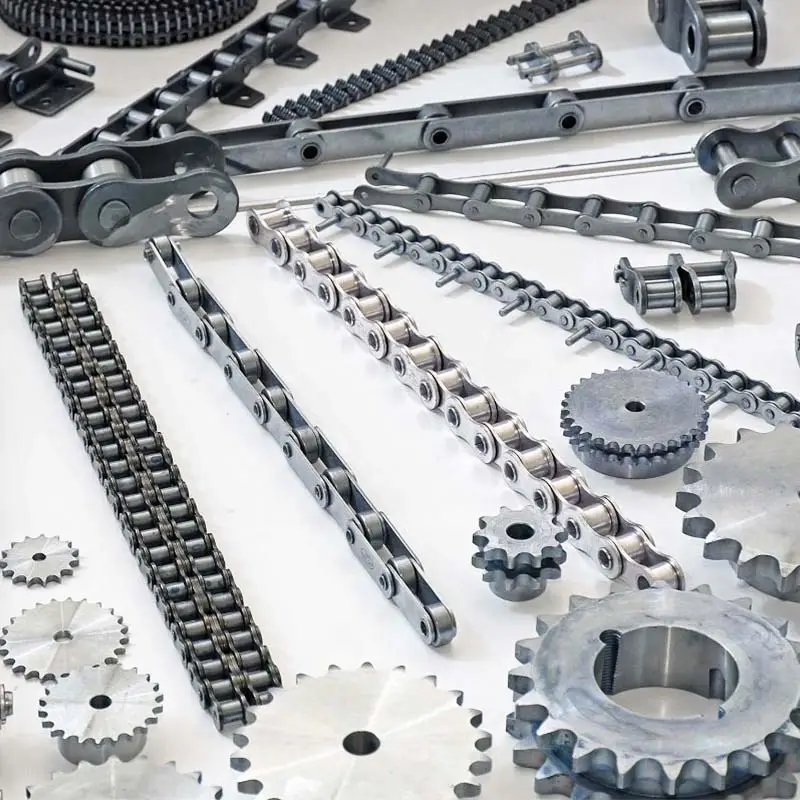
How do roller chains handle shock and impact loads?
Roller chains are designed to handle shock and impact loads, but their ability to withstand these loads depends on several factors:
1. Chain Design: Roller chains are constructed with durable components, including rollers, pins, and plates, which are designed to handle the forces generated by shock and impact loads. The geometry and dimensions of these components contribute to the chain’s overall strength and ability to resist deformation.
2. Material Selection: High-quality materials are used in the manufacturing of roller chains to enhance their strength and durability. Common materials include carbon steel, stainless steel, or specialty alloys. The material selection depends on the specific application requirements and the level of shock and impact loads anticipated.
3. Chain Tension: Proper chain tension is important for handling shock and impact loads. Adequate tension helps maintain the engagement of the chain with the sprockets, preventing slippage and reducing the likelihood of damage due to sudden forces. However, excessive tension can also contribute to increased stress and potential failure, so it’s important to follow the manufacturer’s guidelines for chain tension.
4. Lubrication: Proper lubrication plays a crucial role in reducing friction and wear, which can be accelerated by shock and impact loads. Lubricants help minimize the generation of heat and provide a protective film between the chain components, reducing wear and extending the chain’s lifespan. Regular lubrication and maintenance are essential for optimal performance under shock and impact conditions.
5. Chain Inspection and Maintenance: Regular inspection and maintenance are necessary to identify any signs of wear, damage, or elongation in the roller chain. Chains should be inspected for bent or deformed links, worn-out rollers or pins, and excessive elongation. Any worn or damaged components should be replaced promptly to prevent further deterioration and ensure the chain’s ability to handle shock and impact loads.
It’s important to note that while roller chains are designed to handle shock and impact loads, excessive or repetitive shock loads can shorten their lifespan. Therefore, it’s recommended to assess the specific application requirements and consult with the manufacturer to ensure the appropriate chain design and maintenance practices are followed for optimal performance and longevity under shock and impact conditions.
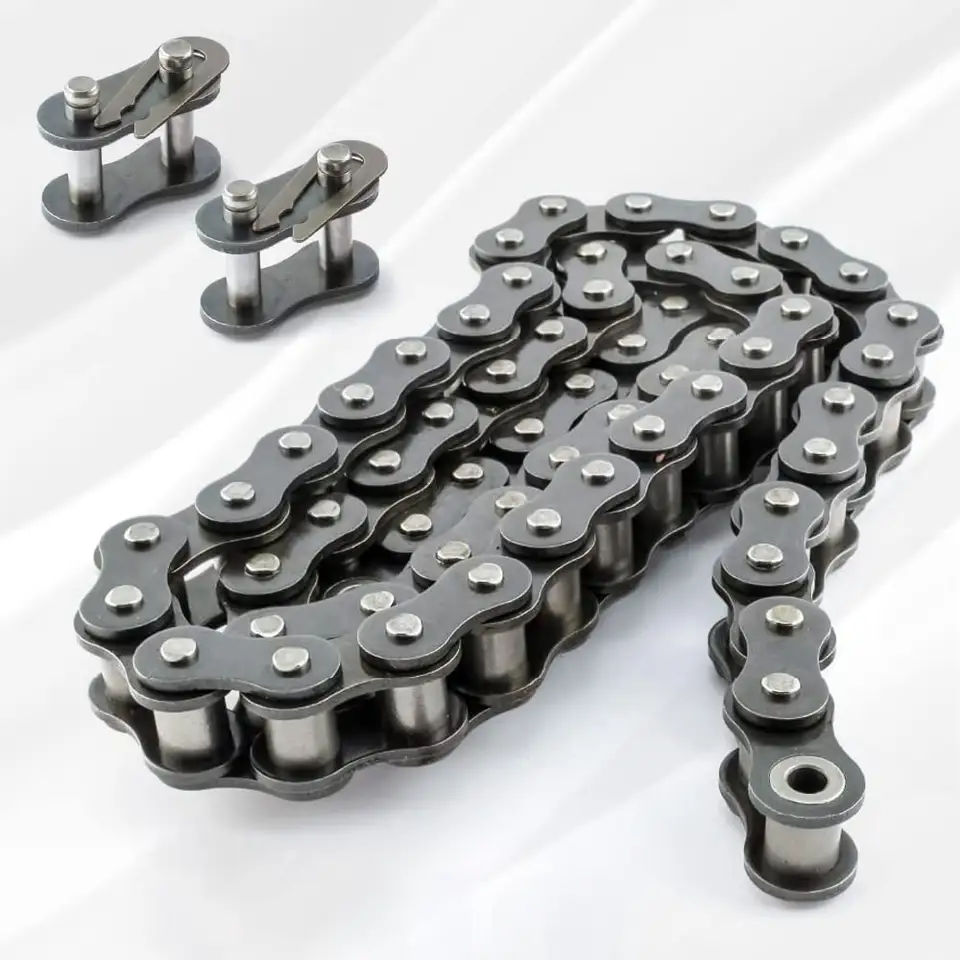
Can roller chains be used in underwater applications?
Roller chains are not typically recommended for direct use in underwater applications due to the potential for corrosion and water ingress. However, with appropriate modifications and additional protective measures, roller chains can be adapted for certain underwater applications. Here’s a detailed answer to the question:
1. Corrosion Resistance: In underwater environments, corrosion is a significant concern. Roller chains can be manufactured from corrosion-resistant materials such as stainless steel or coated with anti-corrosion treatments to mitigate the effects of exposure to water and moisture.
2. Sealing and Waterproofing: Special seals, O-rings, or protective covers can be installed to prevent water ingress into the chain’s internal components. These seals help to maintain lubrication and protect against corrosion, ensuring reliable operation even in wet conditions.
3. Lubrication Selection: Choosing the appropriate lubricant is crucial for underwater applications. Lubricants with excellent water resistance and corrosion protection properties should be selected to provide long-lasting lubrication in the submerged environment.
4. Maintenance and Inspection: Regular maintenance and inspection are essential to monitor the condition of the roller chain in underwater applications. This includes checking for signs of corrosion, lubricant degradation, or seal damage. Prompt replacement of worn or damaged components is necessary to prevent chain failure and ensure optimal performance.
It’s important to consult with experts or manufacturers experienced in underwater applications to determine the suitability of roller chains for specific underwater environments. They can provide guidance on the necessary modifications, materials, and maintenance practices to ensure the safe and reliable operation of roller chains in such conditions.
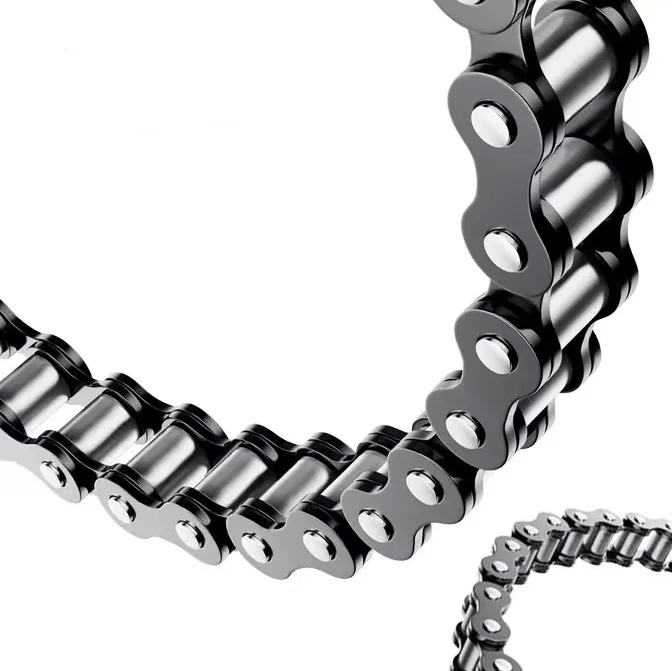
How do you tension a roller chain correctly?
Proper tensioning of a roller chain is crucial for its optimal performance and longevity. Here’s a detailed answer to the question:
1. Initial Installation: When installing a roller chain, it’s important to ensure that it has the correct tension from the beginning. Start by positioning the sprockets at their desired locations, ensuring proper alignment. Then, adjust the position of the shafts or tensioning devices to achieve the desired chain tension.
2. Check the Slack: After installation, check the slack or sag in the chain. The ideal tension allows for a small amount of slack to accommodate articulation around the sprockets. The slack should be uniform along the chain’s length.
3. Adjust the Tensioner: If the chain tension is too loose, adjust the tensioner to take up the slack. Tensioners can be spring-loaded devices, adjustable bolts, or idler sprockets designed to maintain proper tension. Follow the manufacturer’s instructions or recommended guidelines to set the tensioner to the appropriate position.
4. Measure the Deflection: Another method to ensure correct chain tension is to measure the chain deflection. Apply a slight force perpendicular to the chain midway between the sprockets. The deflection should typically be within a specified range, depending on the chain size and application. Refer to the manufacturer’s guidelines for the recommended deflection values.
5. Regular Inspections: Regularly inspect the chain tension to ensure it remains within the desired range. Factors such as wear, elongation, and changes in operating conditions can affect chain tension over time. Adjust the tension as necessary to maintain optimal performance.
6. Follow Manufacturer’s Recommendations: It’s important to follow the manufacturer’s recommendations for chain tensioning specific to the type and model of roller chain being used. These guidelines will provide specific instructions based on the chain’s design, load capacity, and intended application.
Proper tensioning of a roller chain helps ensure smooth operation, minimize wear, reduce the risk of failure, and extend the chain’s lifespan. It’s essential to regularly monitor and adjust the tension as needed, especially during routine maintenance checks, to maintain optimal performance and prevent potential issues.


editor by CX 2023-10-09
China Best Sales Agricultural Rice Conveyor Roller Chain Transmission Chain with X348 X458 X678
Product Description
About Factory
With more than 18 years’ histiory, we are a professinal manufacturer for drop forged products such as forged chain (X348 X458 X658 X678 X698 F100 F160), scraper chain (10160, 14218, 14226, 142N), conveyor trolley (X348, X458, X678, XT160), and drive chain (X348, X458, X678), and so forth standard moulds of chain.
Besides, we can also produce as per your drawing or sample, special link chain, pusher, pin and plate, according to customers’ unique requirements.
Product Description
1) Material: Alloy steel, 40Cr, 42CrMo and so on.
2) Types: Standard types, X348 X458 X678, and so on. (Or as per your drawing)
3) Process: Moulding→Forging→Polishing & Blasting→Fine machining→Heat treatment→Blasting→Inspecting & testing→Packing
Product Show
Technical Data
| Model | Dimension | Weight (Kg) | Material | Hardness | Working Load (KN) | Limit Load (KN) | ||||||
| P | T | C | S | F | R | D | ||||||
| 10160B | 101.6 | 24 | 36 | 13 | 14 | 6 | 14 | 0.32 | 20CrMnTi | Surface HRC56-64° Depth 0.6-1.2mm |
18 | 100 |
| 10160 | 101.6 | 30 | 36 | 13 | 14.5 | 9 | 14 | 0.36 | 20CrMnTi | Surface HRC56-64° Depth 0.6-1.2mm | 21.6 | 120 |
| 14218 | 142 | 42 | 50 | 19 | 20.5 | 11 | 25 | 1.15 | 20CrMnTi | Surface HRC56-64° Depth 0.6-1.2mm | 48.6 | 270 |
| 14226 | 142 | 62 | 50 | 28 | 30 | 15 | 25 | 1.75 | 20CrMnTi | Surface HRC56-64° Depth 0.6-1.2mm | 61.2 | 340 |
| 2571 | 200 | 66 | 60 | 30 | 32 | 18 | 30 | 2.8 | 20CrMnTi | Surface HRC56-64° Depth 0.6-1.2mm | 72 | 400 |
| 26014 | 260 | 70 | 75 | 31 | 33 | 20 | 34 | 5.2 | 20CrMnTi | Surface HRC56-64° Depth 0.6-1.2mm | 135 | 750 |
| 142N | 142 | 43 | 50 | 19 | 22 | 12.5 | 25 | 1.2 | 40Cr | Quench HRC36-44° | 75.6 | 420 |
| 150D | 142 | 42 | 50 | 19 | 20.5 | 11 | 25 | 1.15 | 40Cr | Quench HRC36-44° | 75.6 | 420 |
| MG20 | 200 | 70 | 50 | 27 | 29 | 17 | 35 | 3.78 | 40Cr | Quench HRC36-44° | 144 | 800 |
| MG20B | 200 | 70 | 50 | 27 | 29 | 17 | 30 | 3.82 | 40Cr | Quench HRC36-44° | 140.4 | 780 |
| MG20C | 200 | 70 | 50 | 27 | 29 | 17 | 28 | 3.85 | 40Cr | Quench HRC36-44° | 122.4 | 680 |
| MS32 | 200 | 42 | 50 | 20 | 22 | 12 | 25 | 1.4 | 40Cr | Quench HRC36-44° | 75.6 | 420 |
| MS55 | 200 | 80 | 70 | 35 | 38 | 25 | 28 | 4.36 | 40Cr | Quench HRC36-44° | 138.6 | 770 |
| 3006 | 200 | 65 | 70 | 30 | 33 | 24 | 32 | 3.6 | 40Cr | Quench HRC36-44° | 160.2 | 890 |
| MS63 | 250 | 70 | 80 | 30 | 33 | 20 | 32 | 4.93 | 40Cr | Quench HRC36-44° | 147.6 | 820 |
| S16 | 100 | 30 | 27 | 15 | 16 | 8 | 14 | 0.3 | 40Cr | Quench HRC36-44° | 16 | 88 |
| S20 | 125 | 34 | 33 | 17 | 18 | 8 | 17 | 0.37 | 40Cr | Quench HRC36-44° | 19.4 | 108 |
| S25 | 160 | 48 | 39 | 23 | 25 | 13 | 20 | 1.28 | 40Cr | Quench HRC36-44° | 55.8 | 310 |
| S30 | 142 | 46 | 49 | 22 | 23.5 | 14 | 25 | 1.3 | 40Cr | Quench HRC36-44° | 91.8 | 510 |
| Z16 | 100 | 40 | 35 | 18 | 20 | 12 | 17 | 0.4 | 40Cr | Quench HRC36-44° | 32.4 | 180 |
| Z20 | 125 | 50 | 46 | 24 | 26 | 15 | 20 | 0.67 | 40Cr | Quench HRC36-44° | 59.4 | 330 |
| Z20D | 125 | 52 | 60 | 24 | 26 | 16 | 26 | 1.15 | 40Cr | Quench HRC36-44° | 82.8 | 460 |
| Z25 | 160 | 58 | 55 | 28 | 30 | 18 | 25 | 2.25 | 40Cr | Quench HRC36-44° | 82.8 | 460 |
| Z25D | 160 | 66 | 64 | 29 | 31 | 22 | 28 | 2.6 | 40Cr | Quench HRC36-44° | 120.6 | 670 |
| Z30 | 142 | 64 | 50 | 29 | 30.5 | 18 | 25 | 1.8 | 40Cr | Quench HRC36-44° | 111.6 | 620 |
Products & Testing Equipments
Products Application
Packing & Delivery
Why Choose Us?
1. We are engaged in chain industry over 15 years with rich market experience. We keep improving production techniques. All the products have longer working life and have passed the market test.
2. We can design the correct chains with high quality material, good abrasion resistance, good corrosion, high strengthen and etc as per your request or the chain application.
3. We are the chain manufacturer; you can directly purchase the product from us with low price and high quality.
4. We have a professional team for international trade, they have abundant experiences and are always ready to solve problems for customers. So you have nothing to worry about.
5. We have the long-term cooperative forwarder who can give us the lowest freight. And it can help you to save the freight. What’s more, for the FCL, we will design the packages as per the container sizes with the largest capacity to save the shipping cost for both of us.
|
Shipping Cost:
Estimated freight per unit. |
To be negotiated |
|---|
| Standard or Nonstandard: | Standard |
|---|---|
| Application: | Textile Machinery, Garment Machinery, Conveyer Equipment, Packaging Machinery, Electric Cars, Motorcycle, Food Machinery, Mining Equipment, Agricultural Machinery, Coating, Spraying, Mining, Slaughtering, Assembly |
| Surface Treatment: | Polishing |
| Samples: |
US$ 5/Piece
1 Piece(Min.Order) | Order Sample |
|---|
| Customization: |
Available
| Customized Request |
|---|
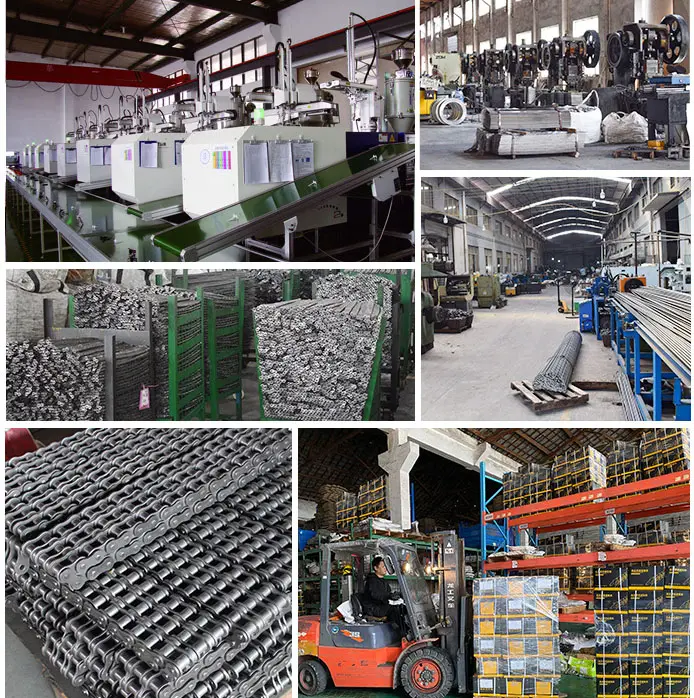
How do roller chains handle side loads?
Roller chains are designed to primarily handle axial (or in-line) loads, which are forces applied along the axis of the chain. However, they do have some capability to handle limited side loads. Here’s a detailed answer to the question:
1. Roller Design: The rollers in a roller chain are cylindrical in shape and rotate freely between the inner and outer plates. This design allows the chain to accommodate limited side loads by allowing the rollers to roll and adjust their position within the chain.
2. Bearing Surfaces: Roller chains have bearing surfaces between the pins and the bushings or rollers. These bearing surfaces help distribute the load and reduce friction, allowing the chain to handle some degree of side loads.
3. Tolerance for Misalignment: Roller chains have some tolerance for misalignment between the sprockets, which can help compensate for minor side loads. However, excessive misalignment can lead to increased wear and decreased chain life.
4. Limitations: It’s important to note that roller chains are primarily designed for transmitting power and handling axial loads. While they can tolerate some side loads, their ability to handle significant side loads is limited. Excessive side loads can cause increased wear, premature chain failure, and reduced overall performance.
To ensure the longevity and reliable performance of a roller chain, it is essential to minimize side loads as much as possible. Proper alignment of the sprockets, appropriate tensioning of the chain, and avoiding excessive side loads are important considerations when using roller chains in an application.
What are the benefits of using a roller chain in printing machinery?
Roller chains offer several advantages when used in printing machinery. Here’s a detailed answer to the question:
1. High Strength and Durability: Roller chains are designed to withstand heavy loads and provide high tensile strength, making them suitable for the demanding requirements of printing machinery. They can efficiently transmit power and handle the stress and torque generated during the printing process.
2. Precise and Reliable Power Transmission: Roller chains provide accurate and reliable power transmission, ensuring consistent and precise movement of the printing components. This is crucial for maintaining print quality, registration, and alignment of the printed material.
3. Wide Range of Speeds: Roller chains can accommodate a wide range of speeds, allowing for flexibility in printing machinery. Whether it’s high-speed printing or slower, more precise operations, roller chains can adapt to different speed requirements.
4. Easy Installation and Maintenance: Roller chains are relatively easy to install and maintain. They can be adjusted, lubricated, and replaced as needed, minimizing downtime and ensuring the continuous operation of printing machinery.
5. Versatility and Adaptability: Roller chains can be customized to meet specific requirements of printing machinery, such as different chain sizes, lengths, and attachments. This versatility allows for easy integration into various types of printing equipment and processes.
6. Cost-Effective Solution: Roller chains offer a cost-effective power transmission solution for printing machinery. They have a long service life, reducing the need for frequent replacements, and their availability in various sizes and configurations allows for efficient use in different printing applications.
In summary, the use of roller chains in printing machinery provides strength, reliability, precision, and versatility. They contribute to the smooth operation of the equipment, ensuring high-quality prints and increased productivity in printing applications.
editor by CX 2023-10-08
China Custom Mc Series Mc28 Mc56 Mc112 Mc224 Hollow Pin Conveyor Steel Chain with No Roller/ S Roller/R Roller/ F Roller
Product Description
MC Series MC28 MC56 MC112 MC224 Hollow Pin Conveyor Steel Chain With No roller/ S roller/R Roller/ F Roller
Product Description
EVER-POWER conveyor chain is made of fine blanking, ball drift and heat treatment components, which comply with DIN / ISO standards and have high strength and durability. CZPT also has a variety of straight, curved, U-shaped chain connections.
|
Chain No. |
Pitch |
Width between inner plates |
Roller diameter |
Pin |
|||||||||||
|
P |
b1 min |
d1 |
d6 |
d5 |
d1 |
d2 |
d3 |
L | L1 | ||||||
|
mm |
mm |
mm |
mm | mm |
mm |
mm |
mm |
mm | mm | ||||||
| MC28 | 63 | 80 | 100 | 125 | 160 | – | 20 | 36 | 25 | 45 | 4.5 | 13 | 8.2 | 36 | 38.5 |
| MC56 | 80 | 100 | 125 | 160 | 200 | 250 | 24 | 50 | 30 | 60 | 5 | 15.5 | 10.2 | 45 | 47.5 |
| MC112 | 100 | 125 | 160 | 200 | 250 | 315 | 32 | 70 | 42 | 85 | 7 | 22 | 14.3 | 62.5 | 64.3 |
| MC224 | 160 | 200 | 250 | 315 | 400 | 500 | 43 | 100 | 60 | 120 | 10 | 31 | 20.3 | 83 | 85.5 |
| Chain No. | Roller diameter | Plate | Ultimate tensile strength | ||
| d2 max mm | h | T | Q min kN | Q max kN | |
| MC28 | 17.5 | 25 | 3.5 | 28 | 40 |
| MC56 | 21 | 35 | 4 | 56 | 90 |
| MC112 | 29 | 50 | 6 | 112 | 180 |
| MC224 | 41 | 70 | 8 | 224 | 350 |
Company Profile
The company has advanced manufacturing technology and relatively strong manufacturing force, and high-end precision testing instruments to ensure that every chain leaving the factory is qualified. The company mainly deals in: transmission chain, transmission chain, lifting chain, agricultural machinery chain, stainless steel chain, etc. Various non-standard chains are ordered separately. The company uses more than 600 kinds of non-standard molds. It can be customized according to drawings. We implement all-round management and control over product quality and service, and constantly improve customer satisfaction. The chain produced by the company enjoys a certain reputation in the world with its high quality, good reputation and high-quality service.
Related products
The chain types are divided into engineering chain, conveying chain, plate chain, transmission chain, escalator chain, parking equipment chain, agricultural chain, stainless steel chain, etc. There are different types of chains with different purposes, specifications, models and styles.
| Plate chain type Plate chain is usually used to lift goods. For example, forklift, lifting machinery and equipment. Plate chain has no rollers, but chain plates are connected with each other. It is a kind of chain used for loading. Different types of plate chains have different functions, | Stainless steel chain Stainless steel chain types include standard stainless steel chain, stainless steel hollow pin chain, stainless steel chain used for environmental protection equipment, etc, |
| Type of transmission chain Many types of transmission chains are power transmission chains, such as precision roller chains, double pitch roller chains, high-strength short pitch precision roller chains, petroleum chains, pumping unit chains, self-lubricating roller chains, side bending (turning machine) chains, corrosion resistant chains, etc | There are many types of escalator chains, including escalator step chains, heavy-duty high gradient escalator step chains, travelator chains, and escalator chains of different specifications and models,
|
| The engineering chain includes many kinds of chains, such as cement bucket elevators, environmental protection equipment, pavers, trenchers, welding equipment, mining, power plant dust removal and other equipment. |
Agricultural machinery chain Agricultural machinery chain is a chain developed and produced according to the characteristics of different crops, including rice harvester chain, GS38 combine chain, corn harvester chain, citrus straw harvester chain, soybean harvester chain, peanut harvesting chain, garlic sowing chain, and potato planter chain. |
| There are many types of conveying chains, such as wood conveying chain, double speed chain, RF conveying chain, sharp tooth chain, sugar chain, brown oil chain, F chain, metric conveying chain, top roller conveying chain, grain scraper, hollow pin, suspension conveying, etc. The conveying chain is a power chain for transporting goods. | Parking equipment chain This type of chain includes roller chains for parking equipment, chains for vertical circulation parking equipment, and parking equipment chains that can be developed according to demand. |
We not only produce chains and transmissions, including gear boxes, sprockets, gears, racks, couplings and other products, but also supply them to meet your one-stop purchase. Welcome to consult us
Packaging & Shipping
Certifications
| Usage: | Transmission Chain, Drag Chain, Conveyor Chain, Dedicated Special Chain |
|---|---|
| Material: | Stainless steel |
| Surface Treatment: | Oil Blooming |
| Feature: | Oil Resistant |
| Chain Size: | 1/2"*3/32" |
| Structure: | Roller Chain |
| Samples: |
US$ 9999/Piece
1 Piece(Min.Order) | |
|---|

Can hollow pin chains be used in agricultural machinery and equipment?
Yes, hollow pin chains can be used in agricultural machinery and equipment, and they offer several advantages for these applications.
- Strength and Load Capacity: Agricultural machinery often handles heavy loads, such as in combines, balers, and grain elevators. Hollow pin chains are designed to handle moderate to heavy loads, making them suitable for these demanding agricultural applications.
- Attachment Options: Hollow pin chains can be equipped with various attachments, such as slats or custom links, to facilitate material handling and transfer during agricultural processes.
- Flexibility: Hollow pin chains have a certain degree of flexibility, which is beneficial in agricultural machinery and equipment that requires navigating around tight spaces and complex layouts.
- Reduced Weight: The hollow pin design reduces the weight of the chains, resulting in lower inertia during starts and stops. This feature allows for smoother and more efficient operation in agricultural machinery.
- Corrosion Resistance: In agricultural environments, the equipment may be exposed to moisture, fertilizers, and other corrosive substances. Stainless steel hollow pin chains offer excellent corrosion resistance, ensuring durability and prolonged service life in such conditions.
- Easy Maintenance: Hollow pin chains are relatively easy to maintain, with accessible pins and links. Regular lubrication and inspection can help extend the chain’s life and ensure continuous operation in agricultural machinery.
However, it’s essential to consider certain factors when using hollow pin chains in agricultural machinery and equipment:
- Contaminants: Agricultural processes may involve exposure to dirt, dust, and other contaminants. Regular cleaning and maintenance are essential to prevent excessive wear and reduce the risk of premature chain failure.
- Impact Loads: Some agricultural equipment, such as combine harvesters, may experience impact loads during harvesting. Choosing a chain with robust construction and material strength can withstand these loads and minimize wear.
- Proper Chain Selection: Selecting the appropriate chain size, strength, and material is critical to ensure the chain can handle the specific requirements of the agricultural machinery and equipment.
In conclusion, hollow pin chains are a suitable choice for agricultural machinery and equipment, offering strength, flexibility, attachment options, reduced weight, corrosion resistance, and ease of maintenance. Proper chain selection, installation, and maintenance are essential to ensure the chain’s reliable performance in these demanding agricultural applications.

What are the noise and vibration characteristics of hollow pin chains?
Hollow pin chains exhibit specific noise and vibration characteristics that can vary based on factors such as design, material, lubrication, and operating conditions.
- Noise Characteristics:
- Noise Level: Hollow pin chains generally produce less noise compared to some other types of chains, such as roller chains. The design of the hollow pins allows for smoother movement and reduced friction, resulting in quieter operation.
- Impact Noise: Hollow pin chains can generate impact noise when engaging sprockets or other components due to the design of the pins. This impact noise can be minimized by using proper lubrication and maintaining the chain at the recommended tension levels.
- Maintenance Impact: Noise from hollow pin chains can increase if the chain is not adequately lubricated or if it experiences wear and elongation. Regular maintenance, including lubrication and tension adjustments, is essential to reduce noise levels and prolong chain life.
- Vibration Characteristics:
- Vibration Damping: Hollow pin chains typically offer better vibration damping properties compared to solid pin chains. The hollow design of the pins allows for some degree of flexibility, which can help reduce vibrations in certain applications.
- High-Speed Vibration: At high speeds, hollow pin chains may experience more vibration compared to lower speeds. Adequate lubrication and precision manufacturing are critical to minimize vibration and ensure smooth operation at high speeds.
- Impact-Related Vibration: Like impact noise, hollow pin chains can produce vibrations during engagement with sprockets or other components. Proper lubrication and chain tension are essential to minimize impact-related vibrations.
Overall, the noise and vibration characteristics of hollow pin chains are generally favorable, especially when properly maintained and used within their design limits. The choice of lubrication, tension control, and material selection can significantly impact the noise and vibration levels experienced during the operation of hollow pin chains.
What are the advantages of using a hollow pin chain in specific applications?
A hollow pin chain offers several advantages in specific applications, making it a preferred choice for certain industrial processes. Some of the key advantages include:
- Customization: The hollow pin chain’s unique design allows for easy attachment installation anywhere along the chain’s length. This customization feature is particularly beneficial in applications where materials need to be positioned or handled differently at various points in the process.
- Quick Assembly: The hollow pin chain enables rapid assembly and disassembly of attachments without the need to break the chain. This quick assembly and reconfiguration save valuable time during maintenance and setup, reducing downtime and increasing overall productivity.
- Flexibility: Due to its customizable nature, the hollow pin chain offers high flexibility in accommodating different conveyor layouts and handling various product types and sizes. This flexibility is crucial in industries that deal with diverse product lines or frequently changing production needs.
- Reduced Maintenance Costs: The ease of adding or removing attachments simplifies maintenance tasks and reduces the need for specialized tools or extensive disassembly. As a result, maintenance costs are minimized, leading to more cost-effective operations.
- Wide Range of Applications: Hollow pin chains find applications in industries such as food processing, packaging, material handling, and manufacturing, where customization, flexibility, and quick assembly are essential for efficient production processes.
- Enhanced Versatility: The ability to integrate various attachments and accessories onto the chain allows for the creation of complex conveyor systems or handling equipment. This versatility supports unique industrial processes and specialized applications.
- Improved Product Handling: In applications requiring delicate product handling or precise positioning, the hollow pin chain’s customization capabilities ensure gentle and accurate product movement, reducing the risk of product damage or misplacement.
In summary, the hollow pin chain offers significant advantages in specific applications where customization, flexibility, quick assembly, and reduced maintenance costs are essential. Its unique design and functionality make it a valuable component in industries that require adaptable and efficient material handling and conveying systems.
editor by CX 2023-09-01
China high quality Industrial Forging Chain with Machinery Parts and Roller
Product Description
About Factory
With more than 18 years’ histiory, we are a professinal manufacturer for drop forged products such as forged chain (X348 X458 X658 X678 X698 F100 F160), scraper chain (10160, 14218, 14226, 142N), conveyor trolley (X348, X458, X678, XT160), and drive chain (X348, X458, X678), and so forth standard moulds of chain.
Besides, we can also produce as per your drawing or sample, special link chain, pusher, pin and plate, according to customers’ unique requirements.
Product Description
1) Material: Alloy steel, 40Cr, 42CrMo and so on.
2) Types: Standard types, X348 X458 X678, and so on. (Or as per your drawing)
3) Process: Moulding→Forging→Polishing & Blasting→Fine machining→Heat treatment→Blasting→Inspecting & testing→Packing
Product Show
Technical Data
| Model | Dimension | Weight (Kg) | Material | Hardness | Working Load (KN) | Limit Load (KN) | ||||||
| P | T | C | S | F | R | D | ||||||
| 10160B | 101.6 | 24 | 36 | 13 | 14 | 6 | 14 | 0.32 | 20CrMnTi | Surface HRC56-64° Depth 0.6-1.2mm |
18 | 100 |
| 10160 | 101.6 | 30 | 36 | 13 | 14.5 | 9 | 14 | 0.36 | 20CrMnTi | Surface HRC56-64° Depth 0.6-1.2mm | 21.6 | 120 |
| 14218 | 142 | 42 | 50 | 19 | 20.5 | 11 | 25 | 1.15 | 20CrMnTi | Surface HRC56-64° Depth 0.6-1.2mm | 48.6 | 270 |
| 14226 | 142 | 62 | 50 | 28 | 30 | 15 | 25 | 1.75 | 20CrMnTi | Surface HRC56-64° Depth 0.6-1.2mm | 61.2 | 340 |
| 2571 | 200 | 66 | 60 | 30 | 32 | 18 | 30 | 2.8 | 20CrMnTi | Surface HRC56-64° Depth 0.6-1.2mm | 72 | 400 |
| 26014 | 260 | 70 | 75 | 31 | 33 | 20 | 34 | 5.2 | 20CrMnTi | Surface HRC56-64° Depth 0.6-1.2mm | 135 | 750 |
| 142N | 142 | 43 | 50 | 19 | 22 | 12.5 | 25 | 1.2 | 40Cr | Quench HRC36-44° | 75.6 | 420 |
| 150D | 142 | 42 | 50 | 19 | 20.5 | 11 | 25 | 1.15 | 40Cr | Quench HRC36-44° | 75.6 | 420 |
| MG20 | 200 | 70 | 50 | 27 | 29 | 17 | 35 | 3.78 | 40Cr | Quench HRC36-44° | 144 | 800 |
| MG20B | 200 | 70 | 50 | 27 | 29 | 17 | 30 | 3.82 | 40Cr | Quench HRC36-44° | 140.4 | 780 |
| MG20C | 200 | 70 | 50 | 27 | 29 | 17 | 28 | 3.85 | 40Cr | Quench HRC36-44° | 122.4 | 680 |
| MS32 | 200 | 42 | 50 | 20 | 22 | 12 | 25 | 1.4 | 40Cr | Quench HRC36-44° | 75.6 | 420 |
| MS55 | 200 | 80 | 70 | 35 | 38 | 25 | 28 | 4.36 | 40Cr | Quench HRC36-44° | 138.6 | 770 |
| 3006 | 200 | 65 | 70 | 30 | 33 | 24 | 32 | 3.6 | 40Cr | Quench HRC36-44° | 160.2 | 890 |
| MS63 | 250 | 70 | 80 | 30 | 33 | 20 | 32 | 4.93 | 40Cr | Quench HRC36-44° | 147.6 | 820 |
| S16 | 100 | 30 | 27 | 15 | 16 | 8 | 14 | 0.3 | 40Cr | Quench HRC36-44° | 16 | 88 |
| S20 | 125 | 34 | 33 | 17 | 18 | 8 | 17 | 0.37 | 40Cr | Quench HRC36-44° | 19.4 | 108 |
| S25 | 160 | 48 | 39 | 23 | 25 | 13 | 20 | 1.28 | 40Cr | Quench HRC36-44° | 55.8 | 310 |
| S30 | 142 | 46 | 49 | 22 | 23.5 | 14 | 25 | 1.3 | 40Cr | Quench HRC36-44° | 91.8 | 510 |
| Z16 | 100 | 40 | 35 | 18 | 20 | 12 | 17 | 0.4 | 40Cr | Quench HRC36-44° | 32.4 | 180 |
| Z20 | 125 | 50 | 46 | 24 | 26 | 15 | 20 | 0.67 | 40Cr | Quench HRC36-44° | 59.4 | 330 |
| Z20D | 125 | 52 | 60 | 24 | 26 | 16 | 26 | 1.15 | 40Cr | Quench HRC36-44° | 82.8 | 460 |
| Z25 | 160 | 58 | 55 | 28 | 30 | 18 | 25 | 2.25 | 40Cr | Quench HRC36-44° | 82.8 | 460 |
| Z25D | 160 | 66 | 64 | 29 | 31 | 22 | 28 | 2.6 | 40Cr | Quench HRC36-44° | 120.6 | 670 |
| Z30 | 142 | 64 | 50 | 29 | 30.5 | 18 | 25 | 1.8 | 40Cr | Quench HRC36-44° | 111.6 | 620 |
Products & Testing Equipments
Products Application
Packing & Delivery
Why Choose Us?
1. We are engaged in chain industry over 15 years with rich market experience. We keep improving production techniques. All the products have longer working life and have passed the market test.
2. We can design the correct chains with high quality material, good abrasion resistance, good corrosion, high strengthen and etc as per your request or the chain application.
3. We are the chain manufacturer; you can directly purchase the product from us with low price and high quality.
4. We have a professional team for international trade, they have abundant experiences and are always ready to solve problems for customers. So you have nothing to worry about.
5. We have the long-term cooperative forwarder who can give us the lowest freight. And it can help you to save the freight. What’s more, for the FCL, we will design the packages as per the container sizes with the largest capacity to save the shipping cost for both of us.
|
Shipping Cost:
Estimated freight per unit. |
To be negotiated |
|---|
| Standard or Nonstandard: | Standard |
|---|---|
| Application: | Textile Machinery, Garment Machinery, Conveyer Equipment, Packaging Machinery, Electric Cars, Motorcycle, Food Machinery, Mining Equipment, Agricultural Machinery, Coating, Spraying, Mining, Slaughtering, Assembly |
| Surface Treatment: | Polishing |
| Samples: |
US$ 5/Piece
1 Piece(Min.Order) | Order Sample |
|---|
| Customization: |
Available
| Customized Request |
|---|
How do roller chains perform in extreme weather conditions?
Roller chains are designed to perform reliably in a wide range of operating conditions, including extreme weather conditions. Here’s a detailed answer to the question:
1. Temperature Extremes: Roller chains can withstand a wide range of temperatures, both high and low. The performance of the chain depends on the specific material used and its temperature rating. For example, stainless steel chains are suitable for high-temperature applications, while specialty chains with low-temperature lubricants are available for cold environments.
2. Corrosion Resistance: Roller chains can be manufactured using corrosion-resistant materials such as stainless steel or with specialized coatings to enhance their resistance to rust and corrosion. This makes them suitable for outdoor applications where exposure to moisture, humidity, and other environmental factors is common.
3. Lubrication: Proper lubrication is crucial for the performance of roller chains in extreme weather conditions. Lubricants with suitable viscosity and temperature range should be used to ensure smooth operation and minimize wear. In some cases, lubrication-free chains with self-lubricating properties can be used to eliminate the need for external lubrication.
4. Sealing and Protection: Roller chains can be equipped with additional sealing mechanisms to protect against the ingress of dirt, dust, and other contaminants. Sealed or encapsulated chains feature protective covers or seals that prevent debris from entering the chain and affecting its performance, making them more suitable for extreme weather conditions.
5. Maintenance and Inspection: Regular maintenance and inspection are essential for ensuring the optimal performance of roller chains in extreme weather conditions. This includes cleaning the chains, checking for signs of wear or damage, and replacing any worn-out components. Proper tensioning and alignment should also be maintained to prevent premature failure.
It’s important to consult the manufacturer’s specifications and recommendations for the specific roller chain and its intended application in extreme weather conditions. By selecting the appropriate materials, lubrication, and protection mechanisms, roller chains can provide reliable and efficient power transmission even in challenging environmental conditions.
How do roller chains handle static loads?
Roller chains are primarily designed for transmitting power and handling dynamic loads, which involve motion and varying forces. However, roller chains can also handle static loads to some extent. Here’s a detailed answer to the question:
1. Load Distribution: When a roller chain is subjected to static loads, the weight or force is evenly distributed across multiple rollers and pins. This helps to distribute the load more effectively and reduces stress concentrations on individual components. The load is transferred from one roller to another through the pins, ensuring a more balanced distribution.
2. Stiffness: Roller chains possess a certain degree of stiffness that enables them to resist static loads. The rigid construction of the chain, including the link plates and pins, helps maintain the integrity of the chain under static conditions. This stiffness allows the chain to support the applied load without excessive elongation or deformation.
3. Lubrication: Proper lubrication is essential for roller chains to handle static loads effectively. Lubrication helps reduce friction and wear, which can occur even under static conditions due to the weight of the load. Adequate lubrication ensures smooth movement of the chain and minimizes the risk of surface damage or increased friction during load-bearing.
4. Chain Preload: In some cases, applying a pre-load or initial tension to the roller chain can help improve its ability to handle static loads. The pre-load helps to eliminate any slack or looseness in the chain, enhancing its rigidity and reducing the potential for excessive elongation or misalignment when subjected to static forces.
While roller chains can handle static loads, it’s important to note that they are primarily designed for dynamic applications involving motion. Excessive static loads or prolonged exposure to static conditions may lead to increased wear, elongation, or deformation of the chain. In scenarios where the majority of the load is static, alternative power transmission systems or load-bearing mechanisms may be more suitable.
What are the best practices for maintaining roller chains?
Maintaining roller chains is crucial for their optimal performance, longevity, and reliability. Here are some best practices for maintaining roller chains:
1. Regular Lubrication: Proper lubrication is essential for reducing friction, preventing wear, and extending the life of the chain. Follow the manufacturer’s recommendations for the type and frequency of lubrication. Apply lubricant evenly along the chain, ensuring it reaches the inner rollers and bushings.
2. Cleanliness: Keep the roller chain clean and free from contaminants such as dirt, debris, and excess lubricant. Regularly inspect and clean the chain to remove any build-up that can contribute to wear and performance issues.
3. Tension Adjustment: Monitor the chain tension regularly and make adjustments as needed to ensure it remains within the manufacturer’s recommended range. Proper tension reduces stress on the chain and sprockets, minimizing wear and improving performance.
4. Alignment: Check the alignment of the sprockets to ensure they are properly aligned. Misaligned sprockets can cause uneven wear and premature failure of the chain. Adjust or replace the sprockets as necessary to maintain proper alignment.
5. Inspection: Regularly inspect the roller chain for signs of wear, damage, or elongation. Look for loose or damaged links, excessive wear on the sprocket teeth, or signs of fatigue. Replace any worn or damaged components promptly to prevent further damage and ensure safe operation.
6. Environmental Considerations: Consider the operating environment and take necessary precautions. In corrosive or high-temperature environments, use appropriate coatings or materials that offer resistance to corrosion and heat. In dirty or abrasive environments, install guards or shields to protect the chain from debris.
7. Training and Documentation: Provide proper training to maintenance personnel on roller chain maintenance and inspection procedures. Keep records of maintenance activities, including lubrication schedules, tension adjustments, and component replacements. This documentation helps track maintenance history and identifies patterns or potential issues.
8. Periodic Replacement: Despite regular maintenance, roller chains will eventually wear out. Establish a replacement schedule based on the chain’s expected lifespan and operating conditions. Replace the chain when it exhibits excessive wear, elongation, or signs of fatigue to prevent sudden failures.
By following these best practices, you can optimize the performance, lifespan, and reliability of roller chains, reducing downtime and ensuring the smooth operation of your machinery or equipment.
editor by CX 2023-08-29
China supplier China Power Transmission SGS Standard Hollow Pin Roller Chain with ISO Standard
Product Description
China Power Transmission SGS Standard Hollow Pin Roller Chain with ISO Standard
Product Description
1. Material: Alloy steel & Stainless steel
2. Surface Treatment: Shot peening / Zinc-plated / Nickel-plated / Dacromet-plated
3. Application: The hollow pin chain is mainly used in products transmission.
| Product name | China Power Transmission SGS Standard Hollow Pin Roller Chain with ISO Standard |
| Materials Available | 1. Stainless Steel: SS304, SS316, etc |
| 2. Alloy Steel: 45Mn, 42CrMo, etc | |
| 3. OEM according to your request | |
| Surface Treatment | Shot peening, Polishing, Oxygenation, Blackening, Zinc-plated, Nickel-plated, Anodized, etc. |
| Characteristic | Fire Resistant, Oil Resistant, Heat Resistant |
| Application | Mainly used in products transmission. |
| Design criterion | ISO DIN ANSI & Customer’s Drawing |
| Size | Customer’s Drawing & ISO Standard |
| Package | Wooden Case / Container and pallet, or made-to-order |
| Certificate | ISO9001: 2008 |
| Advantage | First quality, best service, competitive price, fast delivery |
| Delivery Time | 20 days for samples. 45 days for official order. |
Detailed Photos
View more products,please click here…
Company Profile
| Material: | Carbon Steel |
|---|---|
| Structure: | Conveyor Chain |
| Surface Treatment: | Oil Blooming |
| Chain Size: | 08bhpf, 10bhpf |
| Feature: | Heat Resistant |
| Sample: | for Free |
| Samples: |
US$ 0/Meter
1 Meter(Min.Order) | |
|---|
| Customization: |
Available
| Customized Request |
|---|
Can hollow pin chains be used in agricultural machinery and equipment?
Yes, hollow pin chains can be used in agricultural machinery and equipment, and they offer several advantages for these applications.
- Strength and Load Capacity: Agricultural machinery often handles heavy loads, such as in combines, balers, and grain elevators. Hollow pin chains are designed to handle moderate to heavy loads, making them suitable for these demanding agricultural applications.
- Attachment Options: Hollow pin chains can be equipped with various attachments, such as slats or custom links, to facilitate material handling and transfer during agricultural processes.
- Flexibility: Hollow pin chains have a certain degree of flexibility, which is beneficial in agricultural machinery and equipment that requires navigating around tight spaces and complex layouts.
- Reduced Weight: The hollow pin design reduces the weight of the chains, resulting in lower inertia during starts and stops. This feature allows for smoother and more efficient operation in agricultural machinery.
- Corrosion Resistance: In agricultural environments, the equipment may be exposed to moisture, fertilizers, and other corrosive substances. Stainless steel hollow pin chains offer excellent corrosion resistance, ensuring durability and prolonged service life in such conditions.
- Easy Maintenance: Hollow pin chains are relatively easy to maintain, with accessible pins and links. Regular lubrication and inspection can help extend the chain’s life and ensure continuous operation in agricultural machinery.
However, it’s essential to consider certain factors when using hollow pin chains in agricultural machinery and equipment:
- Contaminants: Agricultural processes may involve exposure to dirt, dust, and other contaminants. Regular cleaning and maintenance are essential to prevent excessive wear and reduce the risk of premature chain failure.
- Impact Loads: Some agricultural equipment, such as combine harvesters, may experience impact loads during harvesting. Choosing a chain with robust construction and material strength can withstand these loads and minimize wear.
- Proper Chain Selection: Selecting the appropriate chain size, strength, and material is critical to ensure the chain can handle the specific requirements of the agricultural machinery and equipment.
In conclusion, hollow pin chains are a suitable choice for agricultural machinery and equipment, offering strength, flexibility, attachment options, reduced weight, corrosion resistance, and ease of maintenance. Proper chain selection, installation, and maintenance are essential to ensure the chain’s reliable performance in these demanding agricultural applications.

How do hollow pin chains handle side loads and lateral forces?
Hollow pin chains are designed to handle some degree of side loads and lateral forces, but there are limitations to consider to ensure proper performance and longevity.
- Side Flexibility: Hollow pin chains offer a certain degree of side flexibility due to their design. This feature allows them to accommodate minor side loads and lateral forces without causing excessive stress on the chain and sprockets.
- Limitations on Side Loads: While hollow pin chains can handle some side loads, it’s important to avoid subjecting the chain to excessive lateral forces. Side loads that are too high can lead to increased wear, chain elongation, and potential chain failure.
- Proper Alignment: To minimize the effects of side loads and lateral forces, it’s crucial to ensure proper chain alignment during installation. Misalignment can lead to uneven wear and increased friction, affecting the chain’s overall performance.
- Chain Tension: Maintaining proper chain tension is essential to handle side loads effectively. Adequate tension helps to keep the chain engaged with the sprockets properly and reduces the risk of the chain derailing or experiencing excessive wear.
- Attachment Options: In applications with significant side loads or lateral forces, using custom attachments or extended pins can enhance the chain’s ability to handle these forces more effectively.
While hollow pin chains can handle some side loads and lateral forces, it’s essential to be mindful of the application’s specific requirements and limitations. Excessive side loads and lateral forces can lead to premature wear, reduced chain life, and potential safety hazards. Proper installation, maintenance, and chain selection are crucial to ensure the chain performs well and safely handles any side loads and lateral forces encountered during operation.

What is a hollow pin chain and how is it used in various industries?
A hollow pin chain is a type of roller chain that features hollow pins, allowing easy installation of attachments or cross-rods at any point along the chain’s length. The chain’s design enables flexibility in various industrial applications, making it a popular choice in different industries. Here’s how hollow pin chains are used in various sectors:
- Conveyor Systems: In material handling and conveyor systems, hollow pin chains are used to transport goods, products, and materials from one location to another efficiently. The hollow pins allow easy mounting of custom attachments or buckets for specific conveying needs.
- Food Processing: Hollow pin chains are commonly used in the food processing industry, where products like biscuits, candies, and bakery items are moved through production lines. The chains can be customized with attachments to hold and transport the products gently and securely.
- Packaging Machinery: Hollow pin chains find applications in packaging equipment, such as filling machines, capping machines, and labeling machines. The chains’ flexibility allows for the integration of various attachments to facilitate packaging processes.
- Printing Industry: In printing presses and equipment, hollow pin chains are utilized to feed paper and other printing materials through the machines accurately. Attachments on the chains can be adjusted to match the requirements of different printing tasks.
- Automotive Manufacturing: Hollow pin chains are used in automotive assembly lines to move car components through various stages of production. The chains’ versatility allows the incorporation of specialized attachments for handling different parts.
- Textile Industry: In textile machinery, hollow pin chains play a role in the production of fabrics and textiles. They are used to control the movement of yarns and threads during the weaving and knitting processes.
- Agricultural Equipment: Hollow pin chains are used in some agricultural machinery, such as in grain handling and processing equipment. The chains’ ability to accommodate attachments makes them suitable for specific agricultural applications.
- Woodworking: In woodworking applications, hollow pin chains are employed in equipment such as sawmills and wood processing machinery. The chains can be customized with attachments to handle wood materials efficiently.
In summary, a hollow pin chain is a versatile roller chain used in various industries for its flexibility and easy attachment capabilities. Its applications range from conveyor systems to food processing, packaging, automotive manufacturing, and more. The ability to incorporate attachments makes hollow pin chains adaptable to specific industrial processes, contributing to enhanced productivity and efficiency in different sectors.
editor by CX 2023-08-22
China Custom ISO Conveyor Chain Transmission Combine Rice Harvester Agricultural with Attachment (A, CA, C, S type) Roller
Product Description
Product Description
The chain of agricultural machinery industry is applied to rice, wheat, corn, cotton and other agricultural machinery, providing driving and conveying functions, and realizing mechanized flower operation in the whole process of agricultural production from arable land to harvest. It is mainly applied to rice machinery, corn machinery, cotton machinery, etc
Product Attribute
|
Usage |
Agricultural roller chain |
|
Material |
chain plate: 45Mn,bush: Q195, roller: 10#,pin: 40Cr |
|
Surface Treatment |
netural/sand-blasted/shot-peening |
| application area | Rice machinery, harvester and other agricultural machinery |
| product type | S Type Steel Agricultural Chain with Attachments C Type Steel Agricultural Chain with Attachments A Type Steel Agricultural Chain with Attachments CA Type Steel Agricultural Chain with Attachments |
| certificate | ISO,SGS,ANSI,DIN |
| Port |
Any sea port or airport in china |
| Payment |
L/C, T/T, D/P, Western Union |
| Package |
Chain, Plastic Bag, Color Box, Wooden Case. or OEM |
| S Type | S32,S32V,S42,S45,S51,S52,
55V,55VF1,S55,S55R,S55RH,S62,S77,S88 |
| C Type | CA550,CA550V,CA555,CA557,CA620,CA2060H,CA2063H,CA550F4,CA550F5
38.4R,38.4V,55VD,S62F3,CA960 |
| A Type | A550,A555,A557,A620 |
| CA Type | CA627,CA550D,CA557D,CA620D |
| We also carry out OEM according to your requirements |
|
Detailed Photos
Product Parameters
Our Advantages
Company Advantages:
Own Import & Export License, The TV trade mark registered successfully in many countries, Sales network spread all over China, Products export to 65 countries in 5 continents.
Membership:
1. The member of China General Machine Components Industry Association.
2. The member of China Chain Transmission Association.
3. The member of China Chain Standardization Association.
4. The member of China Agricultural Association Machinery Manufacturers.
With our excellent trained staffs and workers, advanced and efficient equipments, completely sales network, strict QA systems. You are confidence that our premium qualified chain can meet all customers’ specification and strictest quality standards.
Please do not hesitate to contact us for more information on how TransVision products can meet your industries demands at highly competitive pricing.
Quality First, Clients Uppermost.
Product Categories
| WHY CHOOSE US |
Comprehensive Product Portfolio We produce and supply a wide range of power transmission
products including drive chains, leaf chains, conveyor chains, agricultural chains, sprockets, and
couplings. This one-store-for-all shopping experience will significantly reduce your searching costs while
guarantee youfind what you want at 1 click.
Value Choice Products Our products are the best combination of quality and price, and you get what
you want within your budgets
Seasoned Sales Associates and Engineers We have 15 seasoned sales associates and 5 engineers;
on our team at your disposal any time when you need a helping hand. They are well trained with industry
know-now and will always respond to your requests within 24 hours.
100% Customer Retention Rate Our regular customers from overseas come back not just for our
premium quality products, but for the superior services that we’ve provided over the years.
| FAQ |
| Q1: What’s your average lead time? A: It varies. Our regular end-to-end lead time is 1-2 months.. We also provide express shipments for rush orders. For details,please consult our sales associate. Q2: Is your price better than your competitors given the same quality? Q4: Can we inspect the goods before shipment? Q5: What kind of payment method is acceptable for your mill? Q6: What if I have any other questions? |
|
Shipping Cost:
Estimated freight per unit. |
To be negotiated |
|---|
| Material: | Alloy/Carbon Steel |
|---|---|
| Structure: | Roller Chain |
| Surface Treatment: | Oxygenation |
| Customization: |
Available
| Customized Request |
|---|
How do roller chains handle high humidity environments?
Roller chains are designed to withstand a wide range of environmental conditions, including high humidity environments. Here’s a detailed answer to the question:
1. Corrosion Resistance: Roller chains can be manufactured using corrosion-resistant materials such as stainless steel or with special coatings that provide protection against rust and corrosion. These features help the chain withstand the effects of high humidity, which can cause moisture to come into contact with the chain surface.
2. Lubrication: Proper lubrication is essential in high humidity environments to prevent moisture from penetrating the chain and causing corrosion. Lubricants with water-resistant properties or specifically designed for humid conditions can be used to provide a protective barrier on the chain’s surfaces, minimizing the impact of moisture.
3. Seal Options: Some roller chains come with additional sealing elements, such as O-rings or X-rings, that provide an extra layer of protection against moisture ingress. These seals help keep the lubrication inside the chain and prevent contaminants from entering, reducing the risk of corrosion.
4. Maintenance Practices: Regular maintenance is crucial in high humidity environments to ensure the longevity of roller chains. Cleaning the chain to remove any accumulated moisture, dirt, or debris and applying appropriate lubrication at recommended intervals help mitigate the effects of humidity on the chain’s performance and lifespan.
5. Proper Storage: When not in use, roller chains should be stored in a dry and controlled environment to prevent prolonged exposure to high humidity. Using appropriate storage methods, such as sealed containers or dehumidified storage areas, can help preserve the chain’s integrity and minimize the risk of corrosion.
By considering these factors and implementing proper maintenance practices, roller chains can effectively handle high humidity environments, ensuring their reliable performance and extended lifespan.
Can roller chains be used for power transmission in pumps and compressors?
Yes, roller chains can be used for power transmission in pumps and compressors. Here’s a detailed answer to the question:
1. Power Transmission: Roller chains are widely used in various industries for transmitting power between rotating components. In pumps and compressors, roller chains can efficiently transfer power from the motor to the impeller or compressor wheel, enabling the pumping or compression action.
2. Versatility: Roller chains are available in different sizes, pitches, and configurations, making them suitable for various power transmission requirements. They can accommodate a wide range of power levels and speeds, allowing pumps and compressors to operate effectively in different applications and conditions.
3. Load Handling: Pumps and compressors typically involve dynamic loads due to the movement of fluids and gases. Roller chains are designed to handle these dynamic loads effectively. The multiple rollers and pins in the chain distribute the load evenly, minimizing stress concentrations and ensuring smooth power transmission.
4. Durability: Roller chains are known for their durability and resistance to wear. They are designed to withstand demanding operating conditions, including high speeds, fluctuating loads, and exposure to contaminants. Proper lubrication and maintenance further enhance their longevity and reliability in pump and compressor applications.
5. Easy Installation and Maintenance: Roller chains offer ease of installation and maintenance. They can be easily installed, adjusted, and tensioned to ensure proper alignment and operation. Routine maintenance tasks such as lubrication and inspection can help optimize chain performance and identify any potential issues.
It’s important to select the appropriate roller chain based on the specific requirements of the pump or compressor, considering factors such as power transmission capacity, speed, load characteristics, and environmental conditions. Regular inspection and maintenance are crucial to ensure optimal performance and to detect any signs of wear or damage that may require replacement or repair.
How do you measure roller chain wear?
Measuring roller chain wear is important to determine if the chain is still within acceptable tolerances or if it needs to be replaced. Here are the steps to measure roller chain wear:
1. Chain Elongation Measurement: Chain elongation is a common form of wear in roller chains. To measure chain elongation, you’ll need a ruler or caliper with metric units and a reference length of the chain. The reference length is typically a certain number of pitches, which is the distance from one roller to the next.
2. Select Reference Points: Choose two reference points on the chain, ideally at least 10 pitches apart. These points should be accessible and free from any significant wear or damage.
3. Measure the Distance: With the chain in a relaxed state, measure the distance between the reference points. This can be done by aligning the ruler or caliper with the rollers of the chain. Ensure the measurement is taken along the same side of the chain throughout the process.
4. Compare with the Manufacturer’s Specification: Consult the manufacturer’s specification or maintenance manual to determine the allowable elongation limit. Typically, roller chains have a maximum allowable elongation of around 1-2% before replacement is recommended.
5. Calculate Elongation Percentage: Calculate the elongation percentage by comparing the measured distance with the reference length. Subtract the reference length from the measured distance, divide the result by the reference length, and multiply by 100 to get the elongation percentage.
6. Determine Chain Condition: If the elongation percentage exceeds the manufacturer’s recommended limit, it indicates significant wear and elongation of the chain. In such cases, it is advisable to replace the chain to prevent potential failure and damage to the machinery.
It’s important to note that measuring chain wear is just one aspect of assessing chain condition. Visual inspection for signs of wear, such as pin wear, plate wear, or roller wear, is also crucial. If you notice any signs of damage or wear during the inspection, it is recommended to replace the chain, regardless of the elongation measurement.
editor by CX 2023-08-16
China factory Agricultural Rice Conveyor Roller Chain Transmission Chain with X348 X458 X678
Product Description
About Factory
With more than 18 years’ histiory, we are a professinal manufacturer for drop forged products such as forged chain (X348 X458 X658 X678 X698 F100 F160), scraper chain (10160, 14218, 14226, 142N), conveyor trolley (X348, X458, X678, XT160), and drive chain (X348, X458, X678), and so forth standard moulds of chain.
Besides, we can also produce as per your drawing or sample, special link chain, pusher, pin and plate, according to customers’ unique requirements.
Product Description
1) Material: Alloy steel, 40Cr, 42CrMo and so on.
2) Types: Standard types, X348 X458 X678, and so on. (Or as per your drawing)
3) Process: Moulding→Forging→Polishing & Blasting→Fine machining→Heat treatment→Blasting→Inspecting & testing→Packing
Product Show
Technical Data
| Model | Dimension | Weight (Kg) | Material | Hardness | Working Load (KN) | Limit Load (KN) | ||||||
| P | T | C | S | F | R | D | ||||||
| 10160B | 101.6 | 24 | 36 | 13 | 14 | 6 | 14 | 0.32 | 20CrMnTi | Surface HRC56-64° Depth 0.6-1.2mm |
18 | 100 |
| 10160 | 101.6 | 30 | 36 | 13 | 14.5 | 9 | 14 | 0.36 | 20CrMnTi | Surface HRC56-64° Depth 0.6-1.2mm | 21.6 | 120 |
| 14218 | 142 | 42 | 50 | 19 | 20.5 | 11 | 25 | 1.15 | 20CrMnTi | Surface HRC56-64° Depth 0.6-1.2mm | 48.6 | 270 |
| 14226 | 142 | 62 | 50 | 28 | 30 | 15 | 25 | 1.75 | 20CrMnTi | Surface HRC56-64° Depth 0.6-1.2mm | 61.2 | 340 |
| 2571 | 200 | 66 | 60 | 30 | 32 | 18 | 30 | 2.8 | 20CrMnTi | Surface HRC56-64° Depth 0.6-1.2mm | 72 | 400 |
| 26014 | 260 | 70 | 75 | 31 | 33 | 20 | 34 | 5.2 | 20CrMnTi | Surface HRC56-64° Depth 0.6-1.2mm | 135 | 750 |
| 142N | 142 | 43 | 50 | 19 | 22 | 12.5 | 25 | 1.2 | 40Cr | Quench HRC36-44° | 75.6 | 420 |
| 150D | 142 | 42 | 50 | 19 | 20.5 | 11 | 25 | 1.15 | 40Cr | Quench HRC36-44° | 75.6 | 420 |
| MG20 | 200 | 70 | 50 | 27 | 29 | 17 | 35 | 3.78 | 40Cr | Quench HRC36-44° | 144 | 800 |
| MG20B | 200 | 70 | 50 | 27 | 29 | 17 | 30 | 3.82 | 40Cr | Quench HRC36-44° | 140.4 | 780 |
| MG20C | 200 | 70 | 50 | 27 | 29 | 17 | 28 | 3.85 | 40Cr | Quench HRC36-44° | 122.4 | 680 |
| MS32 | 200 | 42 | 50 | 20 | 22 | 12 | 25 | 1.4 | 40Cr | Quench HRC36-44° | 75.6 | 420 |
| MS55 | 200 | 80 | 70 | 35 | 38 | 25 | 28 | 4.36 | 40Cr | Quench HRC36-44° | 138.6 | 770 |
| 3006 | 200 | 65 | 70 | 30 | 33 | 24 | 32 | 3.6 | 40Cr | Quench HRC36-44° | 160.2 | 890 |
| MS63 | 250 | 70 | 80 | 30 | 33 | 20 | 32 | 4.93 | 40Cr | Quench HRC36-44° | 147.6 | 820 |
| S16 | 100 | 30 | 27 | 15 | 16 | 8 | 14 | 0.3 | 40Cr | Quench HRC36-44° | 16 | 88 |
| S20 | 125 | 34 | 33 | 17 | 18 | 8 | 17 | 0.37 | 40Cr | Quench HRC36-44° | 19.4 | 108 |
| S25 | 160 | 48 | 39 | 23 | 25 | 13 | 20 | 1.28 | 40Cr | Quench HRC36-44° | 55.8 | 310 |
| S30 | 142 | 46 | 49 | 22 | 23.5 | 14 | 25 | 1.3 | 40Cr | Quench HRC36-44° | 91.8 | 510 |
| Z16 | 100 | 40 | 35 | 18 | 20 | 12 | 17 | 0.4 | 40Cr | Quench HRC36-44° | 32.4 | 180 |
| Z20 | 125 | 50 | 46 | 24 | 26 | 15 | 20 | 0.67 | 40Cr | Quench HRC36-44° | 59.4 | 330 |
| Z20D | 125 | 52 | 60 | 24 | 26 | 16 | 26 | 1.15 | 40Cr | Quench HRC36-44° | 82.8 | 460 |
| Z25 | 160 | 58 | 55 | 28 | 30 | 18 | 25 | 2.25 | 40Cr | Quench HRC36-44° | 82.8 | 460 |
| Z25D | 160 | 66 | 64 | 29 | 31 | 22 | 28 | 2.6 | 40Cr | Quench HRC36-44° | 120.6 | 670 |
| Z30 | 142 | 64 | 50 | 29 | 30.5 | 18 | 25 | 1.8 | 40Cr | Quench HRC36-44° | 111.6 | 620 |
Products & Testing Equipments
Products Application
Packing & Delivery
Why Choose Us?
1. We are engaged in chain industry over 15 years with rich market experience. We keep improving production techniques. All the products have longer working life and have passed the market test.
2. We can design the correct chains with high quality material, good abrasion resistance, good corrosion, high strengthen and etc as per your request or the chain application.
3. We are the chain manufacturer; you can directly purchase the product from us with low price and high quality.
4. We have a professional team for international trade, they have abundant experiences and are always ready to solve problems for customers. So you have nothing to worry about.
5. We have the long-term cooperative forwarder who can give us the lowest freight. And it can help you to save the freight. What’s more, for the FCL, we will design the packages as per the container sizes with the largest capacity to save the shipping cost for both of us.
|
Shipping Cost:
Estimated freight per unit. |
To be negotiated |
|---|
| Standard or Nonstandard: | Standard |
|---|---|
| Application: | Textile Machinery, Garment Machinery, Conveyer Equipment, Packaging Machinery, Electric Cars, Motorcycle, Food Machinery, Mining Equipment, Agricultural Machinery, Coating, Spraying, Mining, Slaughtering, Assembly |
| Surface Treatment: | Polishing |
| Samples: |
US$ 5/Piece
1 Piece(Min.Order) | Order Sample |
|---|
| Customization: |
Available
| Customized Request |
|---|
What are the noise and vibration characteristics of roller chains?
Roller chains exhibit specific noise and vibration characteristics during operation. Here’s a detailed answer to the question:
1. Noise Generation: Roller chains can produce noise during operation, especially when operating under certain conditions. The primary sources of noise in roller chains include the interaction between the chain and the sprockets, as well as the impact between the chain pins and the chain guide. The noise level can vary depending on factors such as chain speed, tension, lubrication, alignment, and wear.
2. Vibration: Roller chains can also generate vibrations during operation. These vibrations can be caused by various factors, including the chain’s interaction with the sprockets, chain tension, misalignment, and uneven wear. Excessive vibration can affect the performance and lifespan of the chain and other components in the system. It is important to minimize vibration to ensure smooth and reliable operation.
3. Noise and Vibration Reduction Measures: To mitigate noise and vibration in roller chain systems, several measures can be taken:
- Proper Lubrication: Adequate lubrication reduces friction between the chain and the sprockets, minimizing noise and vibration caused by metal-to-metal contact.
- Alignment and Tension: Ensuring proper alignment and tension of the chain helps to reduce noise and vibration. Misalignment or incorrect tension can lead to increased noise and vibration levels.
- Sprocket Design: The design and condition of the sprockets can affect noise and vibration. Sprockets with worn or damaged teeth can cause increased noise and vibration levels.
- Noise Dampening Elements: Adding noise dampening elements, such as rubber pads or guides, can help reduce the noise generated by the chain’s impact with the chain guides or other components.
- System Design: The overall system design, including the selection of compatible components and proper installation, can contribute to minimizing noise and vibration levels.
It’s important to regularly inspect and maintain the roller chain system to identify and address any sources of noise or excessive vibration. Proper lubrication, alignment, tensioning, and regular replacement of worn components are essential to ensure optimal performance, reduce noise, and minimize vibration in roller chain applications.
What are the advantages of using a roller chain over a timing belt?
Roller chains and timing belts are both commonly used for power transmission in various applications. Here’s a detailed answer to the question:
Advantages of using a roller chain:
1. Higher Load Capacity: Roller chains are capable of handling higher loads compared to timing belts. They are designed to transmit power in heavy-duty applications where high torque and shock loads are present.
2. Flexibility in Power Transmission: Roller chains are more versatile in terms of power transmission. They can transmit power over longer distances and are suitable for applications that require multiple shafts and complex power transmission routes.
3. Tolerance to Misalignment: Roller chains can tolerate more misalignment between the driving and driven sprockets compared to timing belts. They can accommodate slight angular misalignments and axial movements, making them suitable for applications where alignment precision is challenging.
4. Resistance to Harsh Environments: Roller chains are generally more resistant to contaminants, such as dirt, dust, and debris, compared to timing belts. They are commonly used in applications where exposure to harsh environments, such as high temperatures, chemicals, or abrasive particles, is expected.
5. Easy Maintenance and Replacement: Roller chains are relatively easy to maintain and replace. Regular lubrication, tension adjustment, and periodic inspection can help prolong their lifespan. In case of wear or damage, individual chain links can be replaced without the need for replacing the entire chain, making maintenance more cost-effective.
It’s important to note that the choice between a roller chain and a timing belt depends on various factors, including the specific application requirements, load conditions, speed, accuracy, and environmental considerations. Consulting with experts and considering the specific needs of the application can help determine the most suitable power transmission solution.
How do you determine the appropriate size and pitch of a roller chain?
Determining the appropriate size and pitch of a roller chain requires considering several factors. Here’s a detailed answer to the question:
1. Power Requirements: The first step is to determine the power requirements of the application. This includes the required torque and speed. The power transmitted by the roller chain depends on its size, so understanding the power requirements is crucial in selecting the appropriate chain.
2. Design Guidelines: Roller chain manufacturers provide design guidelines and specifications that outline the maximum allowable loads and speeds for different chain sizes. These guidelines take into account factors such as the number of teeth on the sprockets, the chain’s strength, and its ability to withstand the anticipated loads and speeds.
3. Sprocket Selection: The size and pitch of the roller chain must match the corresponding sprockets. It’s important to consider the number of teeth, the diameter, and the tooth profile of the sprockets. The roller chain and sprockets should be selected as a matched set to ensure proper engagement and efficient power transmission.
4. Application Considerations: The specific application requirements and environmental conditions should also be taken into account. Factors such as operating temperature, presence of contaminants, and required maintenance intervals may influence the choice of roller chain size and pitch.
5. Consultation with Experts: If you are unsure about the appropriate size and pitch of a roller chain for your application, it’s recommended to consult with roller chain manufacturers or industry experts. They can provide guidance based on their expertise and experience in similar applications.
By considering these factors and following the guidelines provided by roller chain manufacturers, you can determine the appropriate size and pitch of a roller chain that will effectively meet the power transmission requirements of your specific application.
editor by CX 2023-08-04
China Professional Chain Factory of Agricultural Rice Conveyor Roller Chain Transmission Chain and Industrial Conveyor Drive Chain with Attachment X348 X458 X678
Product Description
About Factory
With more than 18 years’ histiory, we are a professinal manufacturer for drop forged products such as forged chain (X348 X458 X658 X678 X698 F100 F160), scraper chain (10160, 14218, 14226, 142N), conveyor trolley (X348, X458, X678, XT160), and drive chain (X348, X458, X678), and so forth standard moulds of chain.
Besides, we can also produce as per your drawing or sample, special link chain, pusher, pin and plate, according to customers’ unique requirements.
Product Description
1) Material: Alloy steel, 40Cr, 42CrMo and so on.
2) Types: Standard types, X348 X458 X678, and so on. (Or as per your drawing)
3) Process: Moulding→Forging→Polishing & Blasting→Fine machining→Heat treatment→Blasting→Inspecting & testing→Packing
Product Show
Technical Data
| Model | Dimension | Weight (Kg) | Material | Hardness | Working Load (KN) | Limit Load (KN) | ||||||
| P | T | C | S | F | R | D | ||||||
| 10160B | 101.6 | 24 | 36 | 13 | 14 | 6 | 14 | 0.32 | 20CrMnTi | Surface HRC56-64° Depth 0.6-1.2mm |
18 | 100 |
| 10160 | 101.6 | 30 | 36 | 13 | 14.5 | 9 | 14 | 0.36 | 20CrMnTi | Surface HRC56-64° Depth 0.6-1.2mm | 21.6 | 120 |
| 14218 | 142 | 42 | 50 | 19 | 20.5 | 11 | 25 | 1.15 | 20CrMnTi | Surface HRC56-64° Depth 0.6-1.2mm | 48.6 | 270 |
| 14226 | 142 | 62 | 50 | 28 | 30 | 15 | 25 | 1.75 | 20CrMnTi | Surface HRC56-64° Depth 0.6-1.2mm | 61.2 | 340 |
| 2571 | 200 | 66 | 60 | 30 | 32 | 18 | 30 | 2.8 | 20CrMnTi | Surface HRC56-64° Depth 0.6-1.2mm | 72 | 400 |
| 26014 | 260 | 70 | 75 | 31 | 33 | 20 | 34 | 5.2 | 20CrMnTi | Surface HRC56-64° Depth 0.6-1.2mm | 135 | 750 |
| 142N | 142 | 43 | 50 | 19 | 22 | 12.5 | 25 | 1.2 | 40Cr | Quench HRC36-44° | 75.6 | 420 |
| 150D | 142 | 42 | 50 | 19 | 20.5 | 11 | 25 | 1.15 | 40Cr | Quench HRC36-44° | 75.6 | 420 |
| MG20 | 200 | 70 | 50 | 27 | 29 | 17 | 35 | 3.78 | 40Cr | Quench HRC36-44° | 144 | 800 |
| MG20B | 200 | 70 | 50 | 27 | 29 | 17 | 30 | 3.82 | 40Cr | Quench HRC36-44° | 140.4 | 780 |
| MG20C | 200 | 70 | 50 | 27 | 29 | 17 | 28 | 3.85 | 40Cr | Quench HRC36-44° | 122.4 | 680 |
| MS32 | 200 | 42 | 50 | 20 | 22 | 12 | 25 | 1.4 | 40Cr | Quench HRC36-44° | 75.6 | 420 |
| MS55 | 200 | 80 | 70 | 35 | 38 | 25 | 28 | 4.36 | 40Cr | Quench HRC36-44° | 138.6 | 770 |
| 3006 | 200 | 65 | 70 | 30 | 33 | 24 | 32 | 3.6 | 40Cr | Quench HRC36-44° | 160.2 | 890 |
| MS63 | 250 | 70 | 80 | 30 | 33 | 20 | 32 | 4.93 | 40Cr | Quench HRC36-44° | 147.6 | 820 |
| S16 | 100 | 30 | 27 | 15 | 16 | 8 | 14 | 0.3 | 40Cr | Quench HRC36-44° | 16 | 88 |
| S20 | 125 | 34 | 33 | 17 | 18 | 8 | 17 | 0.37 | 40Cr | Quench HRC36-44° | 19.4 | 108 |
| S25 | 160 | 48 | 39 | 23 | 25 | 13 | 20 | 1.28 | 40Cr | Quench HRC36-44° | 55.8 | 310 |
| S30 | 142 | 46 | 49 | 22 | 23.5 | 14 | 25 | 1.3 | 40Cr | Quench HRC36-44° | 91.8 | 510 |
| Z16 | 100 | 40 | 35 | 18 | 20 | 12 | 17 | 0.4 | 40Cr | Quench HRC36-44° | 32.4 | 180 |
| Z20 | 125 | 50 | 46 | 24 | 26 | 15 | 20 | 0.67 | 40Cr | Quench HRC36-44° | 59.4 | 330 |
| Z20D | 125 | 52 | 60 | 24 | 26 | 16 | 26 | 1.15 | 40Cr | Quench HRC36-44° | 82.8 | 460 |
| Z25 | 160 | 58 | 55 | 28 | 30 | 18 | 25 | 2.25 | 40Cr | Quench HRC36-44° | 82.8 | 460 |
| Z25D | 160 | 66 | 64 | 29 | 31 | 22 | 28 | 2.6 | 40Cr | Quench HRC36-44° | 120.6 | 670 |
| Z30 | 142 | 64 | 50 | 29 | 30.5 | 18 | 25 | 1.8 | 40Cr | Quench HRC36-44° | 111.6 | 620 |
Products & Testing Equipments
Products Application
Packing & Delivery
Why Choose Us?
1. We are engaged in chain industry over 15 years with rich market experience. We keep improving production techniques. All the products have longer working life and have passed the market test.
2. We can design the correct chains with high quality material, good abrasion resistance, good corrosion, high strengthen and etc as per your request or the chain application.
3. We are the chain manufacturer; you can directly purchase the product from us with low price and high quality.
4. We have a professional team for international trade, they have abundant experiences and are always ready to solve problems for customers. So you have nothing to worry about.
5. We have the long-term cooperative forwarder who can give us the lowest freight. And it can help you to save the freight. What’s more, for the FCL, we will design the packages as per the container sizes with the largest capacity to save the shipping cost for both of us.
| Standard or Nonstandard: | Standard |
|---|---|
| Application: | Textile Machinery, Garment Machinery, Conveyer Equipment, Packaging Machinery, Electric Cars, Motorcycle, Food Machinery, Mining Equipment, Agricultural Machinery, Coating, Spraying, Mining, Slaughtering, Assembly |
| Surface Treatment: | Polishing |
| Structure: | Combined Chain |
| Material: | Alloy |
| Type: | Cranked Link Chain |
| Samples: |
US$ 5/Piece
1 Piece(Min.Order) | |
|---|
| Customization: |
Available
| Customized Request |
|---|
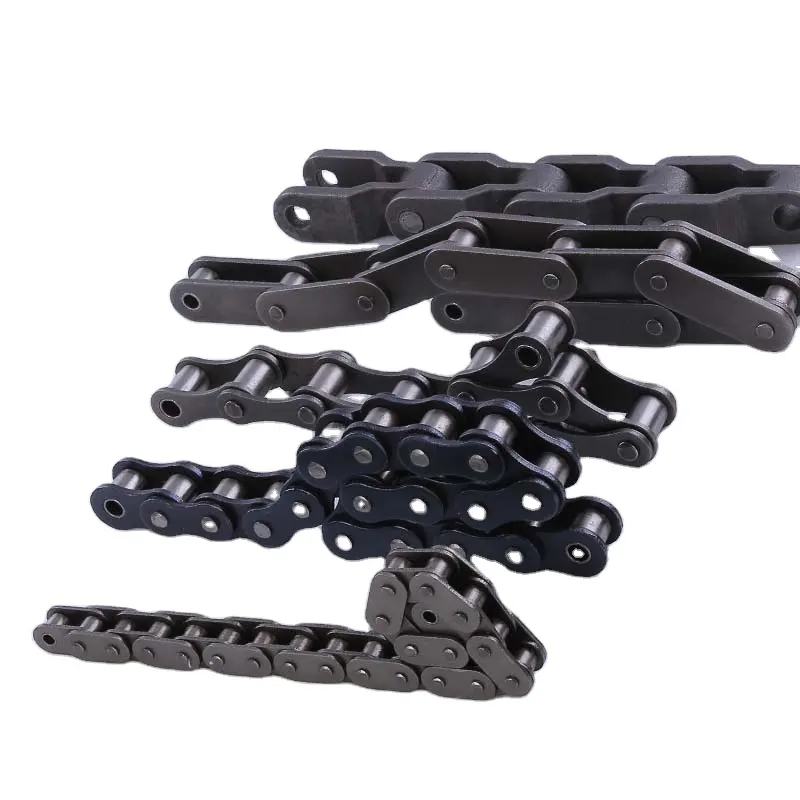
How do roller chains handle high torque loads?
Roller chains are designed to handle high torque loads effectively. Here’s a detailed answer to the question:
1. Robust Construction: Roller chains are constructed using high-quality materials and precise manufacturing techniques to ensure strength and durability. They are designed to withstand the forces generated by high torque loads without deformation or failure.
2. Load Distribution: Roller chains distribute the high torque load evenly across their links and pins. This even distribution helps prevent concentrated stress points and ensures that each link carries a portion of the load, reducing the risk of chain failure.
3. Fatigue Resistance: Roller chains are designed to resist fatigue caused by repeated stress cycles. They have sufficient strength and resilience to endure the high torque loads encountered during operation without experiencing premature wear or failure.
4. Proper Lubrication: Adequate lubrication is crucial for the smooth operation and longevity of roller chains under high torque loads. Lubrication reduces friction, minimizes wear, and helps dissipate heat generated by the increased forces. Proper lubrication ensures that the chain operates efficiently and extends its lifespan.
5. Tensile Strength: Roller chains are engineered to have high tensile strength, which allows them to withstand the tension created by high torque loads. The tensile strength of the chain ensures that it can handle the pulling force exerted by the rotating sprockets without elongation or failure.
6. Sprocket Selection: The choice of sprockets also plays a significant role in handling high torque loads. Sprockets should be matched appropriately with the roller chain to ensure proper engagement and efficient power transmission. Selecting sprockets with the appropriate tooth profile, material, and design helps optimize the performance and longevity of the chain under high torque conditions.
Roller chains have been extensively used in applications that require the transmission of high torque, such as heavy machinery, industrial equipment, and automotive systems. Their robust construction, load distribution capabilities, fatigue resistance, proper lubrication, high tensile strength, and compatibility with well-designed sprockets make them reliable and efficient in handling high torque loads.
Can roller chains be used for power transmission in pumps and compressors?
Yes, roller chains can be used for power transmission in pumps and compressors. Here’s a detailed answer to the question:
1. Power Transmission: Roller chains are widely used in various industries for transmitting power between rotating components. In pumps and compressors, roller chains can efficiently transfer power from the motor to the impeller or compressor wheel, enabling the pumping or compression action.
2. Versatility: Roller chains are available in different sizes, pitches, and configurations, making them suitable for various power transmission requirements. They can accommodate a wide range of power levels and speeds, allowing pumps and compressors to operate effectively in different applications and conditions.
3. Load Handling: Pumps and compressors typically involve dynamic loads due to the movement of fluids and gases. Roller chains are designed to handle these dynamic loads effectively. The multiple rollers and pins in the chain distribute the load evenly, minimizing stress concentrations and ensuring smooth power transmission.
4. Durability: Roller chains are known for their durability and resistance to wear. They are designed to withstand demanding operating conditions, including high speeds, fluctuating loads, and exposure to contaminants. Proper lubrication and maintenance further enhance their longevity and reliability in pump and compressor applications.
5. Easy Installation and Maintenance: Roller chains offer ease of installation and maintenance. They can be easily installed, adjusted, and tensioned to ensure proper alignment and operation. Routine maintenance tasks such as lubrication and inspection can help optimize chain performance and identify any potential issues.
It’s important to select the appropriate roller chain based on the specific requirements of the pump or compressor, considering factors such as power transmission capacity, speed, load characteristics, and environmental conditions. Regular inspection and maintenance are crucial to ensure optimal performance and to detect any signs of wear or damage that may require replacement or repair.
What safety precautions should be taken when working with roller chains?
Working with roller chains requires following specific safety precautions to ensure the well-being of operators and prevent accidents. Here is a detailed answer to the question:
1. Personal protective equipment (PPE): Operators should wear appropriate PPE, including safety goggles, gloves, and protective clothing, to protect themselves from potential hazards such as flying debris, oil splashes, or pinch points.
2. Training and knowledge: Operators should receive proper training on the safe operation and maintenance of roller chains. They should be familiar with the equipment’s components, functions, and potential hazards associated with chain handling, tensioning, and lubrication.
3. Lockout/tagout procedures: Before performing any maintenance or repair work on machinery equipped with roller chains, proper lockout/tagout procedures should be followed to isolate and de-energize the equipment. This ensures that unexpected startup or movement of the chain does not occur, reducing the risk of accidents.
4. Inspection and maintenance: Regular inspection and maintenance of roller chains are essential to identify any signs of wear, damage, or misalignment. Operators should follow the manufacturer’s guidelines for inspection intervals and perform necessary maintenance tasks, such as lubrication, tension adjustment, and sprocket alignment, to keep the chain in optimal condition.
5. Proper tensioning: Maintaining the correct tension in the roller chain is crucial for its safe and efficient operation. Overly tight or loose chains can lead to excessive stress, premature wear, and potential chain failure. Operators should adhere to the recommended tensioning guidelines provided by the manufacturer.
6. Guarding and barriers: Installing appropriate guarding and barriers around roller chain assemblies can help prevent accidental contact with moving parts. This includes the use of chain guards, covers, or enclosures to minimize the risk of entanglement or injury.
7. Cleanliness and housekeeping: Keeping the work area clean and free from debris, oil spills, or other potential hazards is important to maintain a safe working environment. Regular cleaning of the roller chain and surrounding equipment helps prevent contamination, improves performance, and reduces the risk of slips and falls.
8. Risk assessment: Before working with roller chains, it is essential to conduct a thorough risk assessment to identify potential hazards and implement appropriate control measures. This includes evaluating factors such as load capacity, speed, environmental conditions, and specific requirements for the application.
By following these safety precautions, operators can minimize the risk of accidents and ensure the safe operation of machinery equipped with roller chains.
editor by CX 2023-07-25
China Best Sales China Manufacturer OEM Rigging Hardware Grade 80 G100 Alloy Steel 1 2 3 4 Double Three Four Leg Multi-Leg 5/16 Inch Crane Lifting Chain Sling with Grab Hook roller chain design
Product Description
Product Description
Chain slings are industrial lifting slings fabricated from chain. They offer riggers 2 important advantages over synthetic slings and wire rope slings. Chain slings are more temperature tolerant, cut resistant, and certain options allow chain rigging slings to be adjustable.
Company Profile
Work Shop
Certifications
Main Products
Exhibitions
Our Team
Packaging & Shipping
| Type: | Chain Sling |
|---|---|
| Material: | Steel |
| Lifting Capacity: | >6T |
| Fixed Form: | Welding Type |
| Lifting Eye Type: | Folded Eye |
| Rope Core Type: | Steel Core |
| Samples: |
US$ 2/Piece
1 Piece(Min.Order) | |
|---|
| Customization: |
Available
| Customized Request |
|---|
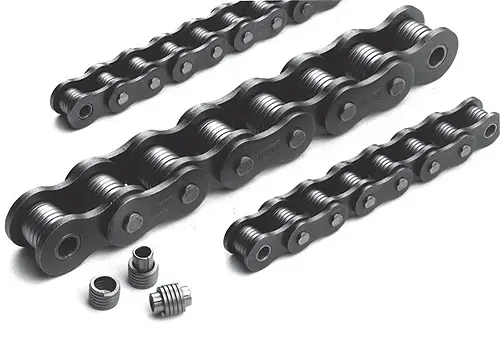
CZPT silent roller chain
The development of roller chains benefited from the concept of automated manufacturing introduced by Henry Ford. Conveyor belts and chains have been around for centuries, and as Ford expanded the concept of automobile manufacturing, roller chains became popular. Today, they are used in factories and lumber mills to move items quickly, sort, and move items vertically or horizontally. There are conveyors for other purposes, including sorting and placing items into truck beds.
CZPT roller chain
Founded in 1890, the company is the world’s leading manufacturer of high-performance roller chain systems. The company focuses on power transmission, industrial production, and the aftermarket. The company uses the highest quality materials for its chains and carefully designs, manufactures, and assembles each component. With more than a century of experience, the company continues to exceed customer expectations and industry standards. This is evident in the chain’s name and logo.
The company also offers manufacturers a full range of service options. These include on-site maintenance and application engineering. Headquartered in Indianapolis, Indiana, the company provides chain drive repair and maintenance services. In addition to providing best-in-class products, CZPT also provides customized service solutions for any industry. For more information, visit the CZPT website. Below are some of the benefits of choosing a CZPT roller chain.
CZPT roller chains reflect many advancements in chain technology. Its components are shot-peened with a high-speed iron shot to maximize toughness and longevity. The chain is also factory preloaded, no need to stretch and adjust prematurely to tighten the chain. Ultimately, a high-quality CZPT roller chain will save you time and money. It is the most durable roller chain on the market. Although more expensive to produce, it will last longer.
There are many types of materials used to construct roller chains. Common materials include steel, stainless steel, and brass. The material used to make the chain also plays a vital role in durability. In addition to steel, chain manufacturers use different heat treatments for their components. The quality of the pitch hole fabrication, heat treatment, and shot peening of the steel affects the fatigue strength of the chain. The design and thickness of the link plates are also important in determining fatigue strength.
CZPT silent chain
The CZPT silent chain is an inverted gear that eliminates friction during articulation. It is also a non-slip durable chain. Its design can be customized to suit various industrial applications. It features a patented wear protection system including connecting links and stainless steel components. Here are some of its benefits. There are some pros and cons here.
The “CZPT” silent chain is driven by a motor through the PS-1 capsule. The chain runs quietly, won’t slip or seize anything, and needs regular lubrication to maintain peak performance. Heavy engine oil or cup grease is an ideal lubricant. The arrows marked on each link point in the direction the chain should move. Avoid using non-solids greases.
The company’s other products include a range of worm gear reducers. CZPT is committed to providing high-quality products at affordable prices. They also manufacture miter gear reducers, plastic belts, and conveyor chains. You can contact Dalton Bearing for more information on CZPT products. We will help you determine the right solution for your specific application. You can also contact us for more information about our product line.
The CZPT Quiet Chain range features unique “M” gauge pins with high surface hardness. It also features advanced chain assembly technology. The company manufactures CZPT timing chains for motorcycle applications in Japan. Its benefits include smooth and noise-free transmission. Also, it reduces the size. Therefore, it is an excellent choice for motorcycle engines. But be sure to consult an expert before buying.
Rexnord Roller Chains
If you are looking for reliable heavy-duty roller chains, you have come to the right place. Regal Rexnord has a complete line of prestressed roller chains in all sizes and types, from single to multi-strand, as well as a wide range of accessories. Specialty chains are also available, including HV and SC chains.
Rexnord’s roller chains are available in a variety of sizes and styles, including double pitch drive chains for the long center, low-speed applications. They are made of stainless steel for corrosion resistance and are factory lubricated for easy maintenance. Rexnord’s roller chains also feature armor pins and wide waist sidebars for added safety and durability. It comes in different styles and configurations for a variety of applications including conveyors, elevators, and commercial sprinkler systems.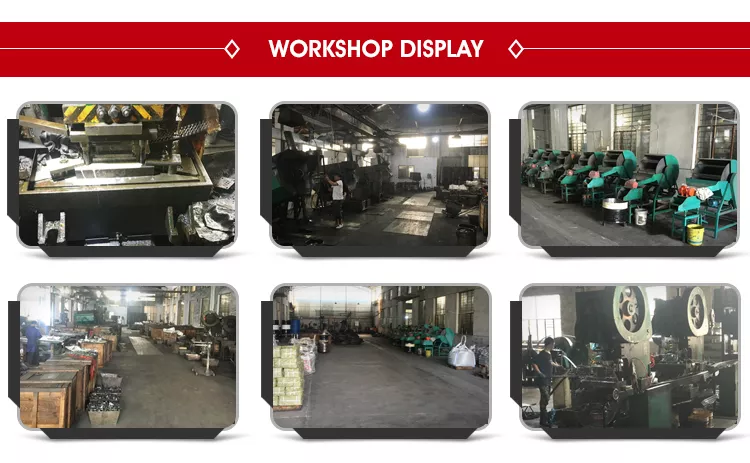
Competitor roller chain
Oil Field Roller Chains Market research report provides a comprehensive analysis of the market including macro and micro trends, pricing analysis, and strategic analysis of key competitors. It also includes an in-depth review of market trend innovations and key segment identification. It also provides insights into competitive scenarios and drivers driving the market growth. It also covers the latest trends and strategies for the future of the industry.
To understand the competitive landscape of the Oil Field Roller Chains market, the strengths and weaknesses of each leading manufacturer must be analyzed. One of the key measurements of a roller chain is tensile strength, which determines the ability to withstand a one-time load before breaking. Fatigue strength, on the other hand, represents the maximum load that a chain can withstand over a long period of time. By comparing these two performance metrics, you can determine the best brand and type for your specific requirements.
Application of roller chain
A roller chain is a simple mechanical power transmission system consisting of a series of short cylindrical rollers connected together by side links and driven by gears called sprockets. This simple, reliable, and efficient system is commonly used to convey materials and is ideal for many different applications. This type of chain is widely used in conveyors and bucket elevators and is available in a variety of power ratings and designs.
The most common drive chains are the single-strand standard series with power ratings ranging from 0.5 to 100 kW. Alternatively, the multi-strand model is a higher performance alternative that offers higher power capacity without increasing chain pitch or line speed. The other is the silent chain, also known as the inverted tooth chain. It is designed to be noiseless and to eliminate the negative effects of stretching. It rides on the teeth of the sprocket and its radius increases as it moves. It automatically corrects slight pitch changes. It also provides smooth, long-lasting service that runs smoothly.
A roller chain consists of 5 basic components: bushings, rollers, and pins. Each individual link is held together with a pin or bushing. The pin goes through a bushing in the inner link to prevent rotation. The advantages of roller chains make them one of the most efficient power transmission and conveying options. CZPT prides itself on its knowledge and experience in roller chain applications. Below are some common uses of roller chains.
Certain applications require less than ideal roller chain performance. To meet these challenges, manufacturers offer a variety of options. A self-lubricating chain can be used to keep the chain clean and reduce dust. Oil-contaminated chains can also be used for special applications. Other materials, such as stainless steel, can help retard corrosion and improve the wear resistance of the chain. Additionally, they can be used in a variety of environments, such as food processing machinery.
editor by CX 2023-05-30
China OEM Factory Sales High Strength/Heavy Duty/Black Painting/Galvanized/Carburized Lifting Link Welded Alloy Steel Traction Chains with CE/ISO for Mining Use/Hoisting bulk roller chain
Product Description
Product introduction
1. Size 6mm to 22mm, alloy steel 25MnV or 20MN2,
24mm to 42mm using imported German 23MnNiMoCr54 alloy steel
2. Surface: self-coloring, painted black; Plastic coated galvanized
3. Safety factor :4:1
4. Comply with EN818-2 standard
5. Standard CZPT or customer requirements, at least 1 meter apart
6. Serial number printed on high power round steel chain;
All production and certification dates are also recorded. Mark once per Meter run.
Lifting and rigging chain has been 1 of the most popular rigging products on the market for many years, mainly due to its strength, durability, and ease of use. All our alloy steel rigging and lifting chain is heat treated to offer industry leading load capacity and durability. Some steel rigging chains are approved for overhead lifting, while others are not, so it is important to always know what type of lifting chain your specific rigging application requires
Product specification
| Product name | 10mm Grade 80 Chain Lift Anchor Transport Welded Alloy Carbon Stainless Steel Heavy Duty Lifting Chain with Hook |
| Grade | Grade 80 Grade 100 or as your request |
| Size | 4/5/6/7/8/10/11/12/13/16/19/20/22/28/32mm or as your request |
| Color | Black , Self color ,Yellow , Red or As your request |
| Length | Custom |
| Material | Alloy steel, 20Mn2A, Stainless steel , high carbon steel . |
| Surface treatment | Blacken finished ,Hot dip galvanized , electroplating , powder coating ,black painted . |
| Structure | Welded chain |
| Process | Fully automatic deburring |
| Sample | Support |
| OEM&ODM | Support |
| MOQ | 2T |
| Standards | G30 G43 G70 CZPT chains NACM/SATM chains |
| Certificate | ISO9001 & CE |
| Method of payment | T/T ,Western Union. |
| Key words | 10mm Grade80 Chain Lift Anchor Transport Welded Alloy Carbon Stainless Steel Heavy Duty lifting chain ;Single Leg CZPT G100 EN818 polished Electric hot dip galvanized black finished painted lifting chain;Us standard black self color plated zinc strong chromate coating 1leg 2legs 3legs 4legs lifting chain |
HangZhou CZPT CO, Ltd. The company is located in ZheJiang province on the east coast of China. As a professional chain manufacturer, QRE focuses on the production and technology of carbon steel, alloy and stainless steel chains, and has established a good reputation and reputation in the local market.
1. High quality alloy material, strong and durable.
2.Thick and bulky, not decoupling, carrying capacity is stronger. Any combination of rigging to meet different use requirements
3. Finishing is not only smooth surface, but also improve its wear resistance, corrosion resistance, rust resistance to obtain high hardness.
4. All kinds of hooks, rings, widely used in vehicles and boats, machinery, mines, ports and other lifting places.
Purpose of use
High strength chain for carrying heavy loads
Used for heavy lifting in mines and construction sites
Grade CZPT lifting chain is an indispensable lifting device when lifting heavy objects. It is made of high-quality alloy steel(manganese steel,etc.),and the quality is strictly controlled throughout the whole process. Only in this way can the lifting chain reach Grade 80 international standard.
Company Profile
Founded in 1998, HangZhou Fuster Rigging Co., Ltd., formerly known as Xihu (West Lake) Dis. Chain Factory, is located in Xihu (West Lake) Dis. County of ZheJiang Province known as “The Gem City of China”, and specializes in producing and marketing chain and rigging related products at home and abroad.
Our company has independent import and export operating rights, and can handle the certifications of CCS, LR, DNV and other famous classification societies for products. Our products are sold to dozens of countries such as Europe, America and Middle East as well as more than 10 provincial and municipal regions in China, and are widely applied to the fields of ships, steel, petrochemical industry, coal mine, etc.
In the principle of “Quality-honoring & Promise-keeping”, our company meets the requirements of all the customers through service innovation, changes the original production state through technical innovation, improves the product quality through process innovation, and continuously goes to standardization, elaboration, process and scientification through the business thought of constant innovation.
Absolute CZPT will move a heart of stone. Our company is willing to cooperate with domestic and foreign new/old customers in utmost sincerity, to create a common future!
The production process
How do we control quality:
a) Pay attention to adaptation for manufacture process
b) Approval report for shipment
c) Third party inspection is accepted
d) Keeping quality guarantee for a long period
e) Guaranteeing quality inspection of each product before assembly and packing.
f) Comply with ISO 9001
Packing and transportation
Why choose us?
1.Stable Brand Cooperation
2.High Quality Production
3.Excellent Service
4.High Quality Product
FAQ
1.How long is your delivery time?
A: Generally it is 5-10 work days if the goods are in stock. or it is 15-20 work days if the goods are not in stock, it is according to quantity.
2.What is your terms of payment ?
A: Payment=1000USD, 30% T/T in advance ,balance before shippment.
3.What products do you supply?
As mentioned above, HangZhou CZPT Factory is capable of supplying:
√All kinds of marine supplies
√Chains
√Rigging hardwares
√Fasteners
√related hardwares
4.How do I receive the goods?
With our professional transport agents, we are capable of delivery products to most ports all over the world.Door-to-door service is also supported.
FOB, C&F, CIF are most commonly used trade terms.
5.Can you give warranty of your products?
A: Yes, we extend a 100% satisfaction guarantee on all items. Please feel free to feedback immediately if you are not pleased with our quality or service.
6.Where are you? Can I visit you?
A: Sure,welcome to you visit our factory at any time.
Certificate
Our team
Our foreign trade staff are all senior staff with more than 10 years of experience, and our foreign trade manager has more than 20 years of experience in foreign trade. In addition to providing you with the best products, we can also provide you with the best service
|
Shipping Cost:
Estimated freight per unit. |
To be negotiated |
|---|
| Usage: | Transmission Chain, Drag Chain, Conveyor Chain, Dedicated Special Chain, Lifting Chain |
|---|---|
| Material: | Alloy |
| Surface Treatment: | Baking Paint |
| Samples: |
US$ 0/Meter
1 Meter(Min.Order) | Order Sample |
|---|
| Customization: |
Available
| Customized Request |
|---|
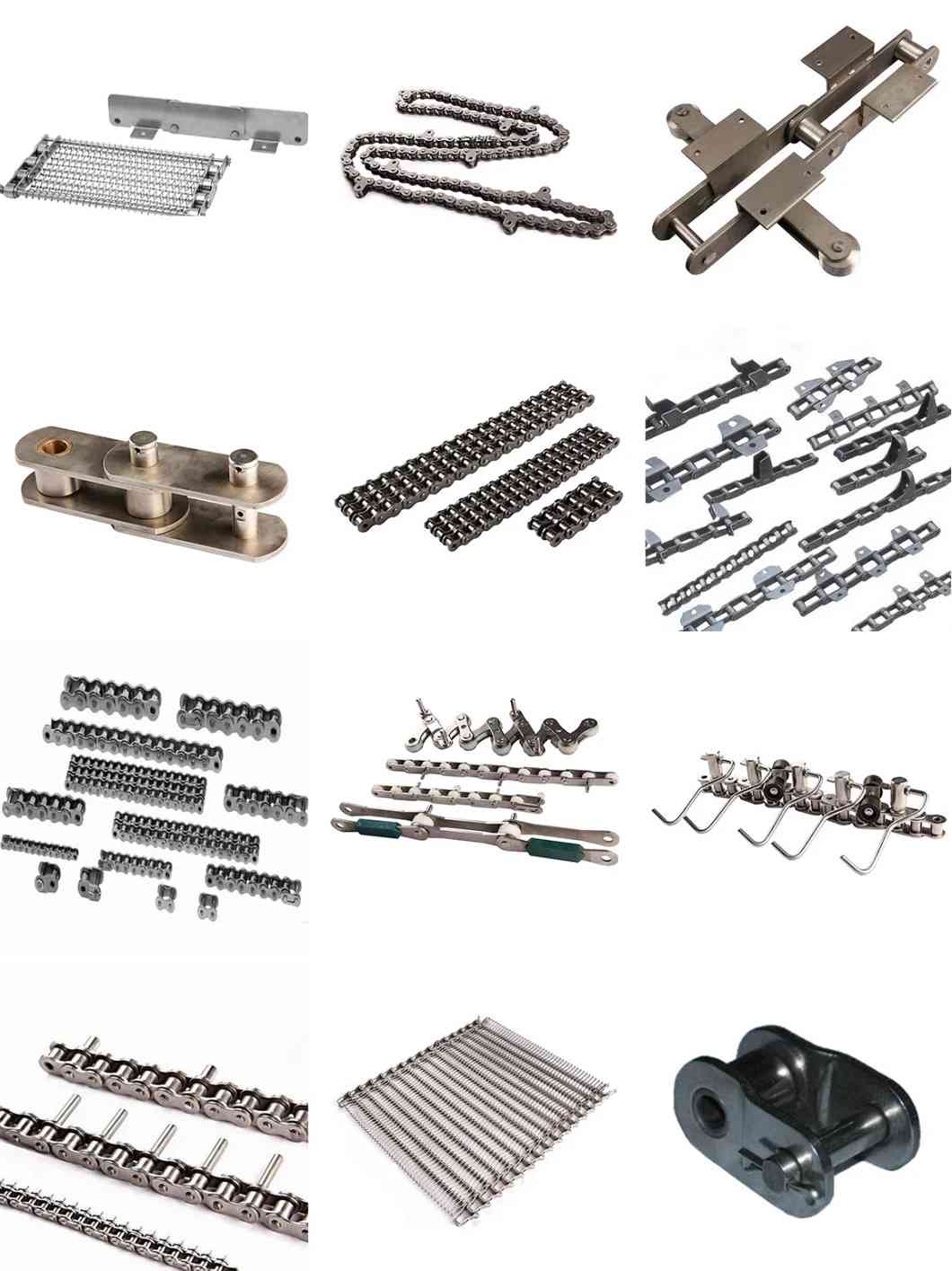
How to choose a drive chain
The process of manufacturing a drive chain starts with bushing. Both inner and outer diameters are strictly measured to ensure tight tolerances. The roundness of the bushing is critical as irregular surfaces in the contact area can cause accelerated wear and shorten chain life. That’s why the CZPT manufacturing process is carefully designed to optimize the wear performance of the chain. There are several types of bushings including roller, forged rivetless, flat top, and timing.
roller chain
The tensile strength of a roller chain is the number of pounds it can withstand before breaking. Fatigue strength is equally important, although the two do not necessarily go hand in hand. Fatigue strength depends on several factors, including the quality of steel used in manufacturing, the quality of the pitch holes, the type of shot peening used, and the thickness and design of the link plates. Here are some things to consider when choosing a roller chain for a drive chain.
When sizing a chain, first determine how much power will be delivered. Then, determine how many teeth you need for the drive sprocket. The gear ratio is approximately 2:1. The number of sprocket teeth depends on the size of the motor. A chain with a higher tooth count requires fewer teeth than a smaller chain. The size of the drive sprocket also depends on the horsepower of the motor.
Before installing rollers or conveyor chains, make sure the drive system is properly aligned. If the drive chain is misaligned, the load on other components will be uneven. This can cause excessive wear on the sprocket or roller chain. Also, check that the sprocket is as close to the bearing as possible. Connecting links can be secured using openings or spring clips.
Different manufacturing processes can affect the performance of the roller chain. Some manufacturers have chains pre-installed at the factory to minimize initial stretch. Others build chains by preloading sprockets and ensuring consistent precision heat treatment. The final product may have greater elongation or less wear than previous products. It is best to follow the manufacturer’s recommendations to extend the life of the roller chain. If you are interested in purchasing a new drive chain, please contact a trusted supplier in your area.
Drop forged rivetless chain
Forged rivetless drive chains are ideal for applications where flexibility and strength are critical. The chain consists of forged steel components for high strength and lightweight. These chain assemblies are easy to assemble without the use of tools and are commonly used on carts, assembly lines, and drag conveyors. They are also compatible with related chain, drive, and accessory products. They have a short turning radius and therefore high flexibility and strength.
The X-348 Forged Rivetless Chain is an example of such a drive chain. This chain is perfect for automated machines that run late at night. It is available in a variety of weight limits and sizes. The chain is pre-stressed after assembly, and a two-year parts replacement warranty is standard. Its durability is also enhanced by the inclusion of push dogs that engage the front floating dogs on the leading free cart.
In addition to this type of chain, CZPT also offers a full line of Caterpillar Drive chains. They are designed to provide fatigue-free operation. The drive jaws are one-piece forged induction hardened steel compatible with forged rivetless chains. There are many special custom chains to choose from. These forged chains can be installed on Caterpillars as well as other types of tractors for maximum durability and efficiency.
Distributors of forged chain products offer a variety of sizes, pitches, and materials for material handling and conveying systems. Typically, this type of chain is used in conveyor and lifting applications and ranges from 3 inches to 9 inches. Depending on size and thickness, it is ideal for a variety of industries including automotive, food, paper, and steel mills. In addition, the chain is corrosion-resistant and corrosion-free.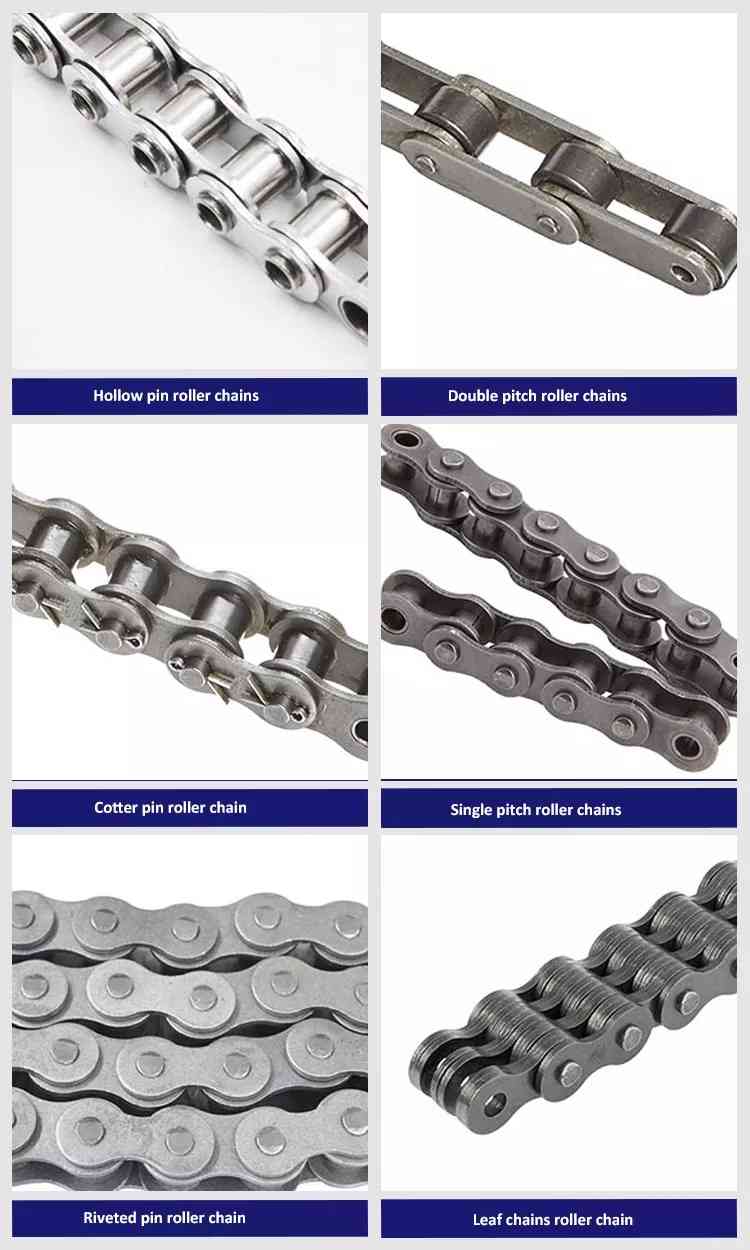
flat top chain
The flat-top drive chain is used for conveying large and medium workpiece pallets. These chains are available in a variety of materials and designs, including plastic, steel, and stainless steel. The steel flat top chain provides high wear resistance and excellent noise reduction. Steel flat-top chains are suitable for applications requiring high loads and excellent workmanship. HD profiles are compatible with steel flat-top chains and are highly recommended for extreme applications.
CZPT produces two types of flat-top chains. Tabletop chains are similar to wing door hinges, while MatTop chains are assembled using full-width pins. Both types are available in standard widths of 3.25 to 12 inches and are shipped in 10-foot sections. Both types can be shaped according to the width of the chain.
Double hinge pin flat-top chains are available with a variety of hinge pins. There are TAB and standard hinge pins for different machines and drive methods. A flat-top chain with dual-hinge pins will provide higher load carrying capacity, but be aware of the hinge pin size and style required for your application. The hinge pins should be long enough to ensure a smooth and smooth delivery. Double hinge pin flat top drive chains are available in a variety of sizes and designs.
Using standardized components and modules, the flat-top chain conveyor system is highly adaptable and can be seamlessly integrated into any production process. It can also be extended to handle a wider range of containers. Using a single drive, the CZPT system can be extended to a length of 40 meters. Its versatility makes it the choice of many industries. There is also a wide variety of flat-top drive chains to choose from.
time chain
The drive chain is a critical component of any internal combustion engine. They transmit the rotation of the crankshaft to the camshaft via the timing chain. These chains have been standard in cars since the turn of the 20th century, and while toothed belts have become a more cost-effective alternative, manufacturers such as Mercedes-Benz and BMW remain loyal to traditional chain drives.
Timing chains come in many shapes and sizes, with different designs depending on the type of load they must carry. Roller chains are the most common and offer an excellent balance of strength and NVH performance. Its design is similar to a bicycle chain, and the inner link consists of two blades pressed into the holes of the sprocket. Roller chains can also pass through smaller diameter sprockets, and roller chains take up less space than chain links.
The length of the chain allows it to stretch over time. In addition, improper oil maintenance can lead to premature timing chain damage. Without an oil change, the chain is not lubricated, causing the rollers and links to rub against each other. This can cause excessive chain wear and eventually chain breakage. To avoid premature timing chain failure, it is advisable to have your vehicle inspected by a mechanic.
For automotive timing chains, the CZPT website offers the best prices for the timing chain you need. You can find the right timing chain for your car by registering on this website. You can also contact a mechanic to get the parts you need. If you don’t know how to diagnose your timing mechanism, you can always check the owner’s manual or the manufacturer’s website. It is critical to follow the manufacturer’s recommendations to avoid catastrophic failure.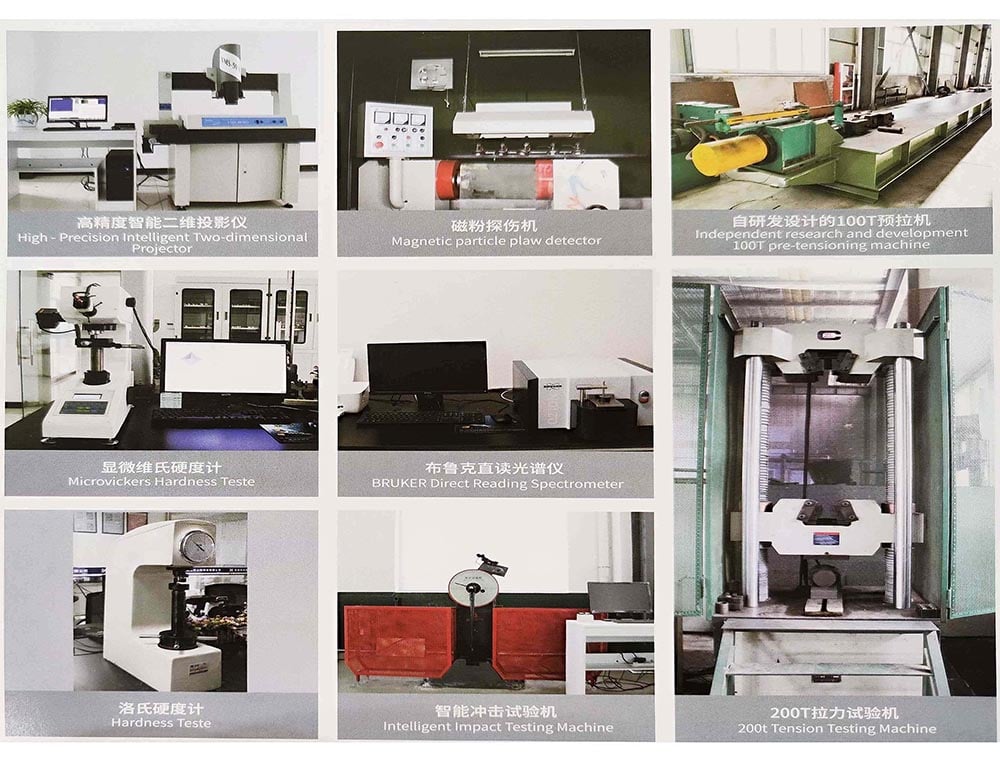
Oil-impregnated bushing
Oil-impregnated bushings for drive chains are an excellent solution to drive chain lubrication problems. Usually, drive chains require additional lubrication, but by adding special oil-impregnated bushings, the chain can run without lubrication. Oil-immersed bushings, such as those of the CZPT brand for CZPT, are specially manufactured for this purpose. They capture oil during operation and release it onto the bearing surfaces, returning it to the bushing by capillary action.
Since their introduction to the automotive industry, engineered composite plastic bushings have been shown to provide longer service life and save up to 40% in maintenance costs. They have replaced bronze in thousands of applications, including pumps, medical equipment, and food processing machinery. Because oil-impregnated bronze bearings rely on capillary action, they must rotate to maintain a complete lubricating film. However, several factors prevent this film from fully forming, including low speeds and intermittent use.
During the manufacturing process, oil-impregnated bushings are manufactured to meet the wear resistance requirements of the drive chain. The sintered density of the oil-impregnated sintered bushing determines its mechanical strength. The larger sintered density increases the wear resistance of the oil-impregnated bushing but reduces the mechanical strength.
Whether or not a drive chain is lubricated will determine its overall life. Proper lubrication can extend chain life by 100% compared to a chain without proper lubrication. Proper lubrication means using high-quality oils without additives and oils that flow freely at prevailing temperatures. Indirect heating is required by immersing the drive chain in the molten pool as certain additives prevent oil from entering the chain joint.
editor by CX 2023-05-17